Two Easy Ways to Start Earning Rewards!
Earn 2X Pals Rewards points at Petco
when you use Petco Pay!
While supplies last.
Get It Today
Is your fish coming to the tank surface to breathe? Find out why your fish may be staying at the top of the tank, if it's normal, and tips on how to ensure your pet is the healthiest it can be.
Updated on November 13th, 2025
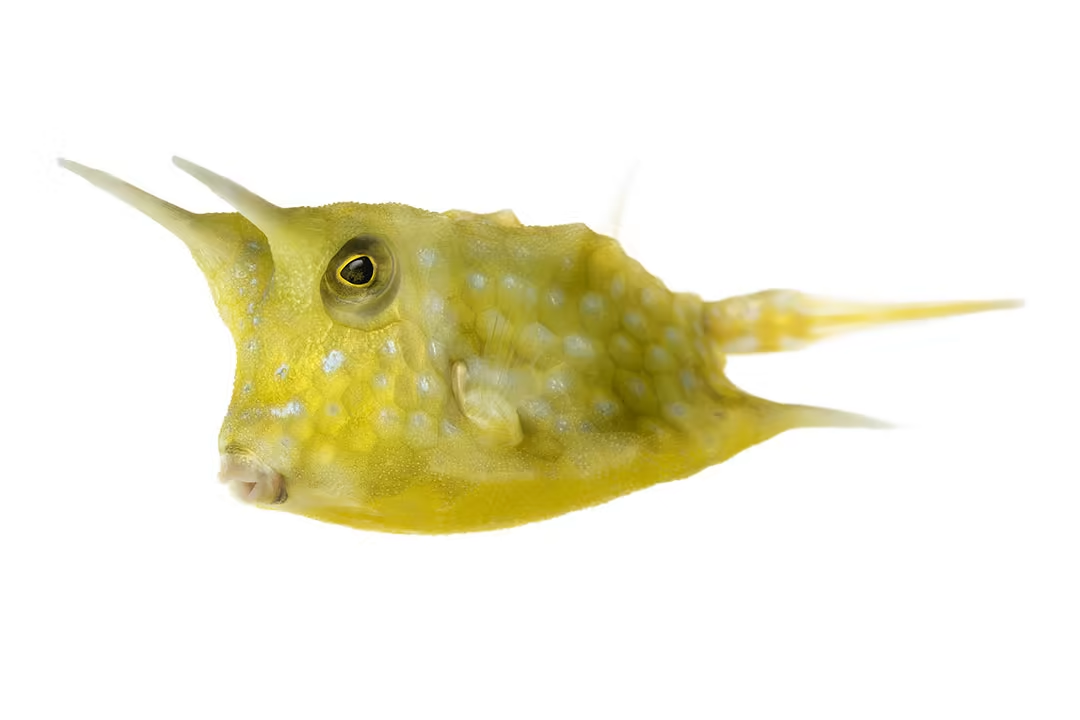
Learn how to care for Boxfish & Cowfish, recommended diet and aquarium setup. Find the right food, supplies and equipment at your neighborhood Petco.
Updated on November 13th, 2025
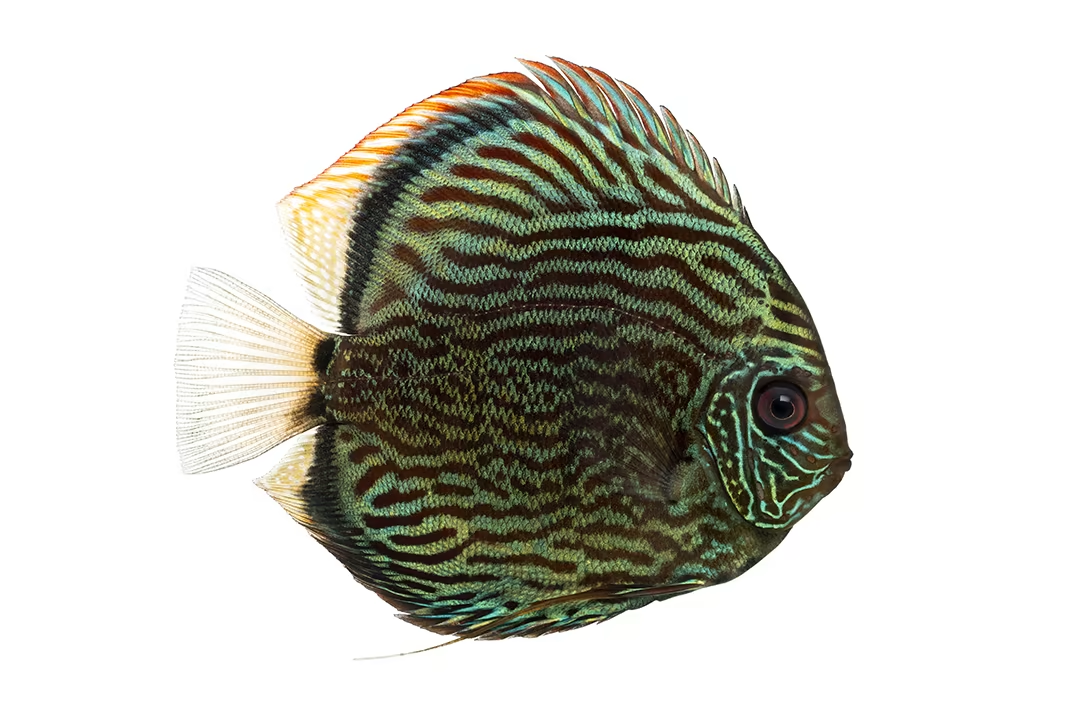
Learn how to care for a Discus, recommended diet and aquarium setup. Find Discus for sale, supplies and equipment at your neighborhood Petco.
Updated on November 13th, 2025
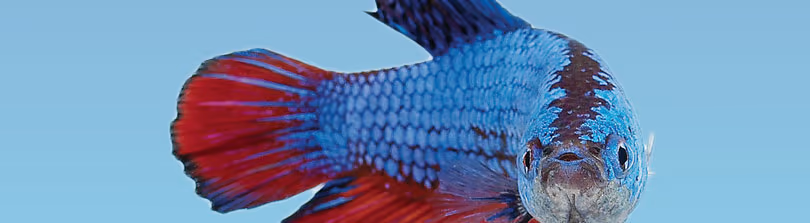
If you’re thinking of adding a betta fish to your family, learn a few fun facts about these underwater wonders.
Updated on November 13th, 2025
Learn how to use aquarium salt in freshwater aquariums to promote healthy gill functions, reduce stress, and treat infections in fish.
Updated on November 13th, 2025
Hello, and thank you for using Boop by Petco. The most common (and easiest) way to clean a fish tank is with a siphon-style cleaner. Fish tanks should be cleaned in stages, generally replacing 10-15% of the water at a time. There are times where a larger cleaning might be necessary, but removing the fish and changing too much of the water at once can be quite a shock and can be dangerous to the fish, so this should be saved for only extenuating circumstances. Here's a helpful video on using a siphon cleaner: http://video.petco.com/v/18852/how-to-clean-your-aquarium-with-the-aqueon-siphon-vacuum-/ And some more reading you may find interesting on general fish tank cleaning and maintenance: http://www.firsttankguide.net/waterchange.php Hope this helps!
Updated on August 12th, 2025
Guppies or Neons are excellent "starter" fish. Care is simple and they are inexpensive. A standard 10 gallon tank is recommended to start. Most people don' t realize the amount of "work" needed to maintain a tank. Filter maintenance, monitoring water chemistry, water changes, monitoring fish health and providing a balanced diet are just a few items that need regular attention to keep a tank thriving. Even though fish aren't as cuddly as cats and dogs, they do have their own personalities and even respond to their owners, especially at feeding time! Studies have shown that simply watching fish in a tank can lead to a reduction in both heart rate and blood pressure. It is quite relaxing.
Updated on August 12th, 2025
I would recommend to have the water completely changed. New water should be ideally submitted for quality testing. Most pet stores will do this for free or a nominal fee. High ammonia levels, PH imbalances may be responsible for that as well. Oxygen concentration and quality of the filters should be determined as well. Please do not hesitate to contact us again on the forum or by requesting a consultation if you have any more questions or to discuss it any further.
Updated on August 12th, 2025
Check the water chemistry. The discoloration could be due to elevated ammonia levels which can cause "burns". Use a home test kit or submit a water sample for testing. The local Petco may do this for free or for a small fee. Aim for an absence (0 ppm) of ammonia and nitrites with nitrates at 20ppm or less. Perform partial water changes to stabilize chemistry and/or to improve water quality. Use only conditioned water that is temperature matched to prevent stress or shock. The Neons (blue fish) appear to be infected with Ich, a parasite. Treatment is possible with commercial products found in the local Petco. Follow label directions carefully. You will need to treat the entire tank until all traces are gone. Removing a lump from your fish on your own is never recommended. You can cause severe injury. Most broad spectrum antibiotics (Kanaplex, Maracyn, Maracyn 2, etc.) found in the aquarium section of the local Petco should help treat or prevent infection. Choose one and follow label d
Updated on August 12th, 2025
Thanks for reaching out about Fish. Test and correct water quality for pH, ammonia, nitrites and nitrates. If all fish are affected, water quality problems the most likely. Alteration can lead to increased mucous production from the skin (white stuff), but fungal dermatitis or parasites are also possible. A veterinary visit is recommended if the water quality if appropriate, to assess and provide a diagnostic/treatment plan. Good luck.
Updated on August 12th, 2025