Two Easy Ways to Start Earning Rewards!
Become a member today! Members-only pricing and offers, personalized care notifications, Vital Care points back on every purchase and more!
 Become a credit card member today!
Earn 2X Pals Rewards points at Petco
when you use Petco Pay!APPLY NOWLearn More About Petco Pay Benefits
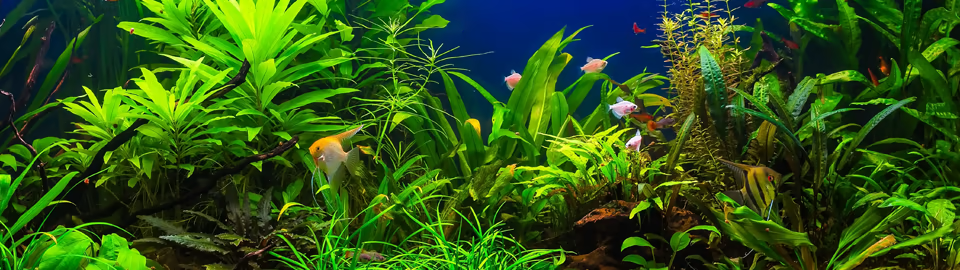
API Fish Health & Wellness
Get It Today


Related Articles & Questions
- Health & Wellbeing
High Nitrates in Your Fish Tank? Protect Fish Health & Prevent Deaths
Search Petco to find out the harm of high nitrates in freshwater fish aquariums. We provide vital information to help keep your fish happy & healthy.
Updated on November 13th, 2025
- Health & Wellbeing
Fish Oil for Dogs: Benefits, Dosage, & Our Top Supplement Picks
Learn about the benefits of fish oil for dogs. Order online from Petco and save with Repeat Delivery or Curbside Pickup.
Updated on November 13th, 2025
 Home & Habitat
Maintain Ideal Aquarium Water Temp for Healthy, Happy Fish
Learn general guidelines and the many factors that go into attaining and stabilizing the correct water temperature and how to acclimate your fish.
Updated on November 13th, 2025
- New Pet
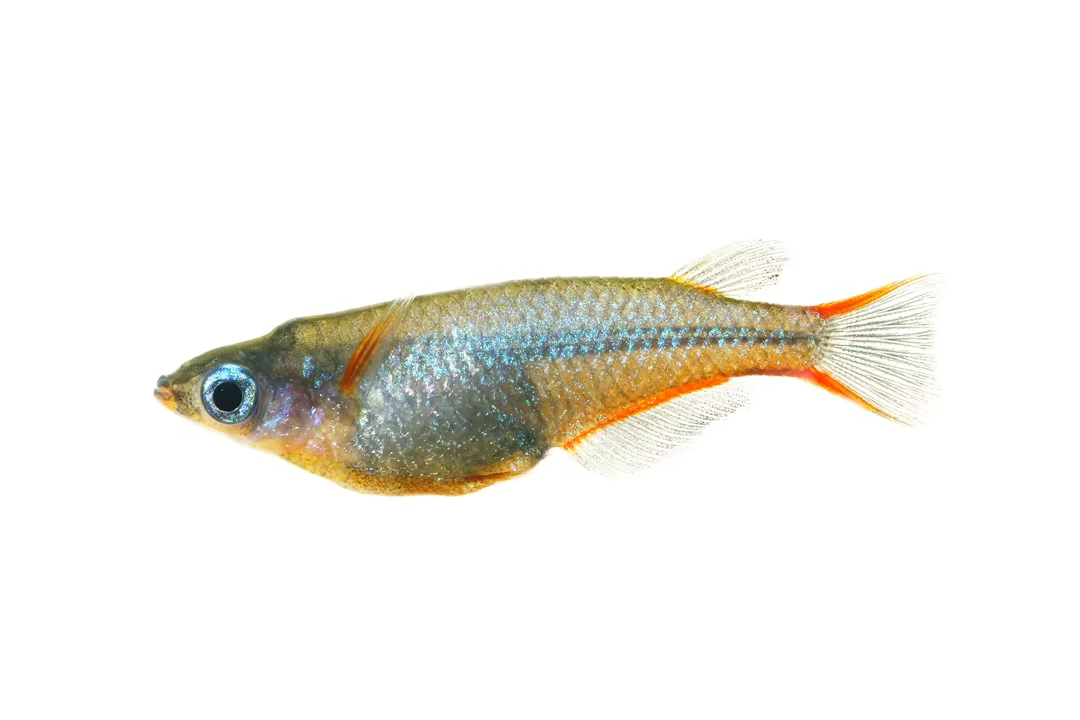
Complete Ricefish Care: Setup, Diet, & Habitat for Thriving Fish
Learn more about these slow moving fish and the care they need when added to your aquatic environment.
Updated on November 13th, 2025
- New Pet
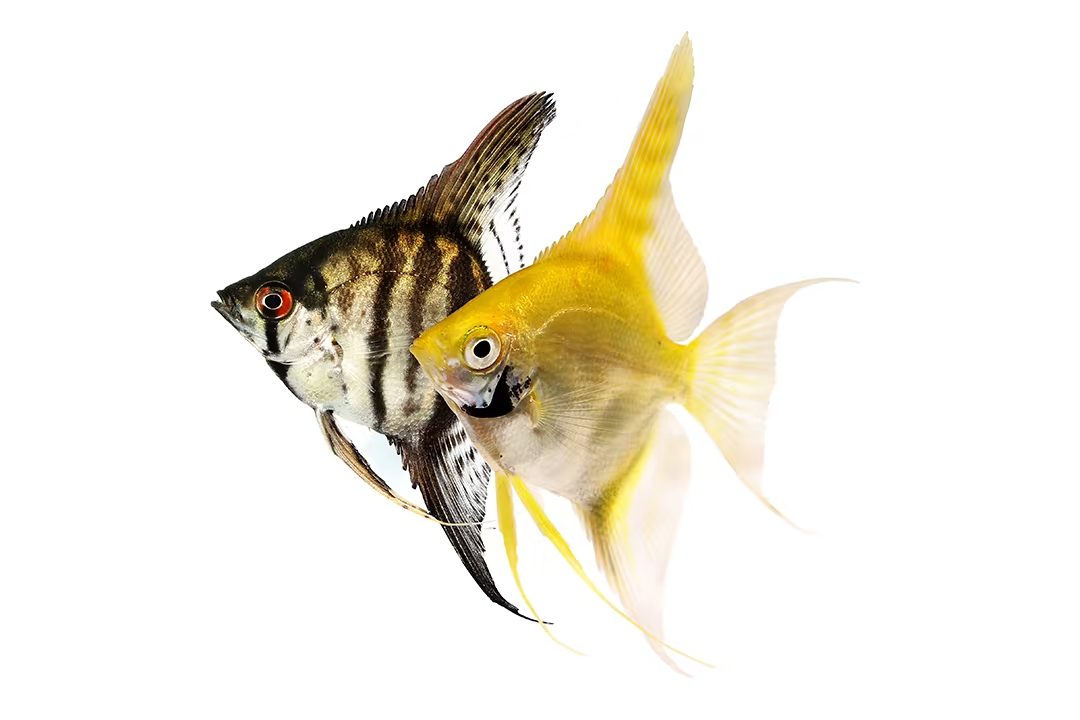
Freshwater Angelfish Care: Tank, Food, & Happy, Healthy Fish
Learn how to care for angelfish, recommended diet and aquarium setup. Find the right food, supplies and equipment at your neighborhood Petco.
Updated on November 13th, 2025
- Health & Wellbeing
I dont know if you are a tropical fish specialist. But there is something going on in my tank and need help diagnosing it. My corydora has two raised growths ..one at the base of its fin. And one under the eye. My pleco seems a bit tattered too. A li
Thanks for reaching out about your aquarium and including photos. Did you test your water quality prior to the water change? Continue to test for pH, ammonia, nitrites and nitrates. Pristine water quality is needed for health. Are any of the fish new, that could have introduced parasites? Itching/flashing can be due to water quality, external parasites, bacterial or viral infections and other causes. The white lesions on the photo could be fungal infections. A skin scrape and examination under the microscope (at a veterinarian's office) is needed for an attempt to determine a cause. Fungal infections are often secondary problems, so check water quality first. Good luck.
Updated on August 12th, 2025
- Health & Wellbeing
Hi I'm really scared because I went to my boyfriends parents house and I left my sister to look after my 7 Fish and she sent me a photo and I saw (HEAPS) of food layers on the to and I had to cut my holiday short my 11 days and I get back to sad babi
Check the water chemistry to rule out elevated ammonia or nitrite levels. You can do this using a home test kit or by submitting a water sample for testing. Most pet stores will do this for free or for a small fee. Perform partial water changes (no more than 30% total volume at a time) to stabilize chemistry and/or to improve water quality. use only aged or conditioned water that is temperature matched to prevent further stress or shock. If all 7 fish are goldfish, a large tank is strongly recommended. The general rule is 20 gallons for the first fish and 10 additional gallons per extra fish. This is due to the goldfish producing a larger than average bio load (wastes) which can quickly overwhelm a small tank. Check the water temperature as well. Goldfish are cold water fish and do best between 65 F (18.3 C) and 72 F (22.2 C). The use of antibiotics or other medications would not be recommended in the absence of symptoms of illness or infection. Plain aquarium salt (NOT table or Epsom
Updated on August 12th, 2025
- Health & Wellbeing
Are these steps good for this fish's wound and finrot? Part of the fish fin fell off but it is okay now. We're planning to quarantine him and use aquarium salt. Is there any last minutes subs for the salt? Tomorrow is Christmas so the stores will be
Generally speaking you can follow these guidelines: - set up quarantine tank: make sure the tank is well oxygenation and has some plants for hiding; - add 1 teaspoon of aquarium salt per gallon; unfortunately it is very difficult to replicate the composition of aquarium salt back home so I would strongly suggest to buy a specific product. - add this product https://www.liveaquaria.com/product/4410/?pcatid=4410 as indicated; - leave your fish there and feed him regularly for 3-4 days until you don't see any improvement - If no results at all are seen after 4 days a check up would be needed as more specific tests may be needed to establish a specific diagnosis. Hope this answer was helpful, but please do not hesitate to contact us again on the forum or by requesting a consultation if you have any more questions or to discuss it any further. Please find the time to give us a feedback about the consultation as that will be used to improve our service.
Updated on August 12th, 2025
- Health & Wellbeing
My goldfish have been acting very strange and fins have been changing colors, they are swimming frantically around the 20 gallon tank and crashing into the glass as well as jumping out of the tank in general. Their tail fins have been developing a re
Hi, and thanks for your question. This is a quite concerning presentation and it is likely to be related to water quality. Begin by submitting a water sample for quality testing. Most pet stores will do this for free or a nominal fee. Clinical examination should always include a water quality check, even if you have done so already. Water testing should be performed with a quality test kit, measuring NH4, NO2 and NO3. High ammonia levels, PH imbalances may be responsible for these signs. Oxygen concentration and quality of the filters should be determined as well. If water quality is good and there are no major imbalances, your fish should get examined to look for any sign of bacterial/fungal infection and eventually water should be treated. Hope this answer was helpful, but please do not hesitate to contact us again on the forum or by requesting a consultation if you have any more questions or to discuss it any further. If this answer was helpful please let us know, this will be used
Updated on August 12th, 2025
- Health & Wellbeing
My fish lived outside during the summer eating alge out of our pond. Now it's inside for the winter but it has developed a white growth on its forehead
Check water chemistry and filtration. Sunny may have developed a bacterial or fungal infection due to the switch in environment. Clean water is crucial to resolving infection. Perform regular partial water changes. Use only aged or conditioned water that is temperature matched to prevent further stress or shock. Maintain water temperature between 75 F and 72 F. Minor infection maybe resolved using plain aquarium salt (NOT table salt). Salt is a great general tonic. It reduces stress, improves gill function and aids in recovery. Dissolve 1 teaspoon of salt per gallon of water in a cup of tank water and gently pour it into the tank. Treat until symptoms resolve. When performing water changes, use just enough salt to treat the water being replaced, not the entire tank volume. If necessary, you can use a broad spectrum medication if symptoms persist. Look in the aquarium section of the local pet or fish store for products such as Kanaplex, Maracyn or Lifeguard by Tetra. Follow label
Updated on August 12th, 2025