Two Easy Ways to Start Earning Rewards!
Earn 2X Pals Rewards points at Petco
when you use Petco Pay!
Get It Today
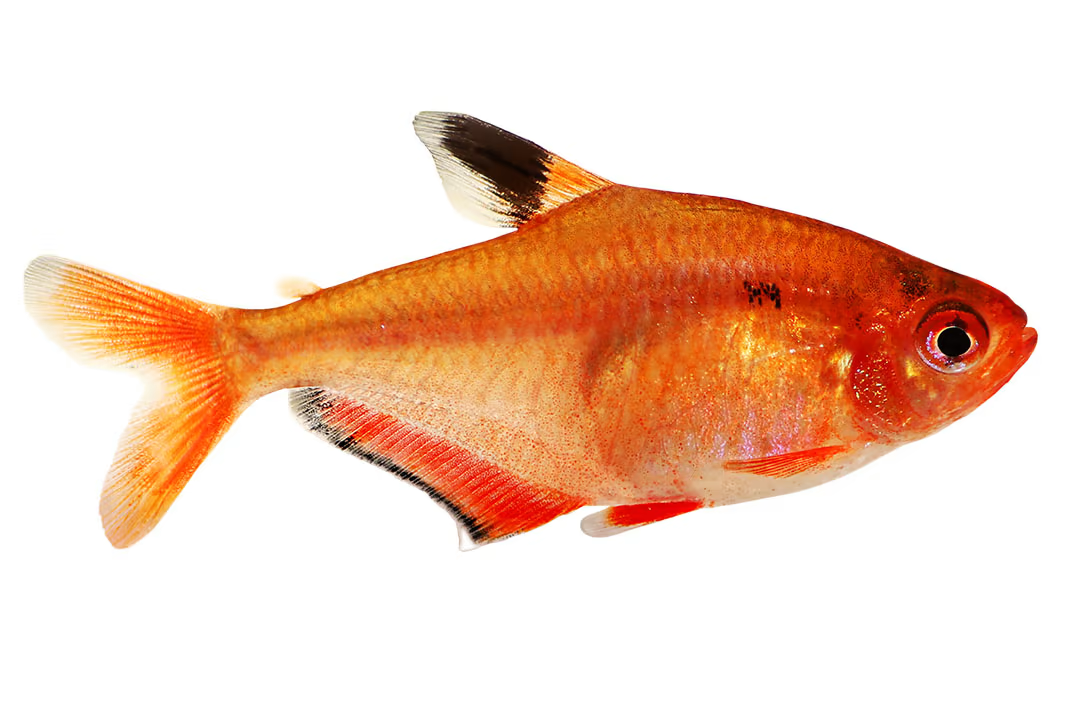
Learn how to care for freshwater community fish, recommended diet & aquarium setup. Find the right food, supplies & equipment at your neighborhood Petco.
Updated on November 13th, 2025
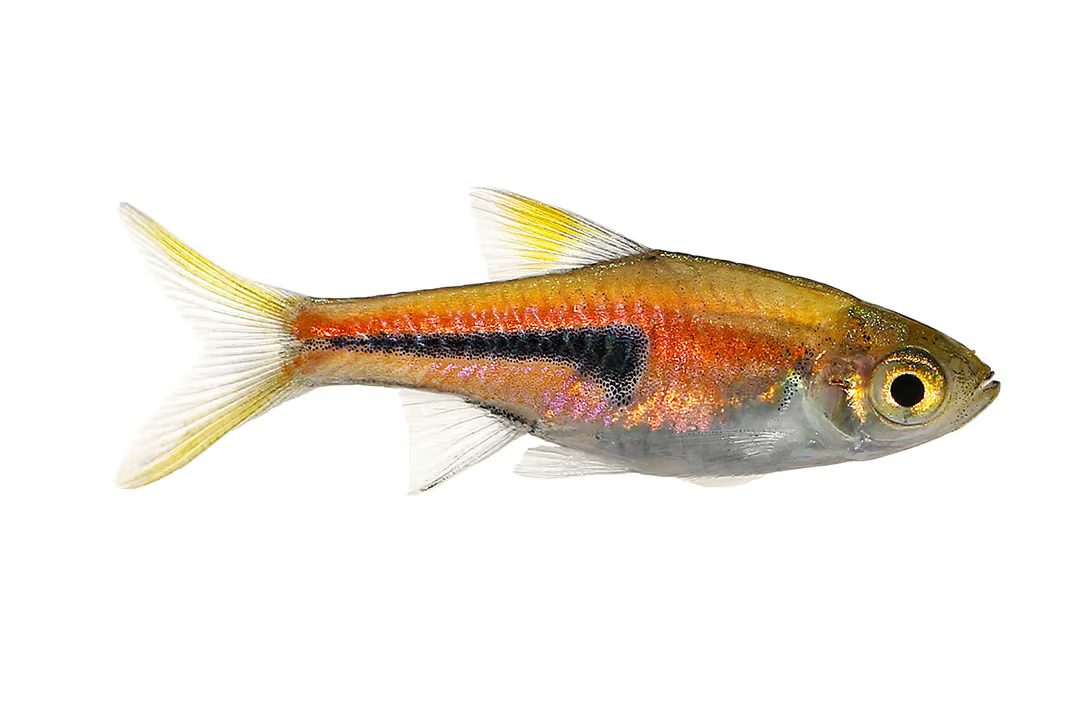
Learn how to care for semi-aggressive fish, recommended diet & aquarium setup. Find the right food, supplies & equipment at your neighborhood Petco.
Updated on November 13th, 2025
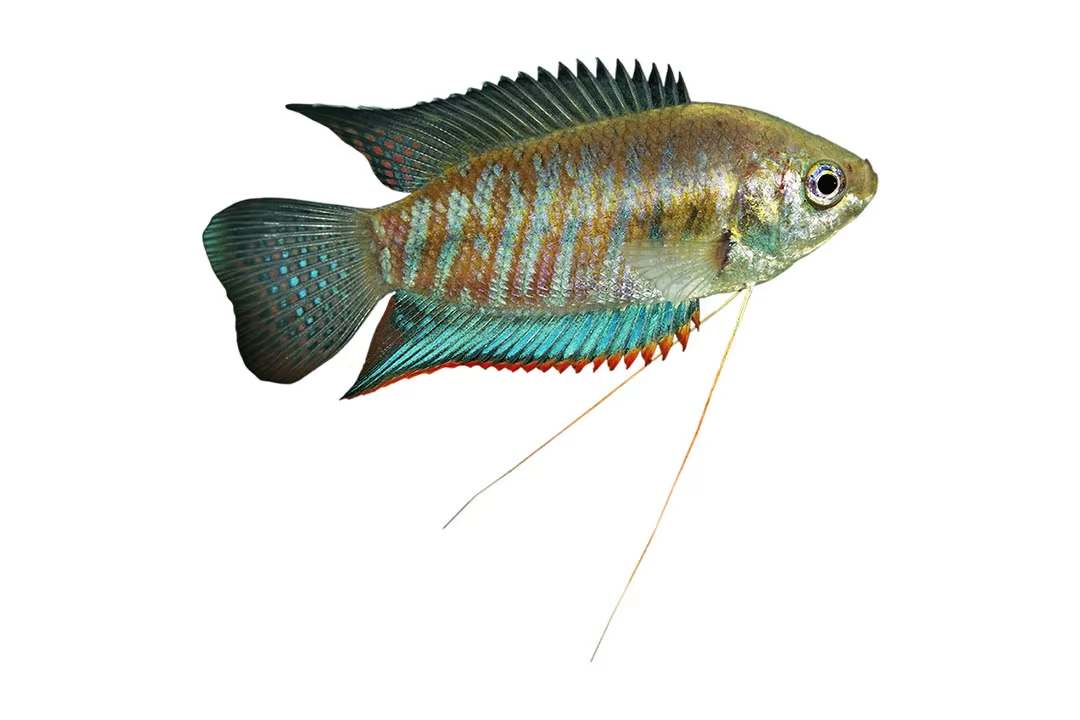
Learn how to care for Paradise fish, recommended diet and aquarium setup. Find the right food, supplies and equipment at your neighborhood Petco.
Updated on November 13th, 2025
Learn more about these slow moving fish and the care they need when added to your aquatic environment.
Updated on November 13th, 2025
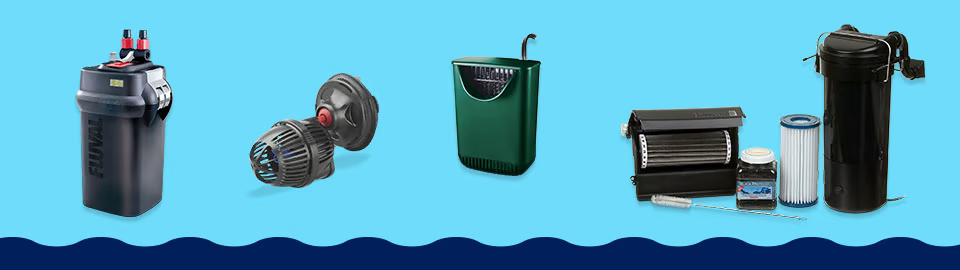
Discover the fish tank filter system that’s right for your aquarium. Learn about mechanical, chemical, and biological filtration at Petco.
Updated on November 13th, 2025
The majority of the acclimation guide is intended for introducing animals recently purchased online into a quarantine environment that have been inside a dark box for 24+ hours and the water quality is most likely degraded from waste. Hopefully you followed these steps before introducing your pond animals into their quarantine environment. After the quarantine period the acclimation from this environment should be relatively easy and quick – given the water parameters in the quarantine environment are ideal and similar to your pond. The best way to move the fish would be to put them in a 5 gal. bucket and float the bucket in the pond for at least 30 minutes so the temperature in the bucket can gradually reach the same temperature as the pond. Make sure you do this in a shady spot of the pond or during a time period when the bucket will not be in the sun. In order to keep the bucket from tipping it may take some creativity but it may be as simple as using a wooden pole laid across the
Updated on August 12th, 2025
Monitor water chemistry using a home test kit or submit a water sample for testing. The local Petco may do this for free or for a small fee. Aim for an absence (0 ppm) of ammonia and nitrites with nitrates at 20ppm or less. Perform partial water changes to stabilize chemistry and/or to improve water quality. Use only conditioned water that is temperature matched to prevent stress or shock. Pristine water quality is the foundation for healing and recovery from infection or injury in fish. You can use plain aquarium salt (NOT table or Epsom salt) as a general tonic to reduce stress, improve gill function and aid in recovery. Dissolve 1 teaspoon of salt per gallon of water in a cup or two of water and gently pour it into the tank. Treat for 14 days then reassess the condition. An "all in one" product, such as Lifeguard (by Tetra), can be used concurrently to treat infection or parasites. Find one in the aquarium section of the local Petco. Follow label directions carefully and remove
Updated on August 12th, 2025
Java Moss, Java Fern, Anubias and Amazon Swords are among the easiest live plants to care for and cultivate in an aquarium. You can use aquarium soil or aquarium sand depending on the species of plant(s) chosen. When medicating fish, it is best to remove them to a hospital or quarantine tank. This will spare live plants as well as beneficial bacterial populations, especially if an antibiotic is used. Medicated food is also an option.
Updated on August 12th, 2025
Hi, and thanks for your question. Begin by submitting a water sample for quality testing. Most pet stores will do this for free or a nominal fee. Clinical examination should always include a water quality check, even if you have done so already. Water testing should be performed with a quality test kit, measuring NH4, NO2 and NO3. High ammonia levels, PH imbalances may be responsible for these signs. Oxygen concentration and quality of the filters should be determined as well. If water quality is good and there are no major imbalances, your fish should get examined to look for any sign of bacterial/fungal infection and eventually water should be treated. Hope this answer was helpful, but please do not hesitate to contact us again on the forum or by requesting a consultation if you have any more questions or to discuss it any further. If this answer was helpful please let us know, this will be used to improve our service!
Updated on August 12th, 2025
Popeye is a symptom of an underlying disorder in the tank. It can be a result of trauma or infection. Most cases can be managed by maintaining water quality and a broad spectrum antibiotic. Quarantining as you have done is always a good move. Check the tank for any furniture/décor that may cause injury. Check the water chemistry, filtration and temperature next. Any imbalances can predispose a fish to illness. Partial water changes can be done to improve quality and correct imbalances. Use only aged or conditioned water that is temperature matched to prevent further stress or shock. Maracyn Plus or Kanaplex can be found in the aquarium section of the local Petco or fish store. You can use either, in addition to plain aquarium salt (NOT table salt), to treat. Dissolve 1 teaspoon of salt per gallon of water in a cup of tank water and gently pour it into the tank. Treat for 10-14 days with salt then perform partial water changes to decrease salinity. Treat only the amount of water g
Updated on August 12th, 2025