

Two Easy Ways to Start Earning Rewards!
Become a member today! Members-only pricing and offers, personalized care notifications, Vital Care points back on every purchase and more!
 Become a credit card member today!
Earn 2X Pals Rewards points at Petco
when you use Petco Pay!APPLY NOWLearn More About Petco Pay Benefits
biOrb Aquarium Cleaning Supplies


Related Articles & Questions
- New Pet
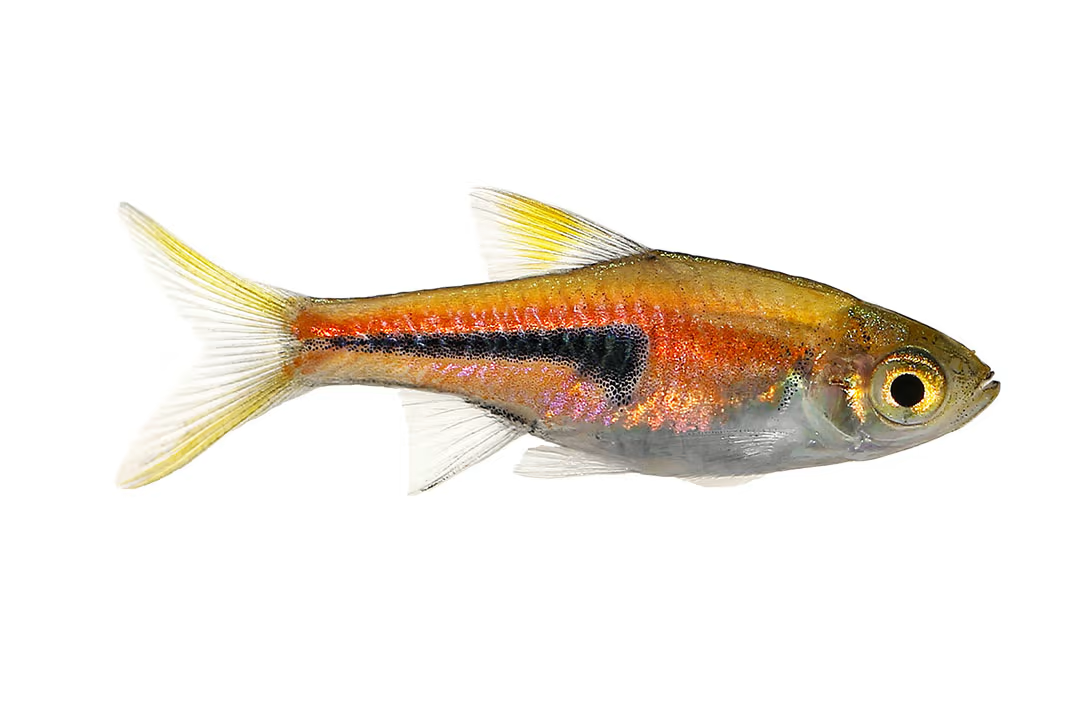
Freshwater Semi-Aggressive Fish: Top Secrets for a Thriving Tank
Learn how to care for semi-aggressive fish, recommended diet & aquarium setup. Find the right food, supplies & equipment at your neighborhood Petco.
Updated on December 21st, 2025
- New Pet
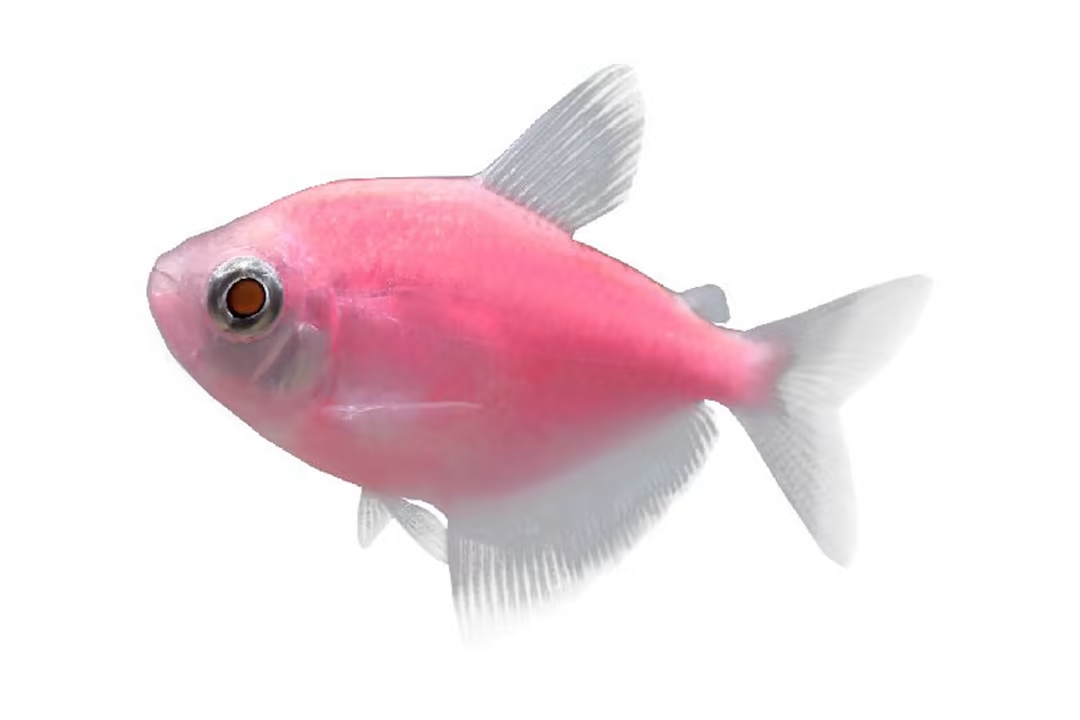
GloFish Care Guide: Tank, Food, & Compatibility for Thriving Fish
GloFish are brilliantly colored and beautiful fish. Learn how to care for GloFish, what to feed them, how long they live, their ideal tank size and more.
Updated on October 23rd, 2025
- Home & Habitat
Aquarium Hardscaping: Essential for Healthy Fish & Gorgeous Aquascapes
Discover how to hardscape your aquarium here at Petco. Visit Petco and check out aquarium hardscape ideas, solutions and much more for your fish.
Updated on October 23rd, 2025
- New Pet
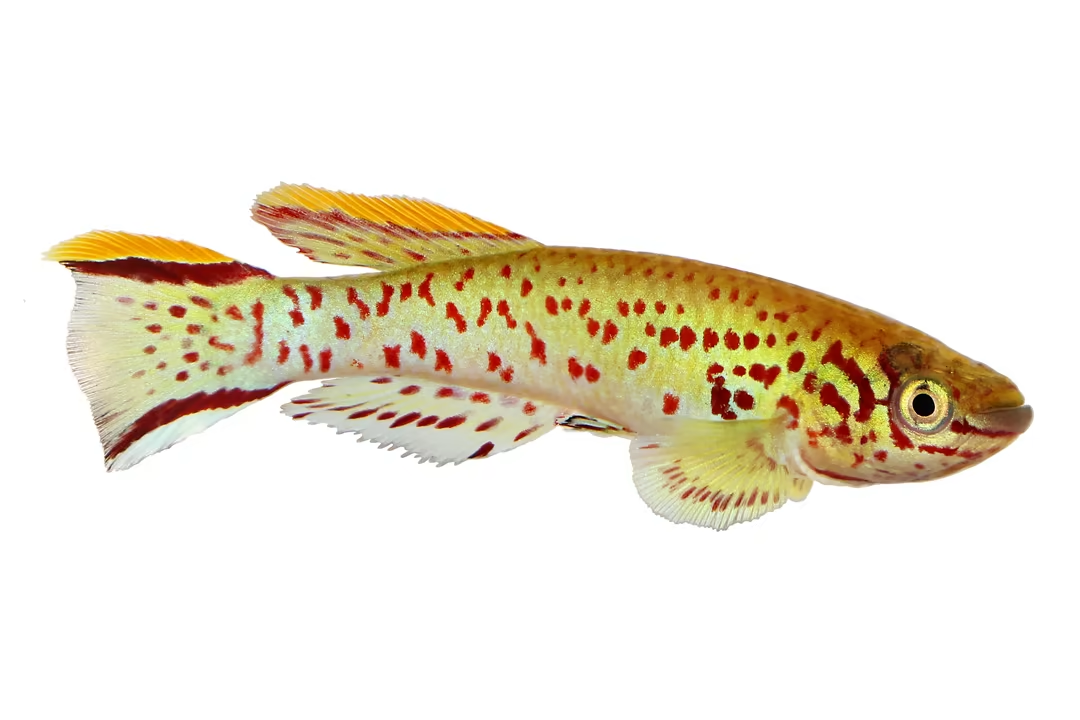
Killifish Care Guide: Unlock Vibrant Health for Your Aquarium Fish
Learn more about Killifish and their care to see if they are the right aquatic life to begin or add to your aquarium.
Updated on October 23rd, 2025
- New Pet
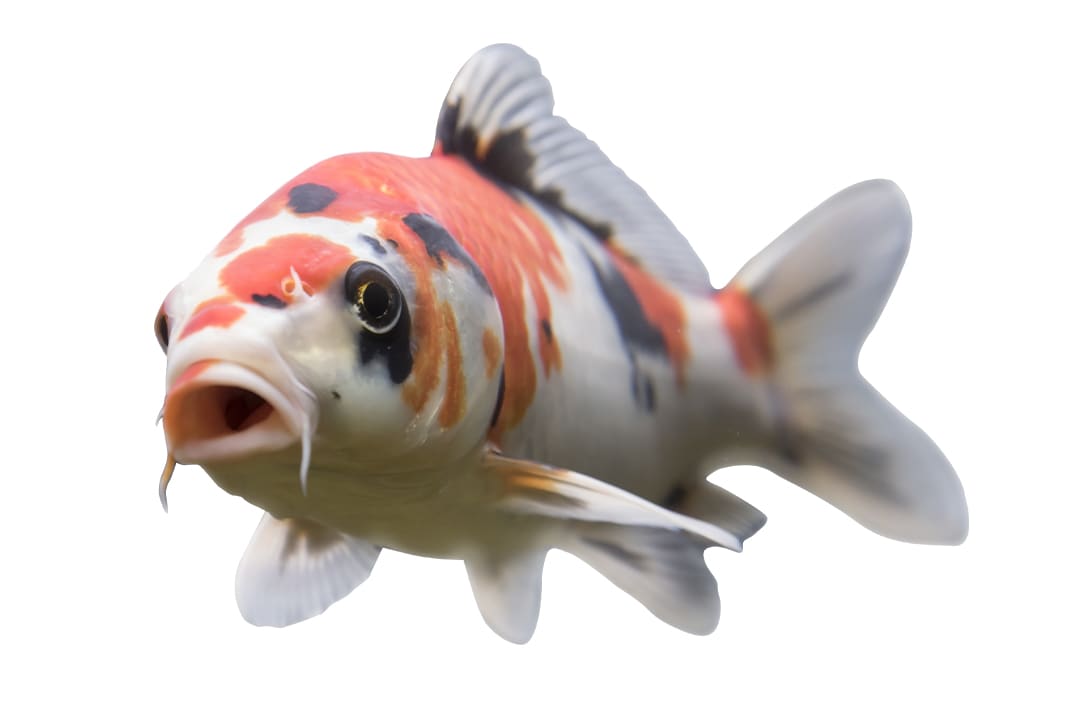
Mastering Koi Care: Optimal Tank, Food, Water Quality & Health Tips
Learn how to care for a Koi, recommended diet and aquarium setup. Find Koi for sale, supplies and equipment at your neighborhood Petco.
Updated on October 23rd, 2025
- Health & Wellbeing
I clean my fish tank because it got really cloudy I put in all the drops that are supposed to. Woke up the next morning and three of my fish were dead. So I clean my water again and put the remaining fish back in it. But my fish tank is cloudy once a
This cloudiness is likely due to a bacterial bloom. This can happen if a tank is not properly cycled. Changing the water may make the condition worse. The fish could have been killed by elevated ammonia or nitrite levels. Use a home test kit or submit a water sample for testing. Most pet or fish stores will do this for free or for a nominal fee. If it is a new tank, allow it to properly cycle. This can take 4 or more weeks for the beneficial bacteria to populate the tank and filter. Once ammonia and nitrites are at 0.25 ppm (parts per million) or less and nitrates are at 40ppm or less, you can add fish. Goldfish are cold water fish and do best between 65 F and 72 F. They also need a larger aquarium than most fish. 20 gallons per fish plus an additional 10 gallons for each additional fish is recommended. They produce a larger than normal bio load which can quickly foul water, so a filter rated for at least twice the tank volume is strongly recommended as well.
Updated on September 24th, 2025
- Health & Wellbeing
My new fish tank is being occupied by some white cotton web like thing at the bottom.. the are found on the natural plants and food remainings in the tank.. please help .. how to get rid of it? I tried changing the water 3 times..
Thanks for reaching out. This problem is perplexing, but possibilities include fungal or bacterial overgrowths. A good cleaning might help to alleviate your problems. Continue to test water quality and correct problems. Sometimes the over-growth of anaerobic bacteria (those which grow in low or no oxygen conditions, at the bottom of the tank), can form strange formations of detritus. Submitting a sample to a lab might help determine an answer. Good luck.
Updated on September 24th, 2025
- Health & Wellbeing
We change the water in the tank and fed the fish the fish ate and now it is floating upside down but still breathing what is wrong?
ECheck the water chemistry. The recent water change may have upset it. Use a liquid home test kit or submit a sample for testing to confirm 0 ppm ammonia and nitrites with a 40ppm or less nitrate level. Confirm proper temperature for the species of fish as well. If necessary, another partial water change can be done to stabilize chemistry and maintain water quality. Use only aged or conditioned water that is temperature matched to prevent further stress or shock. My preferences for conditioners include AmQuel Plus, NovAqua and StressCoat. Other options include StressZyme and Prime. To manage swim bladder issues, withhold food for 2-3 days then feed bits of cooked and shelled green peas. Do this until the fish is swimming and defecating normally. Fast one day a week to maintain regularity.
Updated on September 24th, 2025
- Health & Wellbeing
So today I went to feed my fish when i noticed white specs all over the filter where the water dispenses the filtered water back into the water I think it is mold but please help me out here because I am no expert
Thanks for reaching out about Corn and including photos. This could be mineral deposits but is difficult to tell in the photos. Mold usually does not grow below the water level as needs oxygen. Clean the filter well. A sample of the material can be acquired and a veterinarian might be able to help by examining under the microscope. Good luck.
Updated on September 24th, 2025
- Health & Wellbeing
hi... i need help and fast... i recently bought a black moor goldfish and another type of gold fish. and my black moor has what looks like on his/ her cornea a fungus? something. its white and on both eyes, and on the side of him/ her. i am worried a
Check the water chemistry first. Elevated ammonia levels may result in a cloudiness to the eye(s). Use a master test kit (liquid, not strips) at home or submit a water sample for testing. Most pet stores will do this for free or for a small fee. Perform partial water changes daily, in indicated, to stabilize chemistry and maintain water quality. Use only aged/conditioned water that is temperature matched to prevent stress or shock. If chemistry is fine, it could be bacterial infection. A broad spectrum antibiotic, such as kanamycin, can be used for treatment. Look in the local pet store or Petco for "KanaPlex". It should be in the aquarium section. Follow label directions carefully and remove the carbon filter insert during treatment. Plain aquarium salt (NOT table or Epsom salt) can be used as a general tonic to reduce stress, improve gill function, treat minor infection and aid in recovery. Dissolve 1 teaspoon of salt per gallon of water in a cup of tank water and gently pour it
Updated on September 24th, 2025