Two Easy Ways to Start Earning Rewards!
Earn 2X Pals Rewards points at Petco
when you use Petco Pay!
Get It Today
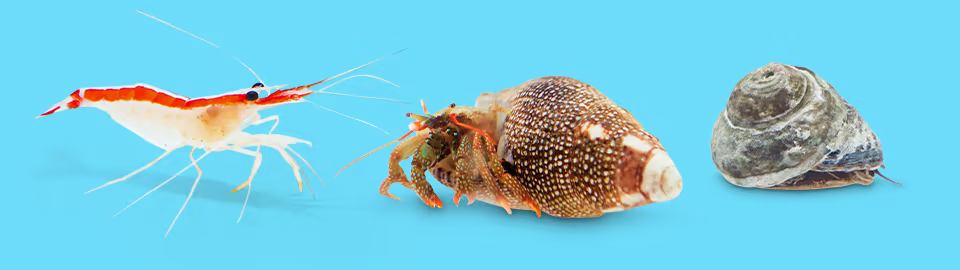
Visit Petco to learn about cleanup crews and how they can help your aquarium health.
Updated on March 5th, 2026

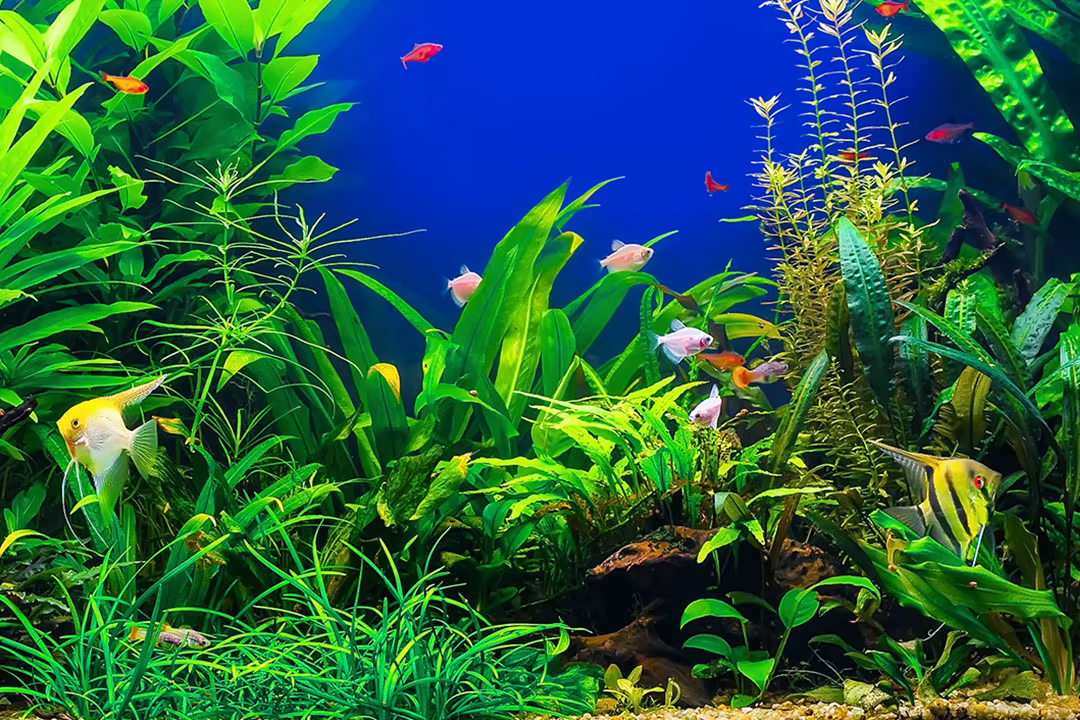
Tanks with live plants can be excellent additions to your home, bringing a touch of nature indoors. Learn how to take care of aquatic plants.
Updated on March 5th, 2026
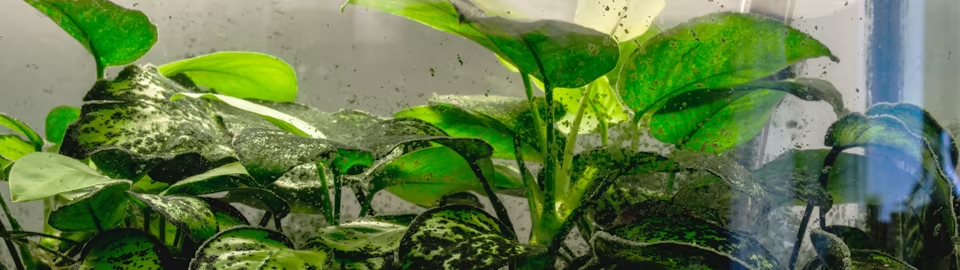
Learn how to safely handle your aquatic life to avoid toxin & bacterial exposure. Find aquatic life care supplies at your neighborhood Petco pet care center.
Updated on March 5th, 2026
Learn how to pick the right aquarium plants, substrate, lighting, and fertilizers to ensure that your aquarium plants thrive and stay healthy.
Updated on March 5th, 2026
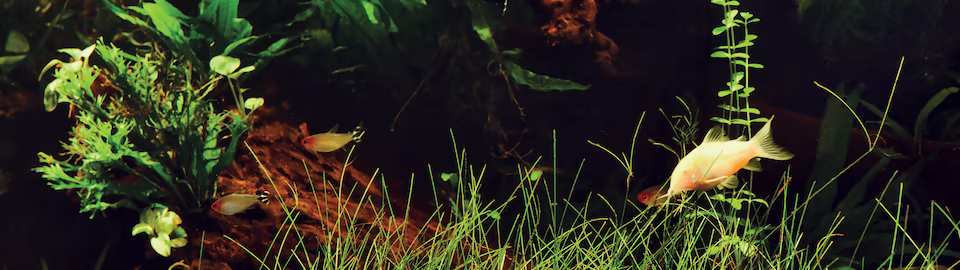
Find out what tools you’ll need and discover the best way to get your aquarium back on track without starting over and find out how to maintain a clean fish tank.
Updated on March 5th, 2026
Hello, and thank you for using Boop by Petco. The most common (and easiest) way to clean a fish tank is with a siphon-style cleaner. Fish tanks should be cleaned in stages, generally replacing 10-15% of the water at a time. There are times where a larger cleaning might be necessary, but removing the fish and changing too much of the water at once can be quite a shock and can be dangerous to the fish, so this should be saved for only extenuating circumstances. Here's a helpful video on using a siphon cleaner: http://video.petco.com/v/18852/how-to-clean-your-aquarium-with-the-aqueon-siphon-vacuum-/ And some more reading you may find interesting on general fish tank cleaning and maintenance: http://www.firsttankguide.net/waterchange.php Hope this helps!
Updated on November 25th, 2025
If you are getting hard water deposits, use a utility razor and gently scrape the deposit off the glass. When you're doing a water change, if the water level drops below the deposits, use a cloth dampened with plain vinegar and scrub. Be careful to not allow any vinegar into the water. Wipe it well with a clean cloth to remove any vinegar residue and refill. Ideally, the tank should be emptied, sprayed with vinegar, sit for 10-20 minutes then scrubbed or scraped.
Updated on November 25th, 2025
Without anything to use for scale, it is hard for me to tell how big your tank is, but in general it seems very small. Also, the water that is in the tank appears very cloudy right now, so that would be the first place to start. Water quality is very important, and will make or break your ability to house and care for fish. I would recommend getting a good filter system (you can visit a local pet store to assist you with brands in your area, as I am not familiar with what you can get in India). Be sure to bring the measurements (height, length, width) of your tank, or the gallons or liters so they can tell you what capacity of filter you will need. Everything else will depend on what types of fish you get - if you plan on getting multiple fish, they will need to be small - a general rule of thumb is one square inch of fish per gallon of water. Depending on the species you get, you may need to also get a bubbler to ensure there is enough oxygen in the water for them, and you will also
Updated on November 25th, 2025
The brown marks are likely diatom growth. You can rid the tank of them by confirming or providing adequate filtration, increasing water motion (use powerheads to create current), remove any tank furniture and scrub with a stiff brush or bleach it, perform a 30-50% water change before returning tank furniture, regulate light exposure (use a timer on tank lights), repeat this process every 2 weeks. You will see less diatom growth after each cleaning. If possible, consider moving the goldfish into a larger tank, at least 75 gallons if you have the space.
Updated on November 25th, 2025
The cone-shaped snails you are referring to are most likely Malaysian Trumpet Snails. A sustained population of Malaysian Trumpet Snails is supported by an abundant food source usually in the form of organic debris or sludge in the substrate. The green water algae can also be attributed to excess nutrients in your aquarium. If you haven't done so already, be in the practice of siphoning your substrate during every water change to remove trapped organic debris and prevent build up. While it maybe tempting to siphon your entire substrate bed, be sure to clean no more than 1/3 at a time to maintain a healthy population of beneficial bacteria that live in the substrate and make up a significant portion of your biological filter. Be sure to use a dechlorinator and a bacterial additive with each water change to ensure a healthy environment for your fish and biological filter. The population of Malaysian Trumpet Snails will diminish naturally over time as you reduce their food source. In
Updated on November 25th, 2025