Two Easy Ways to Start Earning Rewards!
Become a member today! Members-only pricing and offers, personalized care notifications, Vital Care points back on every purchase and more!
 Become a credit card member today!
Earn 2X Pals Rewards points at Petco
when you use Petco Pay!APPLY NOWLearn More About Petco Pay Benefits
Exo-Terra Reptile Habitat Plants & Logs
Get It Today


Related Searches
Related Articles & Questions
- New Pet
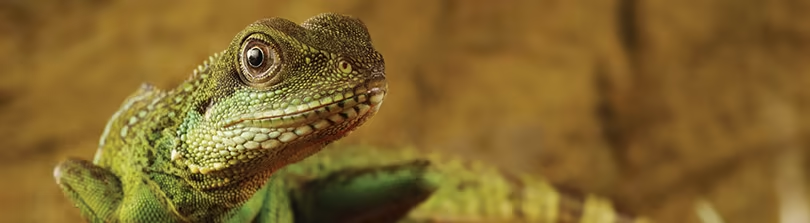
Reptile Enclosure Setup: Create a Thriving Habitat for Your Pet
Learn how to setup your reptiles terrarium to ensure your reptile lives a wholesome & happy life. Shop at your local Petco for all reptile terrarium needs.
Updated on November 13th, 2025
- New Pet
How to Prevent Reptile Illness: Safe Handling & Habitat Cleaning
Read these guidelines about handling reptiles to provide a safe and fun environment for your pet, friends and family.
Updated on November 13th, 2025
- New Pet
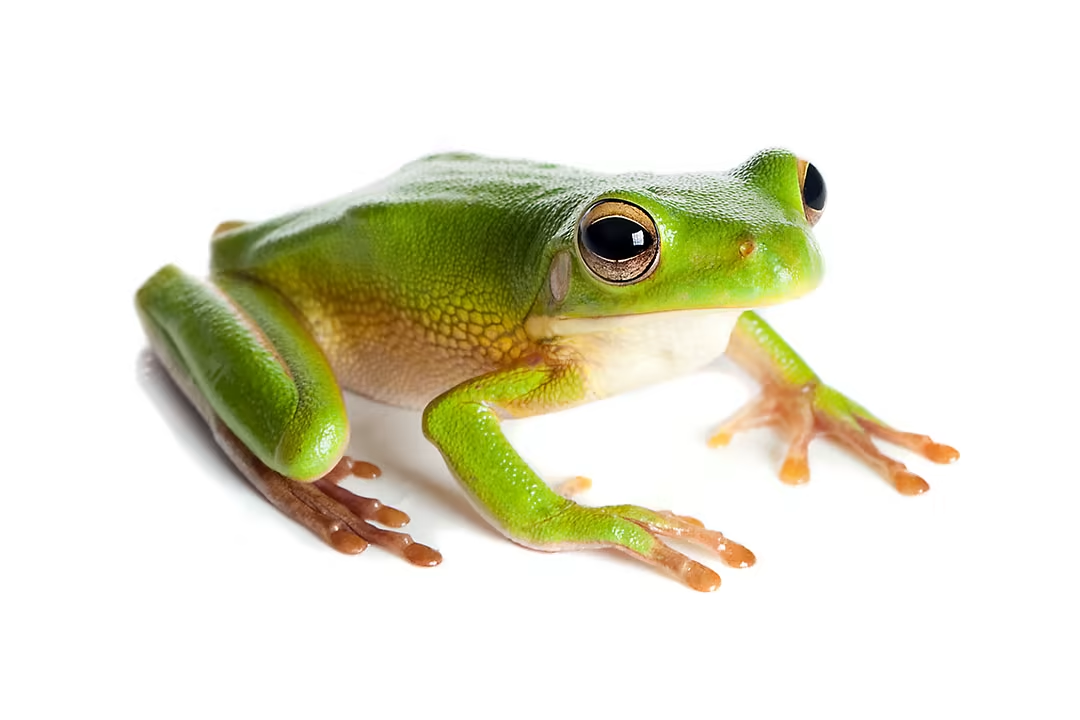
Ultimate Tree Frog Care Guide: Habitat Setup, Feeding & Health Tips
Tree Frogs love to climb, and become active and vocal and dusk. Learn how to take care of tree frogs, what to feed them, and how to set up their habitat.
Updated on November 13th, 2025
- New Pet
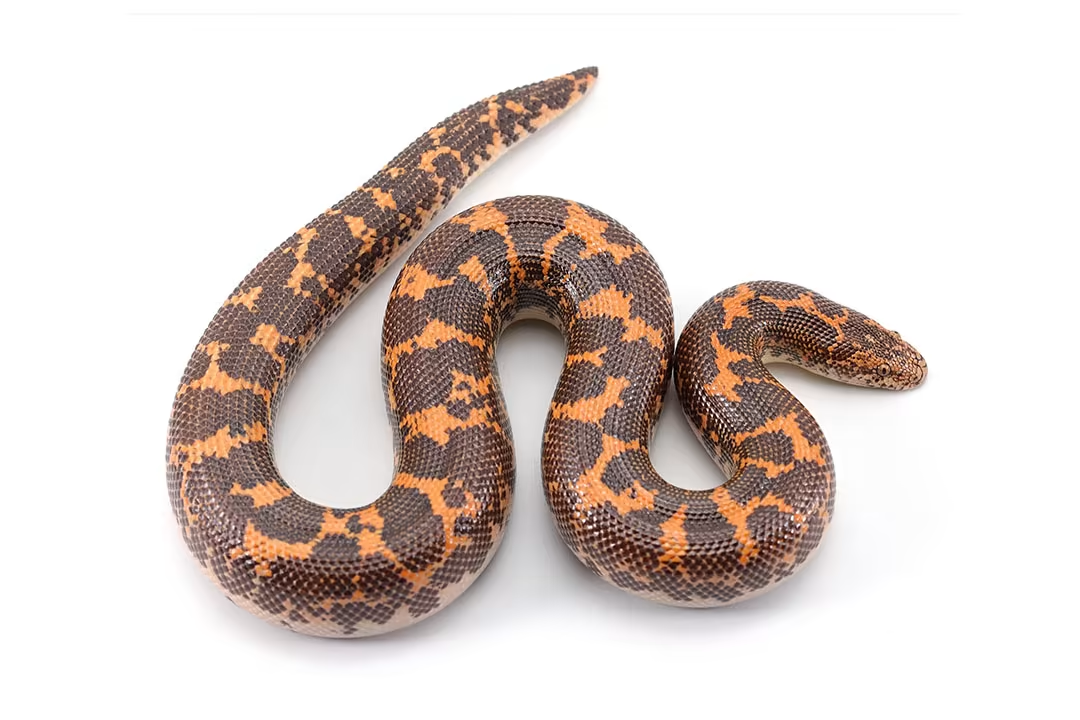
Sand Boa Care: The Ultimate Beginner's Guide to Food, Habitat & Health
Learn how to care for a Sand Boa, recommended diet and habitat setup. Find the right food, supplies and equipment at your neighborhood Petco.
Updated on November 13th, 2025
- New Pet
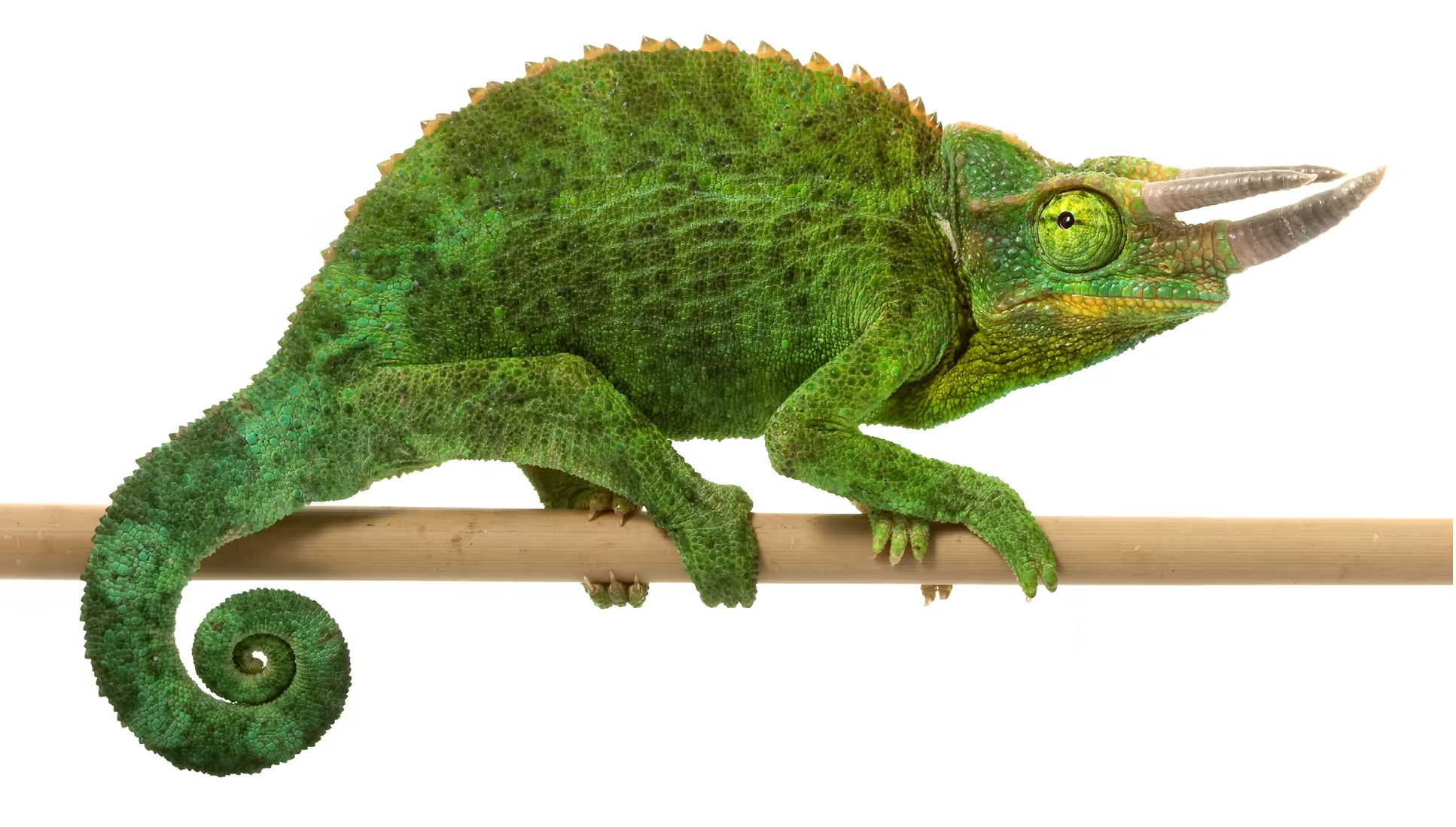
Jackson's Chameleon Care: Thrive Guide for Food, Habitat & Health
Learn how to care for Jackson's Chameleons, recommended diet & habitat setup. Find the right food, supplies & equipment at your neighborhood Petco.
Updated on November 13th, 2025
- Health & Wellbeing
How do I know if my snake is overheating ? I got a new heating mat today and I’ve noticed that it’s getting out of its hide to the other side more often than usual but he doesn’t seem to stressed or anything he just lays half his upper body there wit
The addition of an under-tank heater can change the temperature of an enclosure significantly. To determine what the temperatures are within Ladon's enclosure, I would recommend utilizing digital thermometers. These should be located on both the warm and cool end of the enclosure, and should be located at Ladon's level (not higher or lower than him). With that information, you can tell if the temperatures are now too hot or not. I would also recommend that you have hides present on both the cool end and on the warm end - this will provide Ladon with choices within his enclosure as well. With the water bowl, this may also be related to his enclosure temperature. I would recommend monitoring for any changes once you have determined if the temperatures are appropriate for his species. You can refer to a care sheet if needed to gather temperature information. I hope that answers your question, and thanks for using Boop by Petco!
Updated on August 12th, 2025
- Health & Wellbeing
Good morning I bought a green tree python from you guys about 1 month ago. She is looking a little dull in color, what might she need? Also does she need substrate in her home? Thank you
Snakes typically do not need supplements or extra vitamins. If she is looking dull it is most likely because she is getting ready to shed. Another possibility is improper cage lighting. Do you have a full spectrum lamp on her cage? That helps bring out their coloration. I would recommend coconut husk for a substrate to help hold the moisture in the cage so humidity levels will be adequate. Here is a full care sheet that may answer more of your questions. ( http://www.reptilesmagazine.com/Care-Sheets/Snakes/Green-Tree-Python/ ) Hope this helps. Best wishes.
Updated on August 12th, 2025
- Health & Wellbeing
My bearded dragon never really been very active but she's alert and her eyes are clear, etc, but she stopped shedding sometime this fall and she doesn't go to the bathroom very often but she isn't blocked. She has at good appetite and I feed her ever
Thanks for your question about Tarzan. The lack of activity that you are describing may be normal for Tarzan, but when you then combine it with her not shedding and not going to the bathroom very often I begin to suspect that there is something else going on. I would recommend feeding Tarzan a small salad of dark leafy greens on a daily basis, with calcium supplementation 2-3 times per week based on her age. I would also recommend protein 2 times per week based on her age as well. You eluded to having recommended temperatures in the cage, but I didn't see how you were monitoring the temperatures or if there was UVB light provided. I would recommend monitoring using a digital thermometer and changing the UVB light every 4-6 months. I am glad that she seemed to be doing okay at her vet visit in the fall. I didn't see if blood work was performed, but that is something that I recommend for every reptile at regular intervals for wellness examinations, as reptiles are very good at hiding th
Updated on August 12th, 2025
- Training & Behavior
Hello. So this probably isn’t a question you get much but I was wondering if you guys would know. I want to attach a moss ball to drift wood. I have seen how to do this but people always use drift wood. Would you know if it would attach to a branch f
Thanks for reaching out about Juno. Regarding which type of wood to use, many wood can be toxic. The idea of driftwood is that they are dried, bleached and have soaked for extended periods of time to leach out potential toxins. As the sap leaches into the water, potential materials either toxic or dangerous to the biological filter could cause problems. The wood from fruit with pits (peach, nectarines, etc.) and applewood potential contain cyanide. Oak and other hard woods have resins that could affect fish. Good luck.
Updated on August 12th, 2025
- Health & Wellbeing
Today my turtle isn't active as he normally is. He stands at the bottom of the tank as still as a croccodile or folds his head or legs into his shell. I did a water test and made sure ph is okay, I placed that calcium thing in the water, the temperat
Recheck the water and air temps with a different thermometer. Typically, the behavior you are seeing, in the absence of additional symptoms, is usually due to low temps. Check him over for obvious injury or trauma. Monitor for persistent or worsening lethargy, loss of appetite, discharge from the eyes/nose/mouth, blowing bubbles or "gaping" (holding mouth open or repeatedly opening/closing it). If necessary, have him examined by your veterinarian or by a veterinarian experienced in treating reptiles. You have an amazing habitat for your species of turtle. When he eats, make sure he doesn't ingested any of the gravel. Additionally, offer some fresh chopped greens since these turtles are omnivorous.
Updated on August 12th, 2025