Two Easy Ways to Start Earning Rewards!
Become a member today! Members-only pricing and offers, personalized care notifications, Vital Care points back on every purchase and more!
 Become a credit card member today!
Earn 2X Pals Rewards points at Petco
when you use Petco Pay!APPLY NOWLearn More About Petco Pay Benefits
Exo-Terra Reptile Habitat Light Fixtures & Hoods
Get It Today


Related Searches
Related Articles & Questions
- New Pet
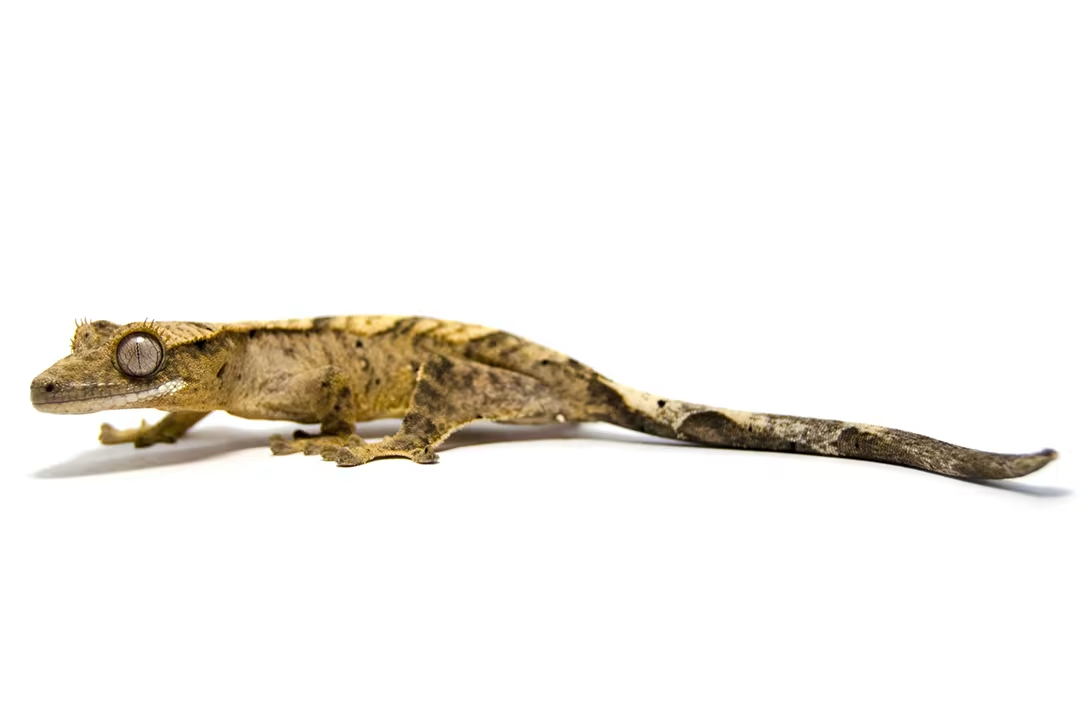
Crested Gecko Care: Habitat, Diet, Health, Supplies - Ultimate Guide
Learn how to take care of your Crested Gecko, tank size, diet & habitat setup. Find the right food, supplies and equipment at your neighborhood Petco.
Updated on November 13th, 2025
- Seasonal Topics
How to Keep Your Reptiles Cool in Emergencies and Excessive Heat
Whether you temporarily lose access to AC or are experiencing unexpected temperature changes, you can use these tips to keep your reptiles happy and healthy.
Updated on November 13th, 2025
- New Pet
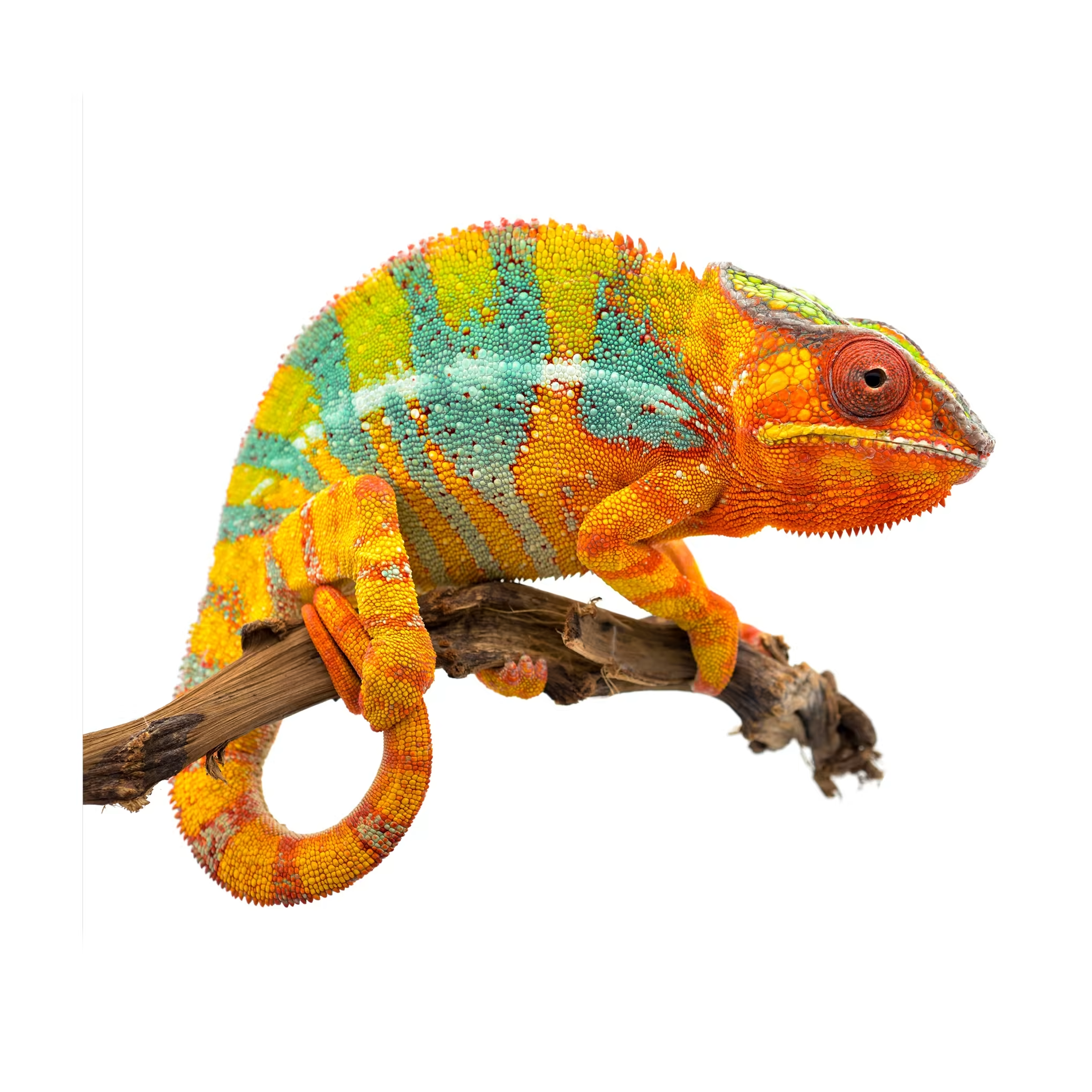
Warm Climate Chameleon Care: Best Food, Habitat & Health Tips
Learn how to care for warm climate Chameleons, recommended diet & habitat setup. Find the right food, supplies & equipment at your neighborhood Petco.
Updated on November 13th, 2025
- New Pet
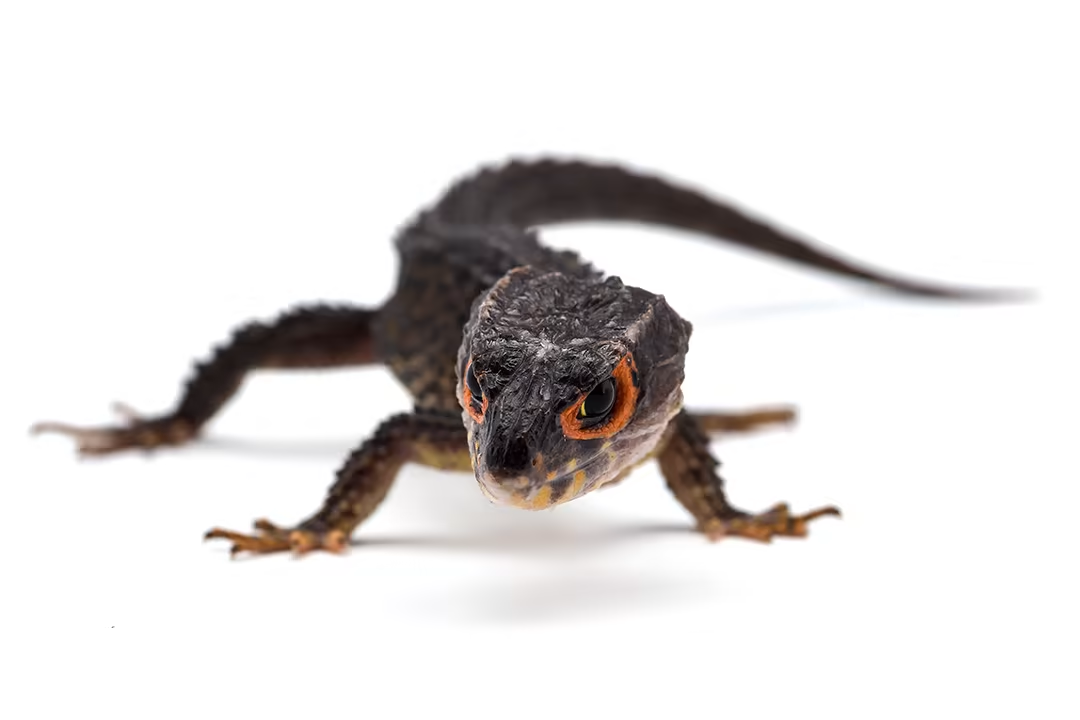
Ultimate Red-Eyed Crocodile Skink Care Guide: Habitat, Food & Health
Learn how to care for Red-Eyed Crocodile Skink, recommended diet & aquarium setup. Find the right food, supplies & equipment at your neighborhood Petco.
Updated on November 13th, 2025
- New Pet
How to Care for Colubrid Snakes: Food, Habitat & Health Tips
Learn how to care for Colubrids recommended diet and habitat setup. Find the right food, supplies and equipment at your neighborhood Petco.
Updated on November 13th, 2025
- Health & Wellbeing
Since full spectrum growl lights for plants are supposed to mimic natural sunlight (is that correct?) then can I use that for my green anole lizard glass cage and save all that cost for a uvb light? I also have a heating pad for my back I could put u
Hello. For the best health & living conditions for your anole, please only use products designed for them. Heating pads are dangerous & reptiles are not plants & require a very specific spectrum of light to grow in a healthy manner. In the long run, you will have less problems & metabolic health issues if you prepare a proper environment for your pet. Thanks for using Boop by Petco.
Updated on August 12th, 2025
- Health & Wellbeing
What kind of lighting does a red eared slider need, I tried to look it up online but I get confused with all the types of lights... Please help!!!!!!!
A RES requires full spectrum lighting (UVA and UVB) and lighting that provides heat. The dry dock, or basking area, should be completely out of the water. Basking temps should range between 90F and 95F (32-35C). You should place the UVA/UVB bulb as close to the heat lamp as possible. It should be no more than 12" away from your RES and should not have a barrier between it and your turtle. Glass, acrylic and plastic block UVB while screens with grids under 1/2" can obstruct a good portion of UVB rays negating the health benefits. Lighting should be on for around 12 hours a day, depending on the time of year. Full UVA/UVB bulbs need replacing every 6 months. The simplest combination for adequate lighting is a UVA/UVB fluorescent bulb and an incandescent light bulb (for heat). Incandescent light bulbs are standard household lights easily purchased at stores such as Home Depot or Lowes. Make sure your RES cannot splash water on it or come into contact with it. You can also consider halog
Updated on August 12th, 2025
- Health & Wellbeing
What should I feed my red ear slider with shell pyramiding and how often?Also which heat lamp would you recommend?Picture 1 or 2?How many watts should I get for the heat lamp?
A proper diet for red-eared sliders includes a complete pellet, such as those made by ReptoMin, and dark leafy green vegetables. This can be fed once per day, and the amount should be based on how many pellets Cooper can eat in 5-7 minutes. This is just a guideline, and your veterinarian can help you to determine if this is appropriate based on Cooper's body condition score (i.e. whether she is overweight or not). For a heat lamp - photo 1 just looks like the dome, and there doesn't appear to be a bulb in it. The second lamp looks like it is a daytime only heat lamp - it is often beneficial to have a heat source that can be used during the day or at night, and if that is what you are looking for, I would recommend a ceramic heat bulb. If you are looking for only a daytime basking bulb, there are many brands that would be appropriate. The key words that you should look for are "daytime basking bulb." For watts - it depends on how far the bulb is away from your turtle - there are some b
Updated on August 12th, 2025
- Health & Wellbeing
How should you care for your reptile during a power outage?
Here are some tips on how to care for pets who require continuous heat, such as reptiles and snakes: - Before a power outage, if possible, buy a generator. This will allow you to keep your reptiles warm during the outage. - Amphibians will do okay without heat for a period of time. Try to limit the number of times you open the habitat. - For a heat source, you can go to your local sporting goods store and purchase the heat packs used to warm feet and hands. These can be placed underneath the habitat (just like you would place an electric heating pad). This will allow your reptile to get heat. Do not put the pack into habitat with the reptile. - Another way to warm cold reptiles is to use a pillowcase. Place the reptile gently in the case and place the pillowcase next to your body under your shirt for warmth. - Pillow cases can also be used to transport reptiles if needed. - Do not feed your reptile as they need heat to digest their food. - You can save plastic milk
Updated on August 12th, 2025
- Health & Wellbeing
What is the best gecko or other small reptile for a beginning reptile keeper that is relatively cheap not counting snakes because my boyfriend won't let me have one. One of my local pet stores has tokay geckos and leopard geckos the other one has a c
Leopard geckos are great "starter" reptiles. They don't require special lighting (UVB) like other reptiles. A 20 gallon tank is big enough for one. Add a heat source, hides and a water bowl and you are good to go. You can review gecko care at the links below. http://www.reptilesmagazine.com/Care-Sheets/Lizards/Leopard-Gecko/ http://www.anapsid.org/leopardgek.html
Updated on August 12th, 2025