Two Easy Ways to Start Earning Rewards!
Become a member today! Members-only pricing and offers, personalized care notifications, Vital Care points back on every purchase and more!
 Become a credit card member today!
Earn 2X Pals Rewards points at Petco
when you use Petco Pay!APPLY NOWLearn More About Petco Pay Benefits
Fluker's Ball Python Food
Get It Today


Related Articles & Questions
- New Pet
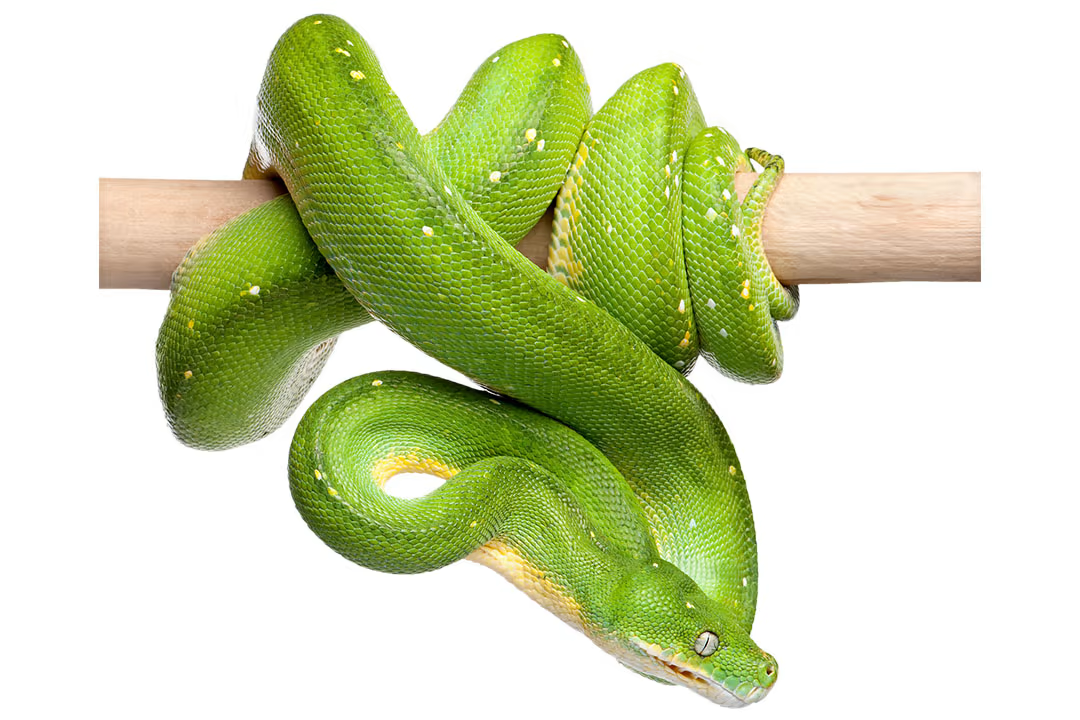
Raise a Healthy Python: Food, Habitat, Health & Handling Tips
Learn how to care for a Python, recommended diet & habitat setup. Find the right food, supplies & equipment at your neighborhood Petco.
Updated on November 13th, 2025
- New Pet
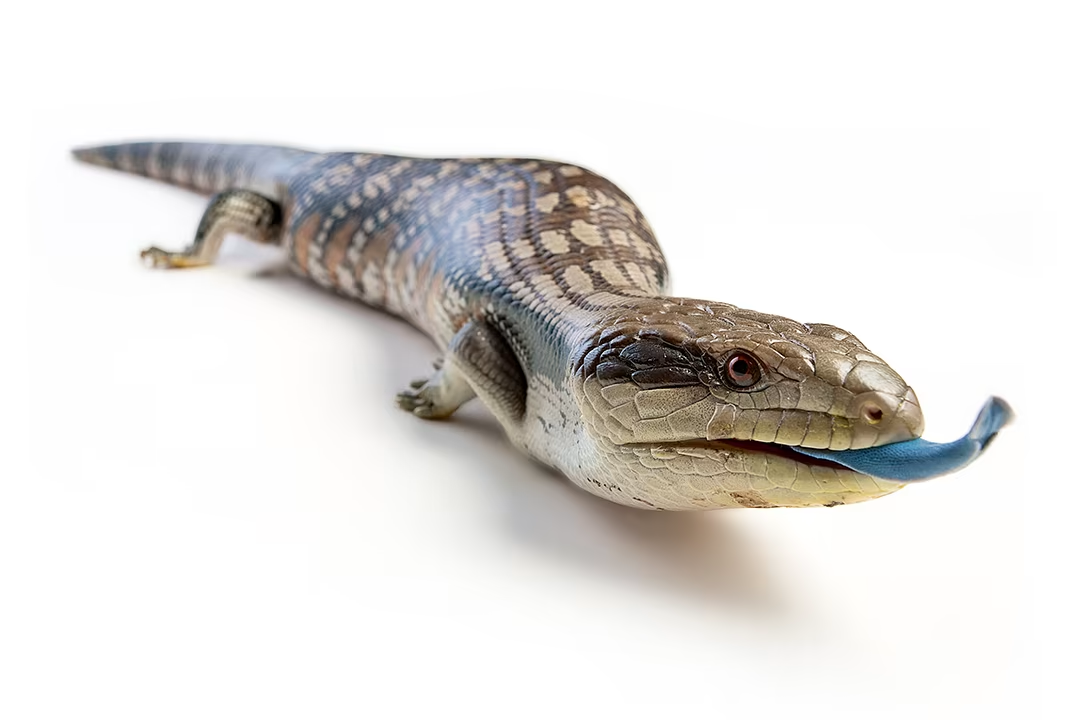
Tropical Skink Care: Habitat, Food, Health & Handling Guide
Learn how to care for Blue-Tongued Skink, recommended diet and habitat setup. Find the right food, supplies and equipment at your neighborhood Petco.
Updated on November 13th, 2025
- New Pet
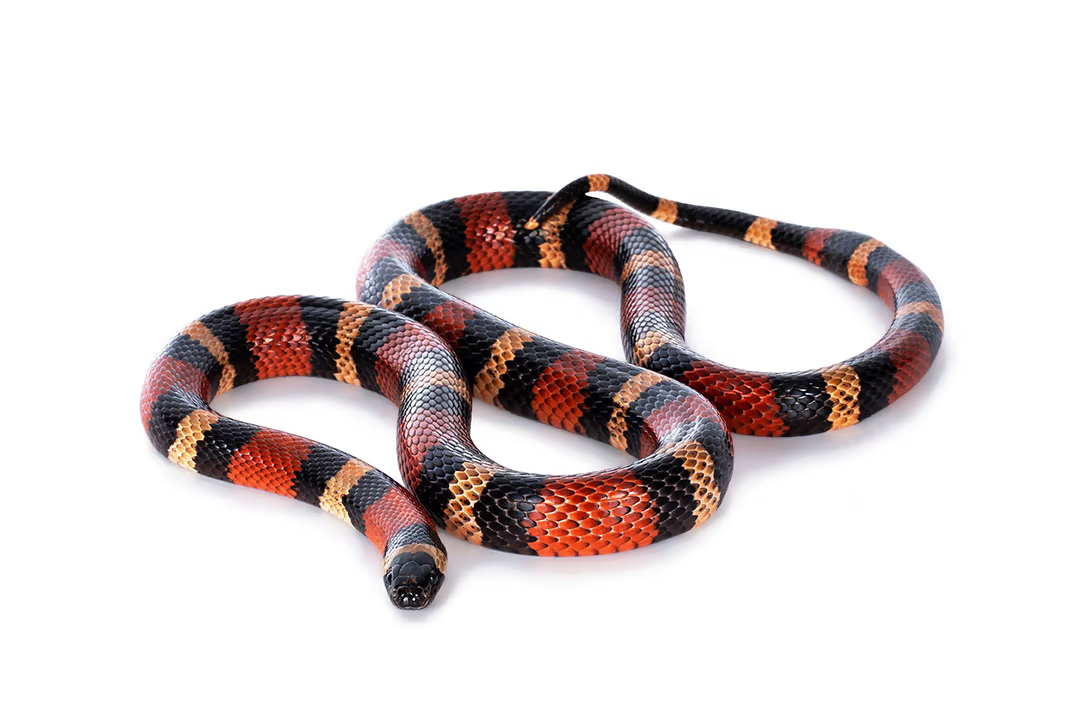
Milk Snake Care: Your Complete Guide to Habitat, Food & Health
Learn how to take care of Milk Snakes, recommended diet and habitat. Find the right food, supplies and equipment at your neighborhood Petco.
Updated on November 13th, 2025
- New Pet
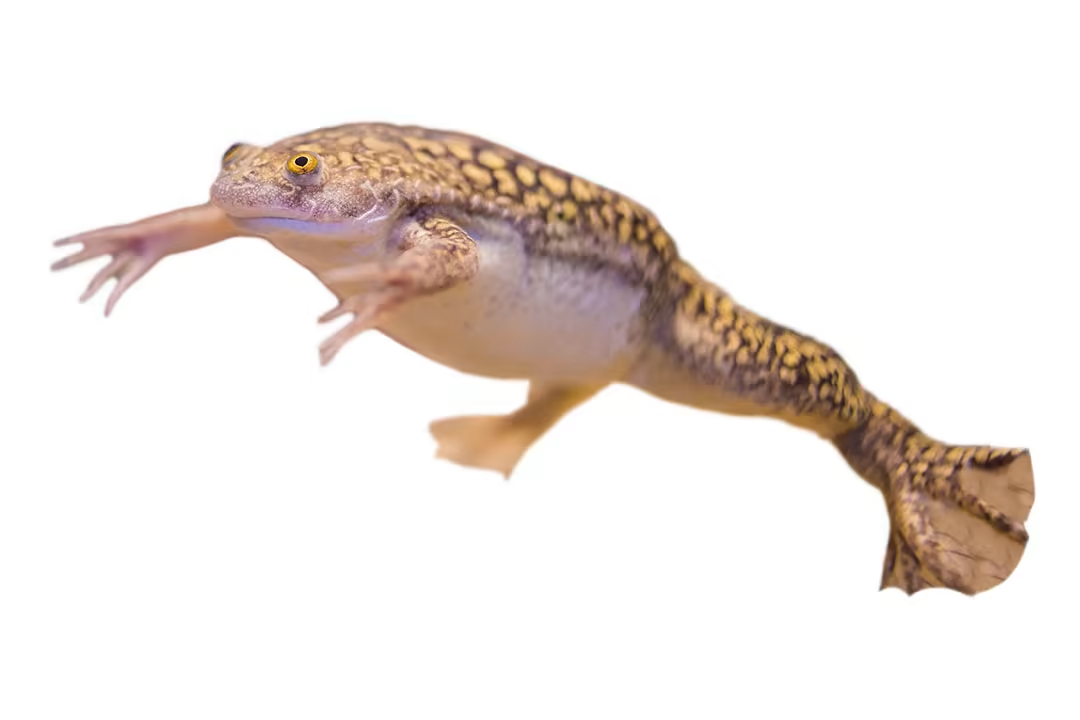
Freshwater Amphibian Care: Ultimate Tank, Food & Habitat Guide
Learn how to care for Freshwater Amphibians, recommended diet and habitat setup. Find the right food, supplies and equipment at your neighborhood Petco.
Updated on November 13th, 2025
- New Pet
Corn Snake Care Guide: Habitat, Food, Health & Easy Beginner Tips
Corn Snakes are named for the pattern of their belly scales that resembles maize. Learn what to feed them, how large they grow, how to house them and more.
Updated on November 13th, 2025
- New Pet
I adopted my ball python (~3 yrs old) on 11/01/19, and she ate a frozen-thawed mouse on 11/04/19. But, despite offering her another mouse every 1-2weeks, she has refused to eat again. She is currently shedding, though I think she is almost done. I am
I suggest you just not feed her for a few weeks and then try again. Her lack of appetite may be due to shedding. Reptiles can not eat for months and still be fine. It is not ideal for them to go quite that long though. So, wait a few weeks, try again with frozen-thawed and see what happens. You are welcome to post again if she doesn't eat and we can see if we can help you better. Be sure he cage temperature is correct. If they are too cold they often won't eat. Basking spot temperature should be 88 to 96 degrees Fahrenheit and an ambient temperature of 78 to 80 degrees. The ambient temperature should not fall below 75 degrees.
Updated on August 12th, 2025
- Health & Wellbeing
Hello. I am already an owner of a snake but I have recently rescued a ball python. Approximately under a year old and his previous owner kept him in a small container with no heat mat or climate control. I have had him for three weeks and he will not
Snakes have a very slow metabolism. So, it takes them a long time to get sick and conversely a long time to get better. Overall from the photo he doesn’t look too bad, just thin. Just get all your husbandry 100% correct and he should come around. ( https://mobile.petcoach.co/amp/article/ball-python-python-regius-basic-husbandry-and-feeding-housi ) If you keep trying to feed him and he doesn’t want it that can cause food aversion. So, it’s best to offer him nothing for a few weeks. Snakes can go very long time without eating so I wouldn’t really be worried about that. When you do start feeding him start with a lot smaller pray than you would normally use (like pinkies). Are you using live or pre-killed food? If you’re trying pre-killed he may not be used to that . He also may be in brumation so keep that in mind. Hope this helps. If you have more questions you are welcome to post again or you can opt for a private consultation if you want to chat back and forth. Best wishes.
Updated on August 12th, 2025
- Health & Wellbeing
I have a 13-14 year old ball python with a dry spot on his skin that he's had for almost 3 weeks now. What can I do?
Thanks for reaching out about Natas and including photos. This could be something as simple as dry skin, so application of an olive oil once every few days might help return the skin integrity to normal. Remove any substrate that could adhere the lesion. A veterinary visit is recommended to assess and provide a diagnostic/treatment plan. A fungal or bacterial dermatitis, nutritional deficiencies, and other problems are still possible. Good luck.
Updated on August 12th, 2025
- Health & Wellbeing
My ball Python doesn’t want to eat and it’s been 3 weeks we try to give him fuzzy mice weekly but he will not eat. He finished shedding last week. What should I do?
Snakes can go months without eating and still be OK. Now, I'm not saying to let it go that long but I am saying that you may want to not even attempt feeding him for 2-3 weeks and then try to start up again. If he will still not eat at that point then you should get him to a vet for an exam. I would not be overly concerned about him not eating at this stage. Things you may want to check: * cage temperature - if it is too cold they often will stop eating * intestinal parasites - ask your vet to run a fecal test next time he produces some stool * too much handling/changing the environment, etc - if you are stressing him too much he may not want to eat I suggest you refer to this article for more information. ( https://www.thesprucepets.com/feeding-ball-pythons-1239265 ) Hope this helps. Best wishes.
Updated on August 12th, 2025
- Health & Wellbeing
Hi! I just acquired a ball python, he's very small and should only be a couple months old at the most. I guess I'm the middle of the night he got caught up in some tape that I hadn't seen, and it was like duct tape. I tried to get it off as gently as
Eclipse should be examined by an experienced herp veterinarian. He may need antibiotics to treat or prevent infection. Monitor for discharge, lethargy, odor or loss of appetite. Keep the area clean and dry. You can apply a dab of triple antibiotic ointment topically. Use paper towels as substrate until the spot heals. It may take a a couple sheds, but he should recover. In the future, if he ever gets any adhesive stuck on him, use a bit of olive oil to soak the area then gently remove the adhesive.
Updated on August 12th, 2025