Two Easy Ways to Start Earning Rewards!
Become a member today! Members-only pricing and offers, personalized care notifications, Vital Care points back on every purchase and more!
 Become a credit card member today!
Earn 2X Pals Rewards points at Petco
when you use Petco Pay!APPLY NOWLearn More About Petco Pay Benefits
Fluval Aquarium Air Pumps & Airstones
Get It Today


Related Articles & Questions
- Product Guides
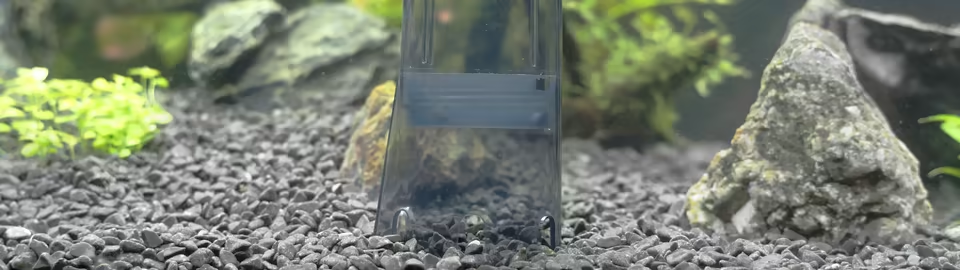
How to Gravel Vacuum: Clean Your Fish Tank for Thriving, Happy Fish
Gravel vacuuming helps remove solid waste from your substrate. Learn about the different types of gravel vacuums available & how to clean your fish tank.
Updated on November 13th, 2025
- Home & Habitat
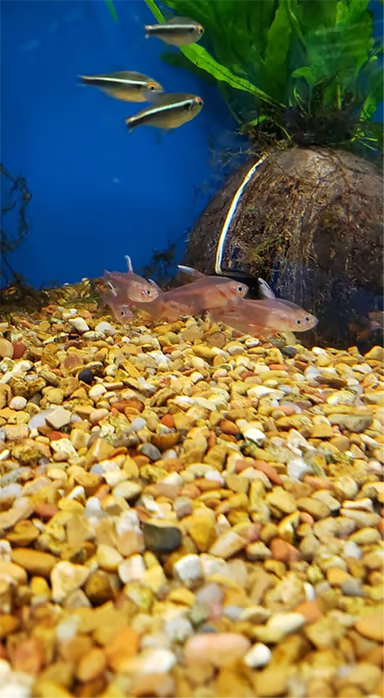
Aquarium Substrate: Choose the Best for Healthy Fish & Plants
Choosing the right substrate for your aquarium is important and provides an area for beneficial bacteria to grow which keeps your aquatic environment safe.
Updated on November 13th, 2025
- New Pet
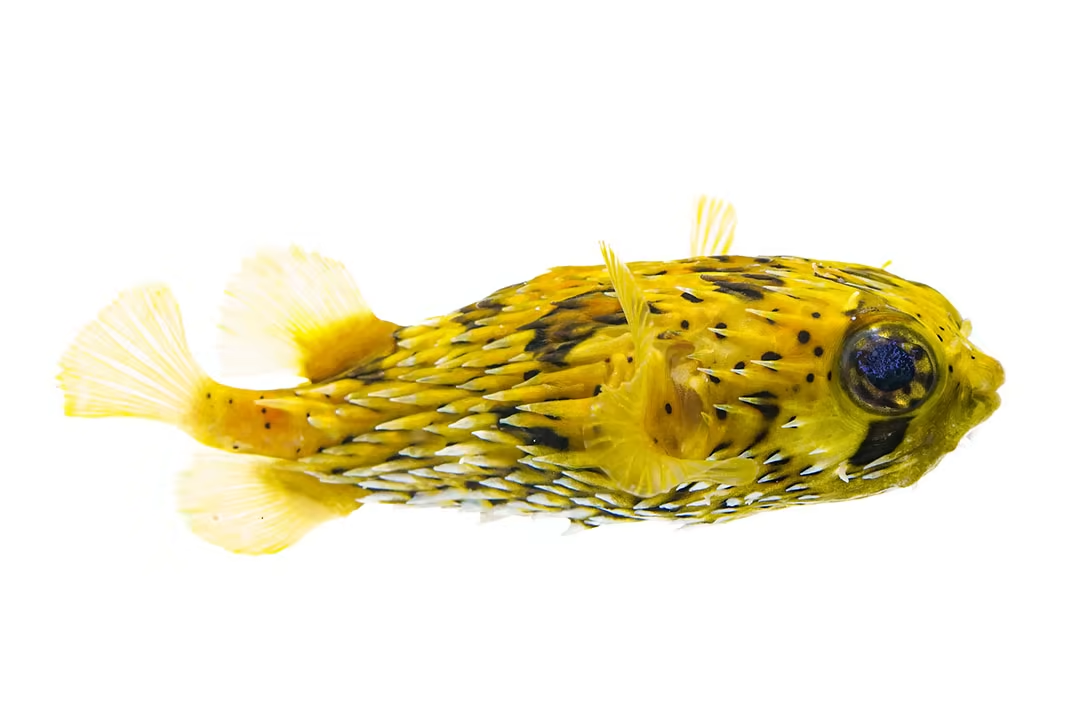
Pufferfish Care: Tank Setup, Diet, & Compatibility for Thriving Pets
Learn how to take care of Puffer Fish, recommended diet and tank size. Find the right food, supplies and equipment at your neighborhood Petco.
Updated on November 13th, 2025
 Product Guides
Aquarium Heaters: Types, Wattage & How to Choose the Best
There's a wide array of heating solutions to provide the optimal temperature for your aquatic friends to thrive. Dive in to navigate options & ideal wattage.
Updated on November 13th, 2025
 Home & Habitat
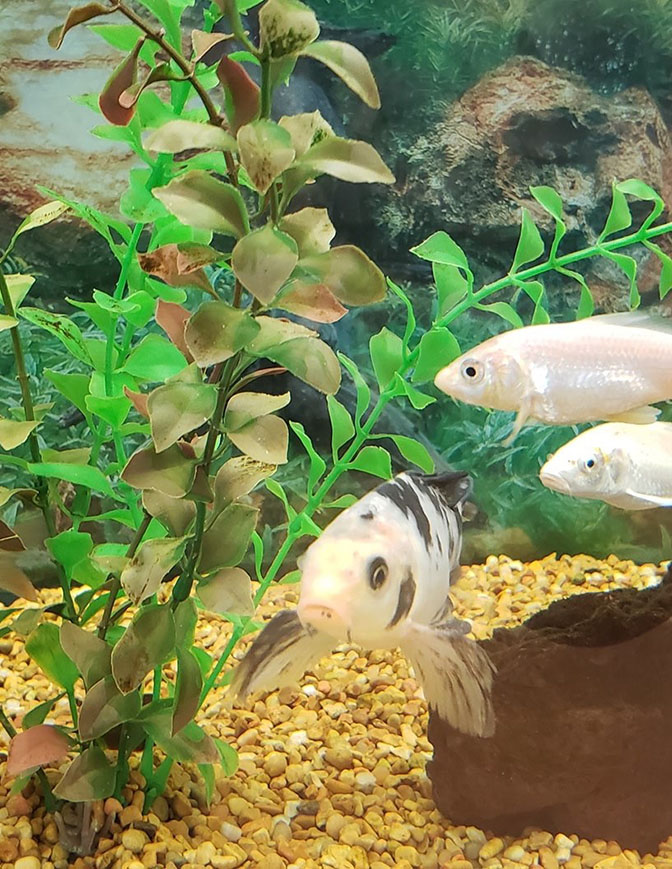
Build Your Outdoor Fish Pond: Setup, Care & Maintenance Guide
When creating an outdoor fish pond you need the right environment, fish and maintenance to keep your water feature looking its best.
Updated on November 13th, 2025
- Health & Wellbeing
Hello, I bought 3 fish (2 cichlids and 1 ray) and an aquarium (90 litres) yesterday. I prepared the aquarium and put the fish inside. However there is a power shortage at the moment. The temperature of the water is fine but what can I do to increase
Hi there! The fish will probably be ok for a day, but if the power doesn't come back on, you should consider purchasing a battery-operated aerator. I highly recommend that all fish owners keep one of these on-hand for situations like this. I don't know if this person ships to Turkey, but a similar product would be fine, too: https://www.ebay.com/p/Rapala-Battery-Powered-Aerator-Model-Raertr-c/1000293148?iid=371986500727 Most fish will come to the surface for air, but they really do need dissolved oxygen to thrive. Good luck!
Updated on August 12th, 2025
- Health & Wellbeing
My fish is acting sick. He is not really eating and he keeps going to the surface to breathe . He is also getting these little what looks like panic attacks and swims very fast and even hits his head constantly on the edges of his tank. I started to
Check water chemistry first. Use a home test kit or submit a water sample for testing. The local Petco may do this for free or for a small fee. Aim for an absence ( 0 ppm) of ammonia and nitrites with nitrates at 20 ppm or less. Perform partial water changes, no more than 30% at a time, to stabilize chemistry and/or to improve water quality. Use only conditioned water that is temperature matched to prevent stress or shock. Check water temp as well. Any of these can drive a fish to the surface. The "flashing" (darting about) can be due to infection (bacterial, fungal or parasites). Consider a broad spectrum antibiotic or an "all in one" product to treat multiple infections. Look in the Aquarium section of the local Petco for options. Follow label directions carefully and remove the carbon filter insert during treatment if indicated.
Updated on August 12th, 2025
- Health & Wellbeing
Hello :). I have two fish one golden and one silver like, they are put in a fairly sized bowl, they seem to be happy for about 3 months now, i change the water daily, but something weird that never happened before happened which is seeing them on the
Begin by submitting a water sample for quality testing. Most pet stores will do this for free or a nominal fee. High ammonia levels, PH imbalances may be responsible for that. Oxygen concentration and quality of the filters should be determined as well. Lack of oxygenation could be the cause of it. If water quality is good and there are no major imbalances, Bubbles should examined to look for any sign of bacterial/fungal infection and eventually water should be treated. Please do not hesitate to contact us again on the forum or by requesting a consultation (where you can post pictures ) if you have any more questions or to discuss it any further.
Updated on August 12th, 2025
- Health & Wellbeing
Best Antiparasite, Antibacterial and antifungal medicines for separately or combination for Fish ? And suggest the dose for parrot fish or other fish ?
Pimafix is an acceptable "natural" antifungal treatment. Melafix is for bacterial infections. Kanamycin, erythromycin or metronidazole are good broad spectrum antibiotics. Fungus Cure (by API) is an excellent antifungal. You can find these medications in the aquarium section of most pet stores or even online. Follow label directions carefully and remove the carbon filter insert during treatment if indicated. The cornerstone of any treatment is to first maintain pristine water quality and stable chemistry.
Updated on August 12th, 2025
- Health & Wellbeing
hi, I need some help with water condition of my fish tank. I’ve recently got 6 new fish and added in my 10 gallon fish tank three days ago. I did set up my tank for 48 hours before adding fish but now the water gets cloudy with tiny air bubbles on th
48 hours is not long enough for a tank to properly cycle. Several weeks to a couple months are needed for beneficial bacteria to populate the substrate and filter. These bacteria break down wastes (ammonia, nitrites, nitrates) that are harmful to fish and can promote bacterial blooms resulting in cloudy water. The overfeeding likely contributed to the bacterial bloom. You can cycle with or without fish, however cycling with fish will increase the risk of loss. You'll need to monitor chemistry using a liquid test kit. The kits with strips are not as accurate. Perform partial water changes, no more than 25%, every few days or if ammonia levels begin to affect fish. Use only aged or conditioned water that is temperature matched to prevent stress or shock. Feed them every other day. Normally, you would add one fish at a time but that isn't possible for you now. Monitor chemistry and perform water changes until ammonia and nitrites are 0.25ppm or less and nitrates are 40ppm or less. This
Updated on August 12th, 2025