

Two Easy Ways to Start Earning Rewards!
Become a member today! Members-only pricing and offers, personalized care notifications, Vital Care points back on every purchase and more!
 Become a credit card member today!
Earn 2X Pals Rewards points at Petco
when you use Petco Pay!APPLY NOWLearn More About Petco Pay Benefits
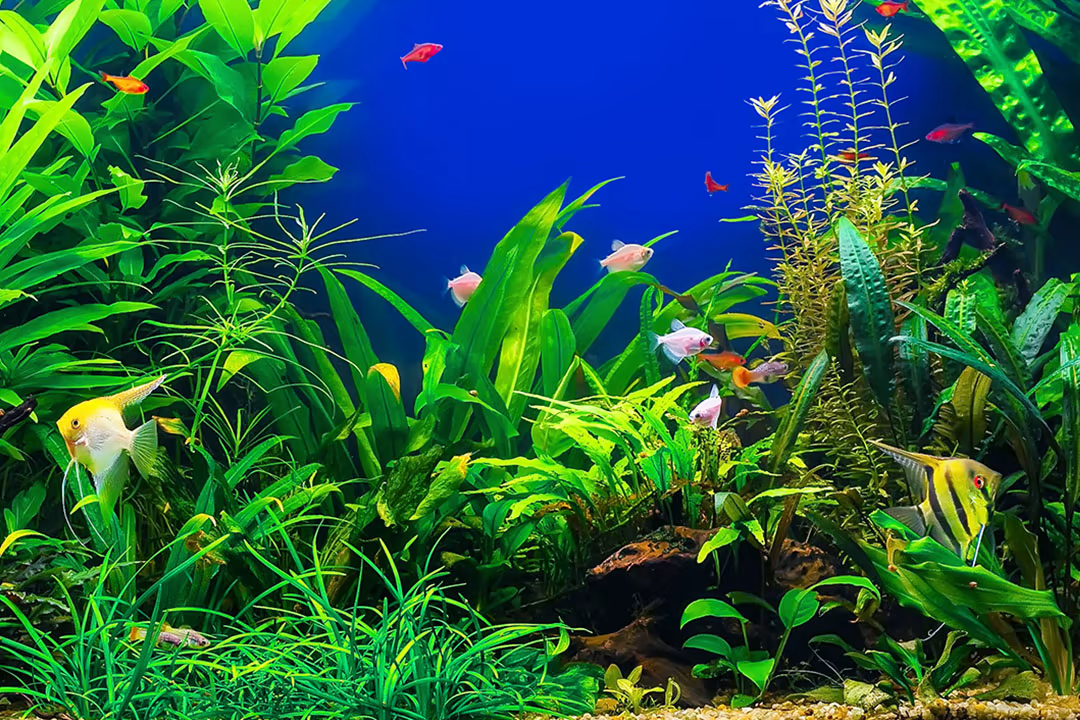
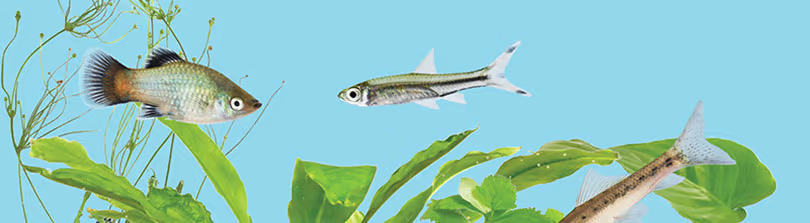
Fritz Aquatics Fish
Get It Today


Related Articles & Questions
- New Pet
Aquatic Pet Safety: Keep Your Home Aquarium Pets Healthy & Safe
Learn how to safely handle your aquatic life to avoid toxin & bacterial exposure. Find aquatic life care supplies at your neighborhood Petco pet care center.
Updated on November 13th, 2025
- New Pet
Don't Release Pets: Protect Waters from Invasive Fish & Plants
Habitattitiude™ commits to environmental protection by not releasing unwanted fish into public areas.
Updated on November 13th, 2025
- Food & Nutrition
Feeding Freshwater Fish: Ultimate Guide for a Thriving Aquarium
Feeding your freshwater fish isn't as simple as adding a pinch of flakes! Read these three tips to learn more about how to provide your pets the nutrition and environment they need.
Updated on November 13th, 2025
- New Pet
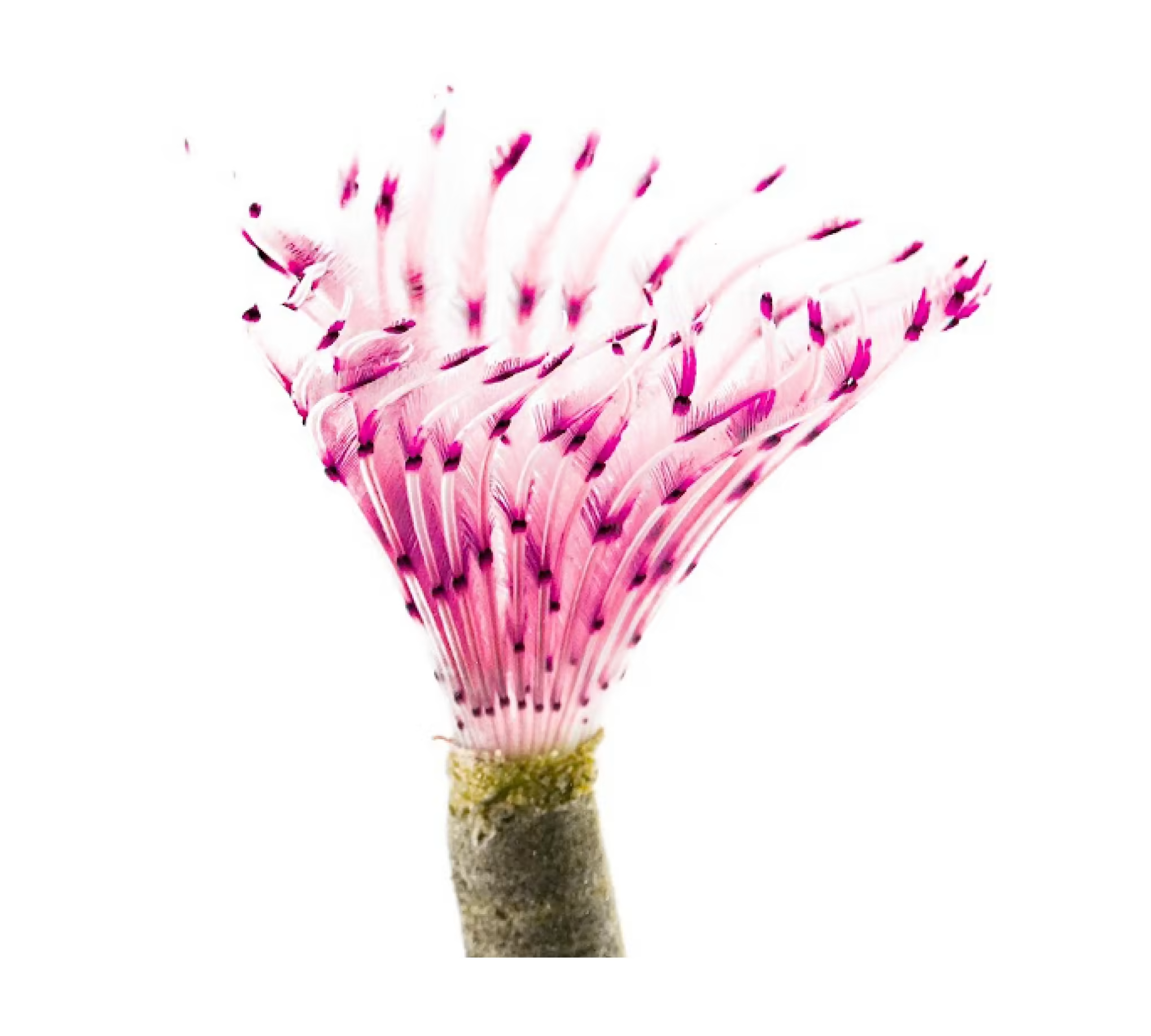
Keep Feather Dusters Thriving: Habitat, Diet, & Water Care Guide
Learn how to care for Feather Dusters. Find the right food, supplies & equipment at your neighborhood Petco.
Updated on November 13th, 2025
- New Pet
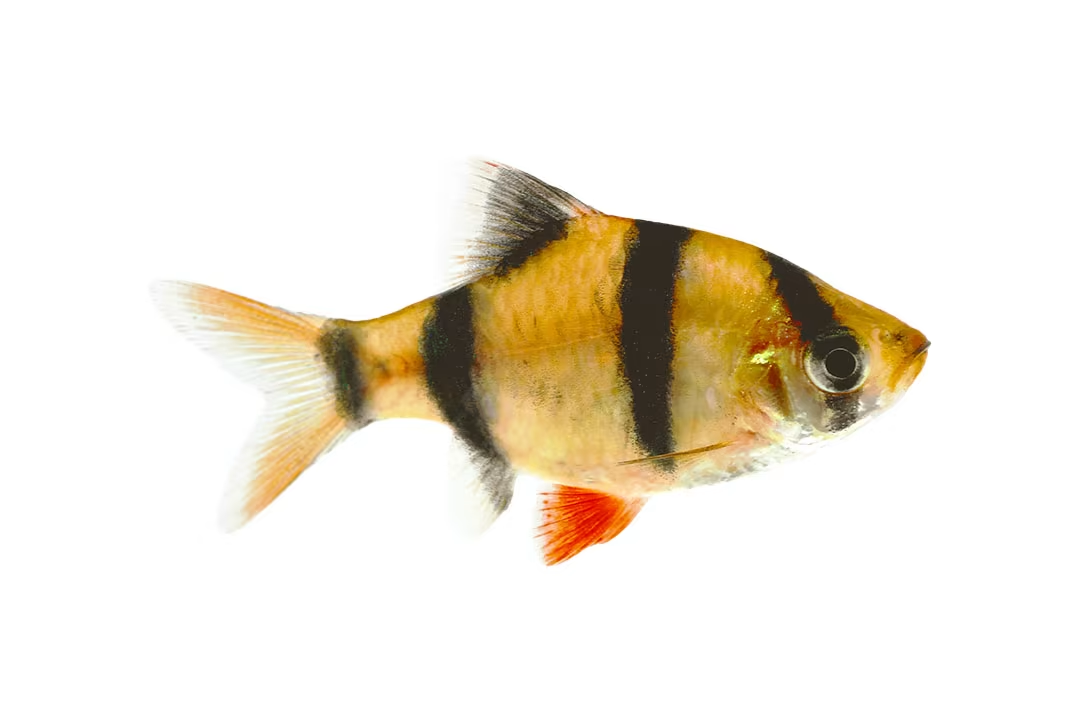
Barbs Fish Care Guide for Beginners: Tank, Food & Compatibility
Learn how to care for Barbs fish, recommended diet and aquarium setup. Find Barbs for sale, supplies and equipment at your neighborhood Petco.
Updated on November 13th, 2025
- Health & Wellbeing
Best Antiparasite, Antibacterial and antifungal medicines for separately or combination for Fish ? And suggest the dose for parrot fish or other fish ?
Pimafix is an acceptable "natural" antifungal treatment. Melafix is for bacterial infections. Kanamycin, erythromycin or metronidazole are good broad spectrum antibiotics. Fungus Cure (by API) is an excellent antifungal. You can find these medications in the aquarium section of most pet stores or even online. Follow label directions carefully and remove the carbon filter insert during treatment if indicated. The cornerstone of any treatment is to first maintain pristine water quality and stable chemistry.
Updated on August 12th, 2025
- Health & Wellbeing
Please help I love my Fish more than anything and one of them is lying on the ground with white stuff peeling off It and One of them is swimming around and it has the same white stuff all over it and it’s fins are like pushed down and all of my 11 fi
Thanks for reaching out about Fish. Test and correct water quality for pH, ammonia, nitrites and nitrates. If all fish are affected, water quality problems the most likely. Alteration can lead to increased mucous production from the skin (white stuff), but fungal dermatitis or parasites are also possible. A veterinary visit is recommended if the water quality if appropriate, to assess and provide a diagnostic/treatment plan. Good luck.
Updated on August 12th, 2025
- Health & Wellbeing
Hello... I would like to offer filtration coaching for fish questions. Can I answer questions on this forum?
You should contact by email the administrators of the website (you can find general email on the contact section) and they put you in touch with the Head Vet in charge of hiring new experts. Best of luck and hope to see you joining the team soon. Dr. Orioles
Updated on August 12th, 2025
- Training & Behavior
My fishes are being soo Inactive. I've checked every, the temperature and all. Air flow too, but they are still inactive. They only get active when I feed them
Hi, and thanks for your question. Begin by submitting a water sample for quality testing. Most pet stores will do this for free or a nominal fee. Clinical examination should always include a water quality check, even if you have done so already. Water testing should be performed with a quality test kit, measuring NH4, NO2 and NO3. High ammonia levels, PH imbalances may be responsible for these signs. Oxygen concentration and quality of the filters should be determined as well. If water quality is good and there are no major imbalances, your fish should get examined to look for any sign of bacterial/fungal infection and eventually water should be treated. Hope this answer was helpful, but please do not hesitate to contact us again on the forum or by requesting a consultation if you have any more questions or to discuss it any further. If this answer was helpful please let us know, this will be used to improve our service!
Updated on August 12th, 2025
- Health & Wellbeing
We have added fish to our newly set up aquarium twice now and both times the fish were dead or dying within 24 hours. The pH is at the proper level. The tank was filled with spring water. Why do our fish keep dying?
It is possible the tank has not cycled properly which results in high ammonia and nitrite levels which can kill fish. Allow the tank to run, without fish, for at least 4-6 weeks. During this time, use a home test kit or submit a water sample for testing every few days. The local Petco may do this for free or for a small fee. What you are looking for is to have ammonia and nitrites at 0 ppm and nitrates at 20ppm or less. pH can hover around 7 for most community fish. Avoid large, rapid swings in pH though. What is happening in the tank during this time is that beneficial bacteria are populating the gravel/substrate and the filter. These bacterial populations are responsible for the Nitrogen Cycle. This cycle breaks down wastes from fish, uneaten food and plant matter into by-products that are filtered out or dissipate. You can "cycle" a tank with fish, however this increases the risk of loss. Once your tank has cycled, you can add fish. You will still need to monitor water chemistry a
Updated on August 12th, 2025