Two Easy Ways to Start Earning Rewards!
Become a member today! Members-only pricing and offers, personalized care notifications, Vital Care points back on every purchase and more!
 Become a credit card member today!
Earn 2X Pals Rewards points at Petco
when you use Petco Pay!APPLY NOWLearn More About Petco Pay Benefits
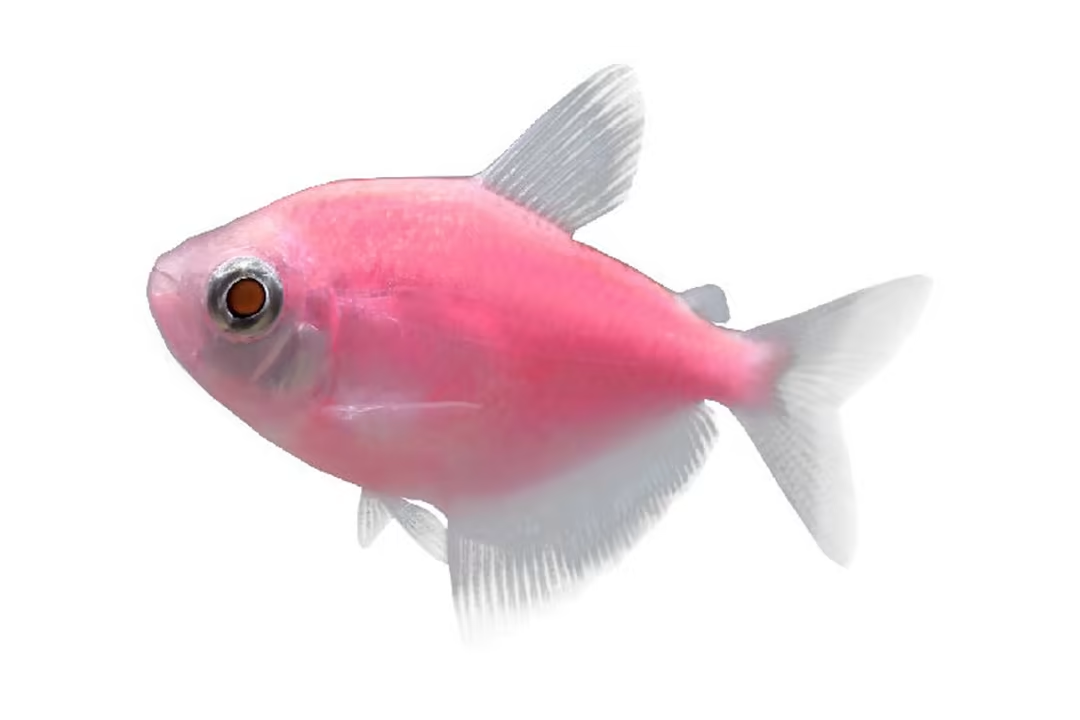
GloFish Aquarium Water Conditioners & Additives
Get It Today


Related Searches
Related Articles & Questions
- New Pet
GloFish Care Guide: Tank, Food, & Compatibility for Thriving Fish
GloFish are brilliantly colored and beautiful fish. Learn how to care for GloFish, what to feed them, how long they live, their ideal tank size and more.
Updated on October 29th, 2025
- New Pet
Master Aquatic Plant Care: Lush Aquarium Plants & Happy Fish
Tanks with live plants can be excellent additions to your home, bringing a touch of nature indoors. Learn how to take care of aquatic plants.
Updated on October 29th, 2025
- New Pet
Aquatic Pet Safety: Keep Your Home Aquarium Pets Healthy & Safe
Learn how to safely handle your aquatic life to avoid toxin & bacterial exposure. Find aquatic life care supplies at your neighborhood Petco pet care center.
Updated on October 29th, 2025
- New Pet
Aquarium Water Quality: Master Healthy Fish & Crystal Clear Tanks
Learn how to test your aquarium water. Poor water quality stresses fish, which leaves them susceptible to disease and possibly death.
Updated on October 29th, 2025
- Home & Habitat
Your Guide to Healthy Freshwater Aquarium Plants & Thriving Fish
Learn how to pick the right aquarium plants, substrate, lighting, and fertilizers to ensure that your aquarium plants thrive and stay healthy.
Updated on October 29th, 2025
- Health & Wellbeing
I have 2 glo fish what kind of tank should I get?
At the very least, a 10 gallon tank with a filter, heater, hood and light. Ideally, the tank should be up and running (without fish) until it cycles properly. This means there needs to be sufficient time for beneficial bacteria to colonize the tank and filter to be able to break down wastes, namely ammonia and nitrites and to a lesser degree, nitrates. This can take several weeks to occur. You can cycle a tank with fish in it, but it will require daily testing of water chemistry to prevent a toxic build up of ammonia and/or nitrites. Either can kill your fish if not treated. Follow this link for a FAQ regarding Glo Fish: https://www.glofish.com/about/faq/ Follow this link for more about cycling a tank: http://www.firsttankguide.net/cycle.php
Updated on August 12th, 2025
- Health & Wellbeing
Hello! Things didn’t go so well with cichlids and I only have one remaining which I moved to a different tank. The 45 is now empty and the others besides one blue African cichlid has died. I did water tests and most came out fine except the Carbonate
Water conditioning can be complicated and I recommend to stop by your local aquarium store. They are most often familiar with the local water quality and can give recommendations specific to your location. Some areas need buffering solutions to help control things like the water pH. Here are a few links which may help answer some of your questions about water condition: https://www.aqueon.com/articles/freshwater-aquarium-water-quality https://www.petcoach.co/article/aquarium-water-management-alkalinity-vs-water-hardness/ Before moving your goldfish, make sure all the conditions are appropriate for goldfish: https://www.aqueon.com/information/care-sheets/goldfish https://www.petcoach.co/article/how-to-help-your-new-goldfish-thrive/ I hope this helps and please feel free to post any additional questions.
Updated on August 12th, 2025
- Health & Wellbeing
I have three glo fishes in my tank. Two of them appear to be very bloated. Not only is one of them more bloated than the other, but it is also losing some of its color in the lower part of its body and it has a rough look as if its scales were starti
The bloating could be infection. It may also be parasitic infection, constipation or swim bladder disease. You cannot discount them being gravid (pregnant). Glo fish are egg layers, so they could be females readying to spawn (release eggs). First check water chemistry and quality. Clean water is critical to having healthy fish or to having fish recover from illness or injury. Use a home test kit or submit a water sample for testing. Most pet stores will do this for free or for a small fee. An established tank will have 0 ppm ammonia and nitrites with a nitrate level of 20 ppm or less. If your tank shows any level of ammonia or nitrites, perform a partial water change (no more than 30% total volume at a time) using conditioned water. Makebsurebit is temperature matched as well to prevent stress or shock. Glofish do best between 72 F and 80 F. Once water quality is squared away, fast the fish for 2-3 days, then feed tiny bits of cooked and shelled green peas. This will help with consti
Updated on August 12th, 2025
- Health & Wellbeing
My GloFish are fighting each other. To be exact, one is fighting the other ones. My yellow one started going solo a day before the fighting. No one can give me a straight answer to why!!!
GloFish are schooling fish. They do best in groups of 6 or more. If you have just a few, they may be stressed which can cause aggression. Check the water parameters since an imbalance in chemistry can cause stress as well. You can use a home test kit (one with liquid drops, not test strips) or submit a sample to you local pet store or aquarist. Most will perform water testing for free or for a nominal fee. Ideal parameters measure 0 ppm (parts per million) ammonia and nitrites with nitrates at 40ppm or less. pH of the water should be between 6 and 8. They are cool water fish, so aim for a water temp between 65 F and 75 F. Hopefully, this will help. The other option you have is to remove the aggressor. You can request a consultation to discuss the situation and set up in greater detail or if you have further questions or concerns.
Updated on August 12th, 2025
- Health & Wellbeing
I went on vacation and put a vacation feeder in the tank when I came home his tank was a sandy color. After cleaning his tank complete I put him back in and after that he hasn't been the same going on a week with out eating. What did I do wrong? Now
Check the water chemistry. Confirm ammonia and nitrite levels are 0.25ppm or less and nitrates are 40ppm or less. Use a liquid test kit or submit a sample for testing. Most pet stores or aquarists will do this for free or for a small fee. Partial water changes, about 30% can be done to decrease high levels. Use only aged or conditioned water that is temperature matched to prevent further stress or shock. My preferences for water conditioning are AmQuel Plus and NovAqua in addition to StressCoat. Confirm water temperature between 78F and 80F. You can soak pellets in some garlic juice to stimulate his appetite.
Updated on August 12th, 2025