Two Easy Ways to Start Earning Rewards!
Earn 2X Pals Rewards points at Petco
when you use Petco Pay!
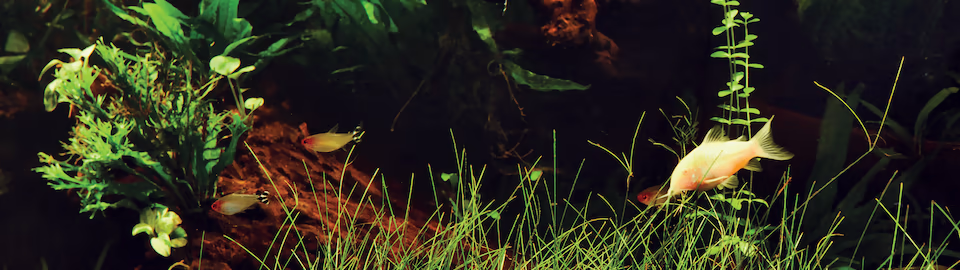
Learn how to pick the right aquarium plants, substrate, lighting, and fertilizers to ensure that your aquarium plants thrive and stay healthy.
Updated on November 13th, 2025
Before establishing an aquarium at home, learn more about the basics of fish care.
Updated on November 13th, 2025
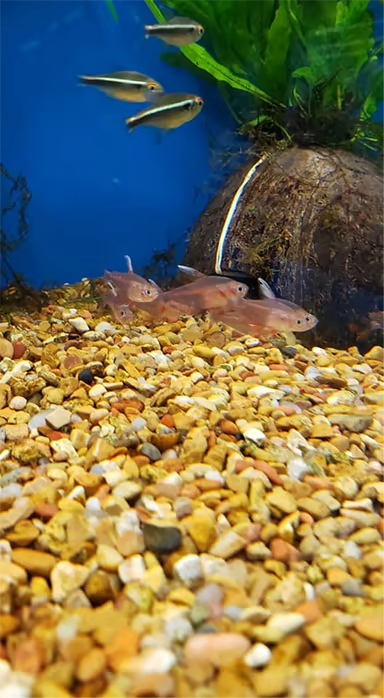
Choosing the right substrate for your aquarium is important and provides an area for beneficial bacteria to grow which keeps your aquatic environment safe.
Updated on November 13th, 2025
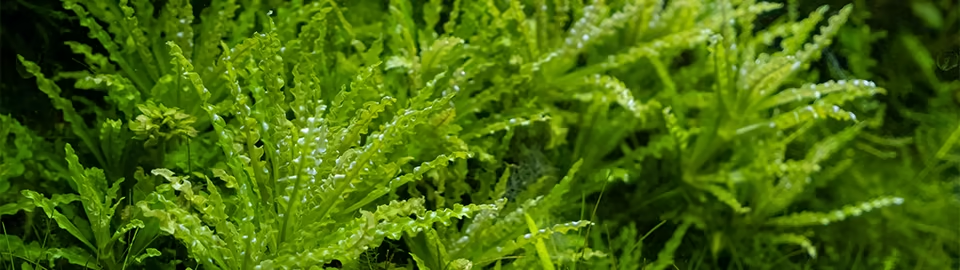
Shop Petco for Pogostemon Helferi aquarium plants. We want to help you select the best plant for your aquarium, as well as share tips on how to care for them.
Updated on November 13th, 2025
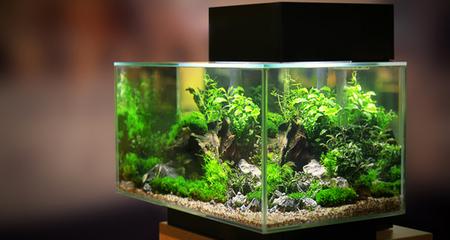
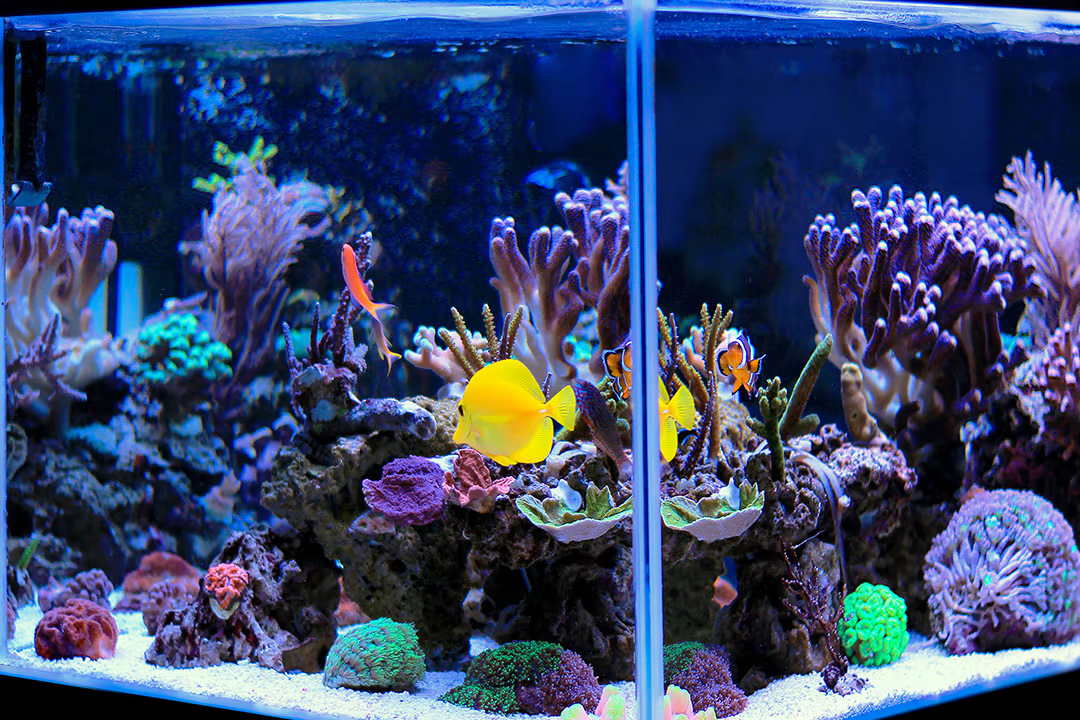
Learn how to set up a saltwater fish tank and key considerations regarding placement, supplies needed, and the overall set up process.
Updated on November 13th, 2025
Check the water quality and temperature. Warm water will not hold as much oxygen as cool water and goldfish are cold water fish. Ideal water temp is about 21 C. Use a home water test kit to check parameters. Ammonia and nitrites should read 0ppm (parts per million) and nitrates can be 40ppm or less. If you don't have a test kit, most pet stores or aquarists will test a sample for free or for a nominal fee. Ensure adequate filtration and oxygenation. Use a filter that will comfortably handle twice the volume of your tank. An airstone will increase oxygenation. A tank hood or cover is recommended to prevent fish from jumping out.
Updated on August 12th, 2025
Hi, and thanks for your question. Begin by submitting a water sample for quality testing. Most pet stores will do this for free or a nominal fee. Clinical examination should always include a water quality check, even if you have done so already. Water testing should be performed with a quality test kit, measuring NH4, NO2 and NO3. High ammonia levels, PH imbalances may be responsible for these signs. Oxygen concentration and quality of the filters should be determined as well. If water quality is good and there are no major imbalances, your fish should get examined to look for any sign of bacterial/fungal infection and eventually water should be treated. Hope this answer was helpful, but please do not hesitate to contact us again on the forum or by requesting a consultation if you have any more questions or to discuss it any further. If this answer was helpful please let us know, this will be used to improve our service!
Updated on August 12th, 2025
Those could be copepods. They are typically harmless and difficult to completely eradicate. On the good side, they are a sign of a healthy tank and are useful in eating decaying matter in the aquarium. The brown algae can be due to insufficient lighting or lighting periods. You can wipe down the glass and plants, perform a partial water change and increase lighting. It can take weeks to month to resolve. Use only aged or conditioned water that is temperature matched to prevent stress or shock. Confirm stable water chemistry and quality. Make sure the water temperature is correct as well. Too warm or too cold can cause stress. Look the Jack Dempsey over for signs of injury or infection. Ich, bacterial infection or fungal infection can cause the fish too twitch or shiver. Plain aquarium salt (NOT table salt or Epsom salt) dissolved at 1 tablespoon per 5 gallons of water is a great general tonic that can reduce stress, improve gill function, treat minor infection and aid in any recover
Updated on August 12th, 2025
I would suggest to try to stimulate him and see if he moves more. You can try to feed him as well. If he does not move and he is lethargic there may definitively be a problem; unfortunately the signs in this case are quite generic and a logic and radical approach would be required. Begin by submitting a water sample for quality testing. Most pet stores will do this for free or a nominal fee. High ammonia levels, PH imbalances may be responsible for that. Oxygen concentration and quality of the filters should be determined as well. If water quality is good and there are no major imbalances, your fish should get examined to look for any sign of bacterial/fungal infection and eventually water should be treated. Please do not hesitate to contact us again on the forum or by requesting a consultation if you have any more questions or to discuss it any further.
Updated on August 12th, 2025
These signs are quite generic but certainly concerning.This problem requires a radical but logic approach. Begin by submitting a water sample for quality testing. Most pet stores will do this for free or a nominal fee. Clinical examination should always include a water quality check, even if you have done so already. Water testing should be performed with a quality test kit, measuring NH4, NO2 and NO3. High ammonia levels, PH imbalances may be responsible for these signs. Oxygen concentration and quality of the filters should be determined as well. If water quality is good and there are no major imbalances, your fish should get examined to look for any sign of bacterial/fungal infection and eventually water should be treated. Hope this answer was helpful, but please do not hesitate to contact us again on the forum or by requesting a consultation if you have any more questions or to discuss it any further.
Updated on August 12th, 2025