

Two Easy Ways to Start Earning Rewards!
Become a member today! Members-only pricing and offers, personalized care notifications, Vital Care points back on every purchase and more!
 Become a credit card member today!
Earn 2X Pals Rewards points at Petco
when you use Petco Pay!APPLY NOWLearn More About Petco Pay Benefits
Imagitarium Fish Breeding Supplies
Get It Today


Related Articles & Questions
- New Pet
Aquatic Pet Safety: Keep Your Home Aquarium Pets Healthy & Safe
Learn how to safely handle your aquatic life to avoid toxin & bacterial exposure. Find aquatic life care supplies at your neighborhood Petco pet care center.
Updated on October 23rd, 2025
- New Pet
Beginner's Guide: Freshwater Livebearer Tank Setup, Food & Happy Fish
Learn how to care for freshwater livebearers, recommended diet & aquarium setup. Find the right food, supplies & equipment at your neighborhood Petco.
Updated on October 23rd, 2025
- New Pet
Perfect New Fish Tank: Water Quality & Cycling for Healthy Fish
Before establishing an aquarium at home, learn more about the basics of fish care.
Updated on October 23rd, 2025
- New Pet
Mastering Koi Care: Optimal Tank, Food, Water Quality & Health Tips
Learn how to care for a Koi, recommended diet and aquarium setup. Find Koi for sale, supplies and equipment at your neighborhood Petco.
Updated on October 23rd, 2025
- New Pet
Complete Tetra Care: Tank Setup, Food, & Compatibility Tips
Learn how to care for a Tetra, recommended diet & habitat setup. Find the right food, supplies & equipment at your neighborhood Petco.
Updated on October 23rd, 2025
- Health & Wellbeing
Is my fish ok. Does it have a sickness or diseases?
Thank you for using Boop by Petco! Ariel does look like she has a little bit of white on her abdomen, and potentially some raised scales. She also appears to be swimming towards the bottom of the tank, but this may just be a coincidence in the photo. The white on the abdomen can be caused by a fungal or parasitic infection, so I recommend separating this fish from the others. You may want to change the water and sanitize the tank if any other fish start to get similar symptoms. I hope this helps and am happy to answer any other questions you may have!
Updated on September 24th, 2025
- Health & Wellbeing
I dont know if you are a tropical fish specialist. But there is something going on in my tank and need help diagnosing it. My corydora has two raised growths ..one at the base of its fin. And one under the eye. My pleco seems a bit tattered too. A li
Thanks for reaching out about your aquarium and including photos. Did you test your water quality prior to the water change? Continue to test for pH, ammonia, nitrites and nitrates. Pristine water quality is needed for health. Are any of the fish new, that could have introduced parasites? Itching/flashing can be due to water quality, external parasites, bacterial or viral infections and other causes. The white lesions on the photo could be fungal infections. A skin scrape and examination under the microscope (at a veterinarian's office) is needed for an attempt to determine a cause. Fungal infections are often secondary problems, so check water quality first. Good luck.
Updated on September 24th, 2025
- Health & Wellbeing
Hey! Just got a beta fish and he is swimming fine... but after I fed him, he seemed to “hyperventilate”! But then again, he’s swimming fine. Is this okay? He’ll also swim really fast at some points. Is he just nervous?
Monitor for redness, white spots or fuzzy growths on him. The swimming fast may be "flashing", which a fish with an infection will do to "scratch an itch". Maintain pristine water quality via filtration and partial water changes. Use only aged or conditioned water that is temperature matched to prevent stress or shock when performing water changes. Bettas do best between 78 F and 80 F. Monitor water chemistry to confirm 0 ppm ammonia and nitrites with nitrates at 320 ppm or less. If you don't have a home test kit, most pet stores will test water for free or for a small fee.
Updated on September 24th, 2025
- Health & Wellbeing
I'm doing a project for school about fish and here are some questions I have: What kind of fish is easiest to take care of? What size tank should someone start out with? What are some things people don't know about fish? What are the most common reas
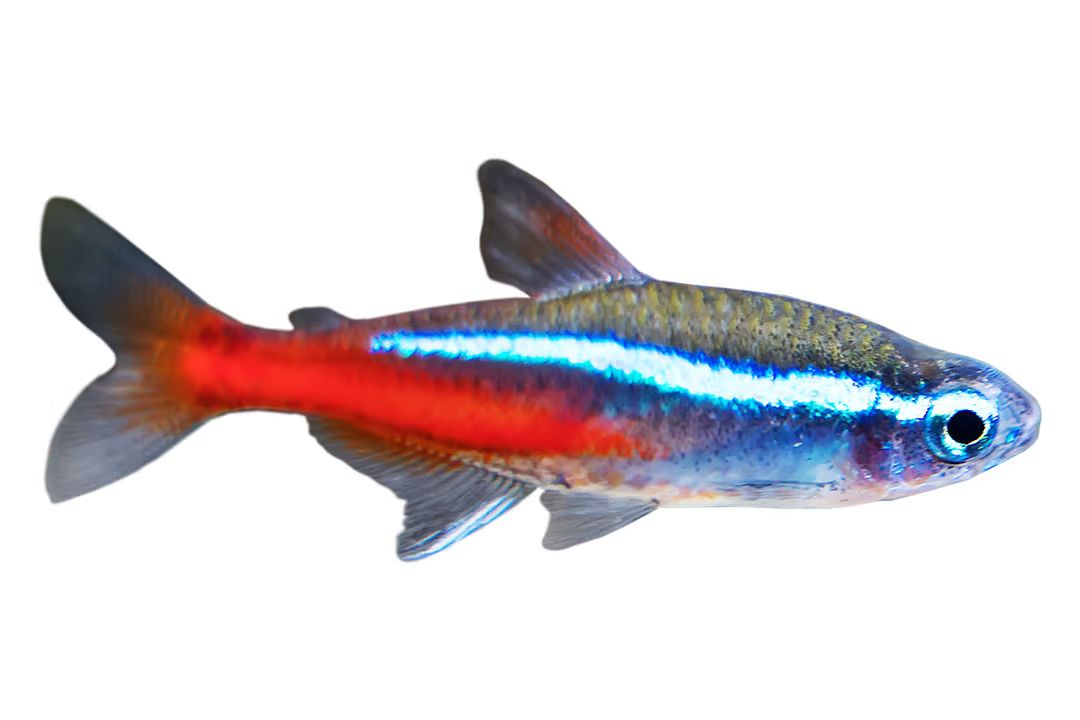
Guppies or Neons are excellent "starter" fish. Care is simple and they are inexpensive. A standard 10 gallon tank is recommended to start. Most people don' t realize the amount of "work" needed to maintain a tank. Filter maintenance, monitoring water chemistry, water changes, monitoring fish health and providing a balanced diet are just a few items that need regular attention to keep a tank thriving. Even though fish aren't as cuddly as cats and dogs, they do have their own personalities and even respond to their owners, especially at feeding time! Studies have shown that simply watching fish in a tank can lead to a reduction in both heart rate and blood pressure. It is quite relaxing.
Updated on September 24th, 2025
- Health & Wellbeing
I have an angelfish and a red tail shark in a 15 gallon tank for about 4 days and they get along great. The angel fish has been almost swimming kind of lazy like almost floating and then will swim when off balance. And belly kinda looks swollen as we
Check the water chemistry and temperature. Use a home test kit or submit a water sample to test fro elevated ammonia or nitrite levels. Most pet stores will do this for free or for a small fee. Partial water changes can be done, if indicated, to stabilize chemistry and improve or maintain water quality. Ideally, you want 0 ppm ammonia and nitrites with nitrates at 20 ppm or less in a non-planted tank or 40 ppm or less in a planted tank. Use only aged or conditioned water that is temperature matched to prevent stress or shock. You'll need to keep the temp at the upper limits for Red Tails in order to keep the Angelfish comfortable. That would be in the 78F to 80 F range. Both have similar pH requirements, 6.8 to 7.5. You can fast the Angel for 2-3 days then feed bits of cooked, shelled green peas. This will usually resolve constipation and bloating. Pristine water quality may resolve the patch on your shark. Recommending a medication without more information or a clear image would be
Updated on September 24th, 2025