Two Easy Ways to Start Earning Rewards!
Become a member today! Members-only pricing and offers, personalized care notifications, Vital Care points back on every purchase and more!
 Become a credit card member today!
Earn 2X Pals Rewards points at Petco
when you use Petco Pay!APPLY NOWLearn More About Petco Pay Benefits
Imagitarium Tortoise Supplies
Get It Today


Related Articles & Questions
- New Pet
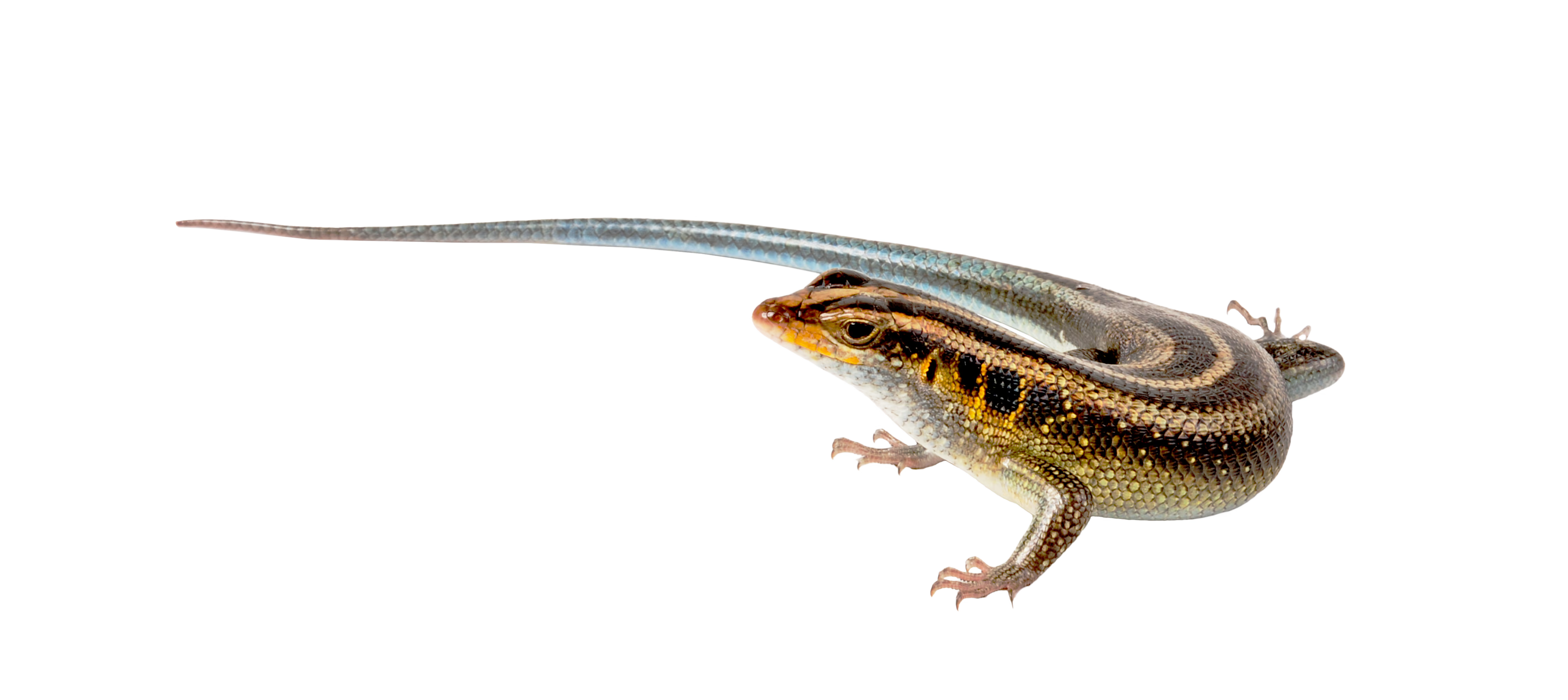
Arid Skink Care: Your Ultimate Guide to Habitat, Food & Health Tips
Learn how to care for an Arid Skink, recommended diet and habitat setup. Find the right food, supplies and equipment at your neighborhood Petco.
Updated on November 13th, 2025
- New Pet
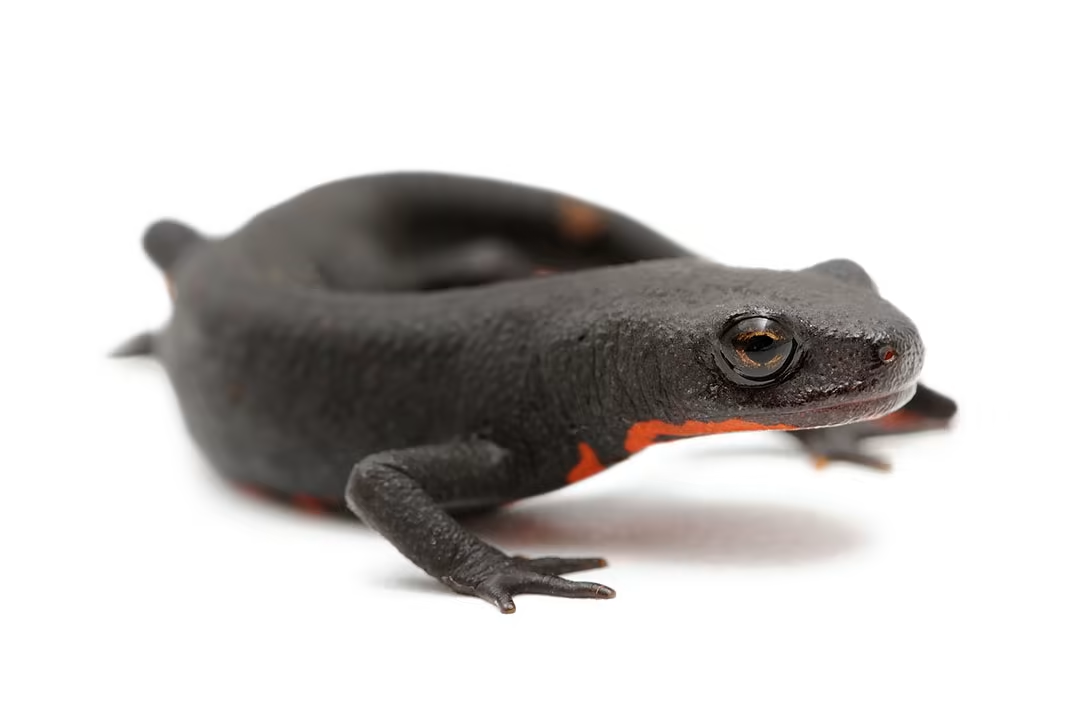
Mastering Pet Salamander & Newt Care: Food, Habitat, Health Guide
Learn How to Care for a Salamander & Newts, recommended diet and habitat setup. Find the right food, supplies and equipment at your neighborhood Petco.
Updated on November 13th, 2025
- New Pet
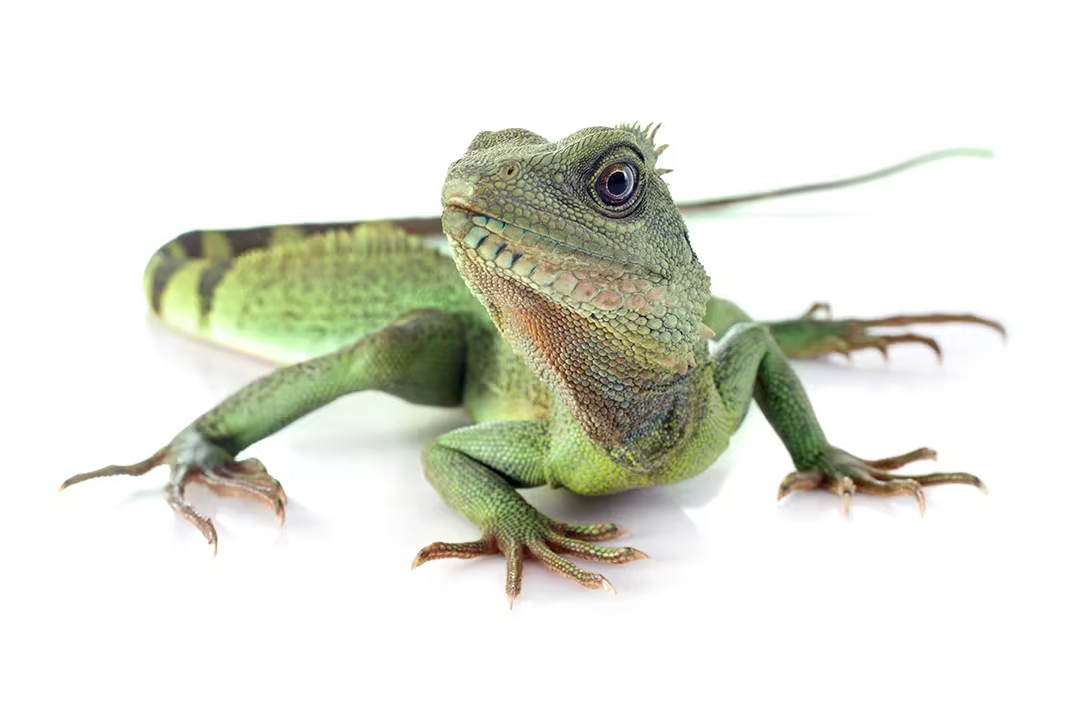
How to Care for a Water Dragon: Habitat, Food, Health & Setup
Learn how to take care of Water Dragons, recommended diet and habitat setup. Find the right food, supplies and equipment at your neighborhood Petco.
Updated on November 13th, 2025
- New Pet
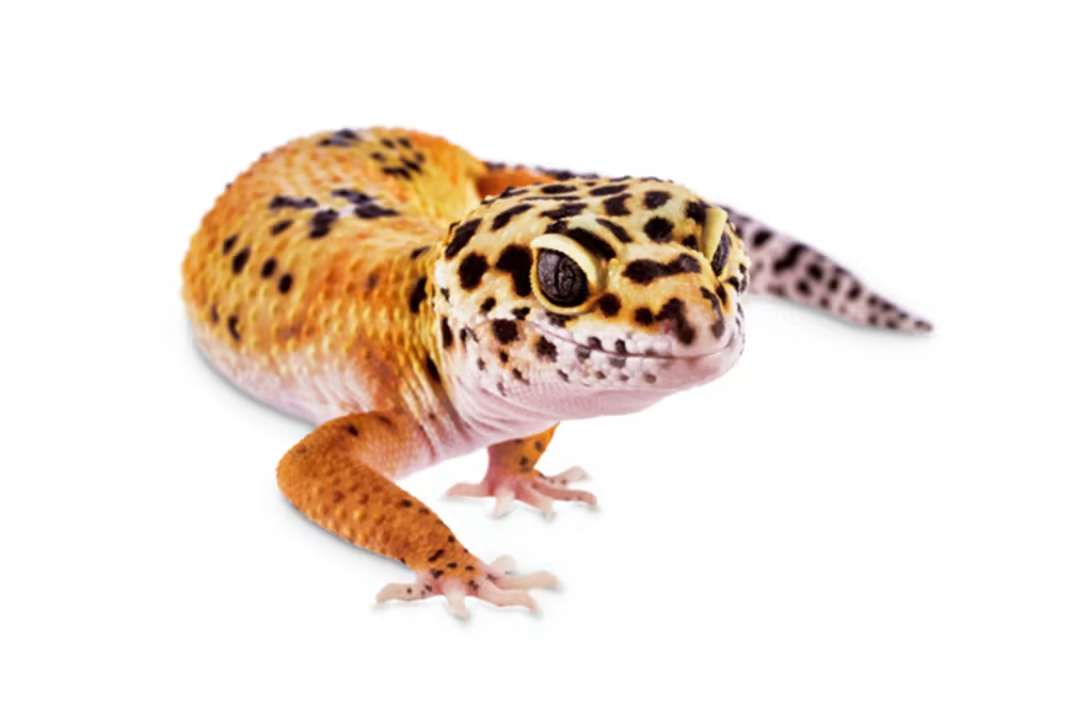
How to Care for Arid Geckos: Food, Habitat & Health Tips
Learn how to care for an Arid Gecko, recommended diet and habitat setup. Find the right food, supplies and equipment at your neighborhood Petco.
Updated on November 13th, 2025
- New Pet
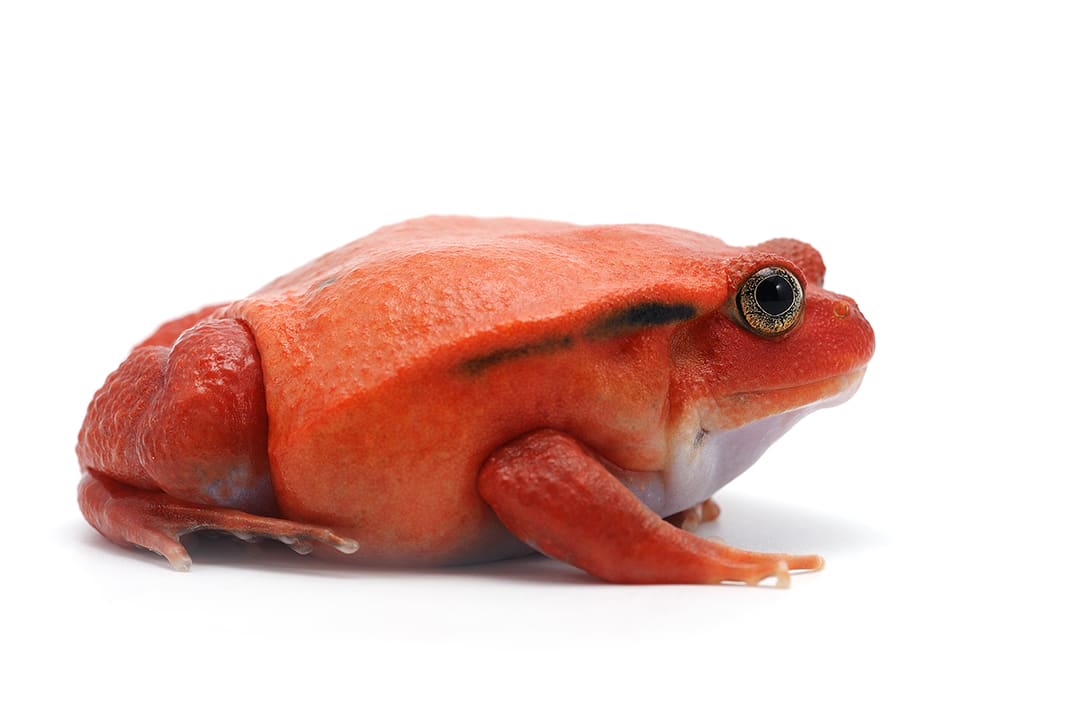
Tomato Frog Care: Ultimate Guide to Habitat, Food & Health Success
Learn how to take care of your Tomato Frog, tank size, diet & habitat setup. Find the right food, supplies and equipment at your neighborhood Petco.
Updated on November 13th, 2025
- New Pet
I rescued (was abandoned to die) a turtle (or tortoise) about a month ago. I would like to have her (or him) checked and to get some guidance to learn how to take care of properly. Does Pecto has Vets that are reptiles specialists?
A better option would be to use the link below to find a veterinarian experienced in treating reptiles. https://arav.site-ym.com/search/custom.asp?id=3661 In the meantime, change out the rocks for something "softer", such as a soil/most mix. Rocks can cause tiny scrapes on the shell which can introduce infection. Use a thermometer in the basking spot to make sure temps don't get too high. A thermometer on the other end would be recommended to make sure temps aren't too low. Offer a commercial pelleted diet along with fresh greens and vegetables.
Updated on August 12th, 2025
- Health & Wellbeing
I just want to know if my tank looks ok and if I might need anything else. P.S. the temperature isn't as high because I just connected the lights because I was cleaning the tank. The grass is fake btw
Ideally, the UVB light source should run the entire length of the tank. A thermometer/hygrometer should be on each end of the tank to confirm cool and warm sides. Use a digital thermometer to verify temps. Those little ones you have can be inaccurate. Provide a hide on both sides as well. Personally, I would remove the fake grass as it has the potential to cause eye injuries. Your tank looks good otherwise.
Updated on August 12th, 2025
- Health & Wellbeing
Hi, i had a turtle bought yesterday. Since im saving money, i bought a tupperware as his temporary shelter... And i have a lot of questions like what do i need to do for him to eat because he never eats anything i gave him to eat like veggies. I've
He can use a plastic tote until you get a tank, but it should be a much larger one than Guido is in right now. Find one that is at least 20 gallons. Provide water deep enough for him to swim in as well as a dry area to rest and bask. Provide a water filter, water heater,heat lamp and UVB light source. You can feed a commercial pelleted or stick diet supplemented with fresh greens and prey such as feeder fish or nightcrawlers. He may not be eating because water or ambient temperatures are too low. Low temps can affect appetite and digestion in reptiles. The link below will provide more information regarding slider care. http://www.anapsid.org/reslider.html
Updated on August 12th, 2025
- Health & Wellbeing
I have a turtle I got as a hatchling whose shell has started to curve. I’ve read this could be due to too much protein, too weak of uv/uvb lights, or a combination that makes him grow too fast for the shell to keep up. I’m going to the pet supply sto
He should be eating some greens and vegetables as well. Avoid the fish flakes as they are high in protein. Use both a multivitamin powder and a calcium powder on the food. Rep-Cal and Zoo Med products can be found in the local Petco. Make sure the UVB light is not blocked by glass, plexiglass or fine mesh. Depending on the strength of the bulb, place the source between 12 and 18 inches from the surface of the basking area. Provide a piece of cuttlebone to float in the tank as a calcium supplement for when he wants to munch it. If you can provide the species of turtle in a new post, we may be able to provide more accurate and comprehensive advice.
Updated on August 12th, 2025
- Food & Nutrition
I have always given my turtle ReptoMin for the past 14 years. Are there any other foods or treats i can feed her?
Why change a working system? You are obviously doing very well in the way you keep your turtle. Since apparently your turtle is doing well, it is getting everything it needs with the Reptomin. You could try offering it leafy greens, freeze-dried shrimp or krill, crickets, superworms, rosy red minnows and even pinky mice as an occasional treat.
Updated on August 12th, 2025