

Two Easy Ways to Start Earning Rewards!
Become a member today! Members-only pricing and offers, personalized care notifications, Vital Care points back on every purchase and more!
 Become a credit card member today!
Earn 2X Pals Rewards points at Petco
when you use Petco Pay!APPLY NOWLearn More About Petco Pay Benefits
JW Pet Wild Bird Feeders & Waterers
Get It Today


Related Articles & Questions
- New Pet
First-Time Bird Owner? Essential Guide to Your Pet Bird's Perfect Home
Learn some tips about bringing your new pet bird home for the first time. Find out what supplies and actions will help her feel most at home.
Updated on October 23rd, 2025
- New Pet
How to Groom Your Bird: Feathers, Nails & Wings for a Healthy Pet
Read more to learn some basics of bird grooming that include bathing, nail trimming, and wing clipping.
Updated on October 23rd, 2025
- Health & Wellbeing
Bird Emergency? Essential First Aid Kit & Steps to Save Your Pet
Get prepared to react calmly and efficiently when accidents happen by learning basic bird first-aid skills and putting together a pet bird first-aid kit.
Updated on October 23rd, 2025
- New Pet
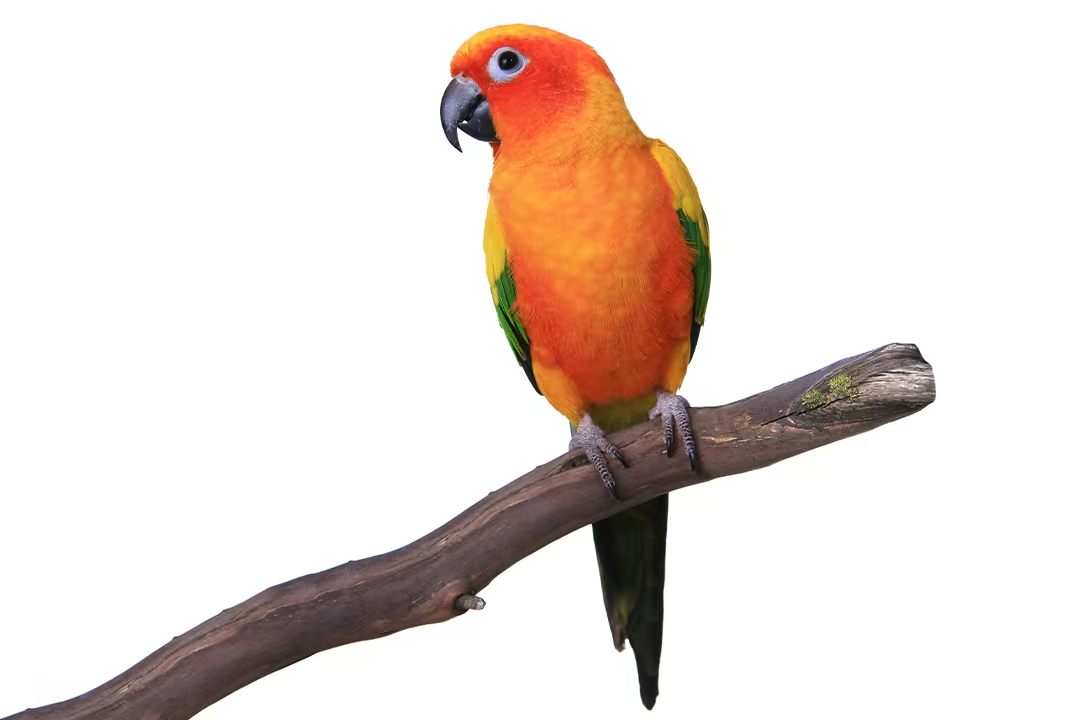
How to Care for a Sun Conure: Food, Habitat, Health & Behavior
Learn how to take care of Sun Conures, recommended diet and housing setup. Find the right food, supplies and equipment at your neighborhood Petco.
Updated on October 23rd, 2025
- Health & Wellbeing
Whys Birds Molt: How to Help Them Stay Comfortable
Molting is a normal process for your bird. Learn when it happens, and what signs to look for in case you need to see your vet.
Updated on September 13th, 2025
- Health & Wellbeing
Wild bird in South Australia Pied Butcher bird. Sore swollen feet. Prefers to stand (on the side of) one foot. Now has swallowing problems. Fed dog food and occasionally grated cheese. Please help love Nicki x
Ideally, it should be examined by an experienced wildlife or avian veterinarian. The symptoms reported may be due to injury or infection on or around the feet. It may also be diet related. Dog food and cheese are not appropriate foods as these birds subsist on a diet of small prey, insects, fruits and vegetables. It is never recommended to feed wildlife as it can be detrimental to them and dangerous to you.
Updated on September 24th, 2025
- New Pet
I've got a few questions. First my two birds are having a hard time bonding with me how do I fix that? Second I think my hamster needs a bigger cage, picture below, 3rd my leopard gecko has a heating Rock does that mean I can leave his light off dur
Thanks for reaching out. Sound like you have a full house. 1. Birds will often bond together but continue to work with them in a quiet environ, offering treats to win and re-enforce trust. Toys, the radio or tv, can all assist with boredom. Setting up foraging toys so birds need to spend time looking for food. 2. There is no such thing as too big a cage. 3. Heating rocks are rarely approved for use, as they will eventually become faulty and get too hot, potentially damaging the animal. A heat lamp is recommended. 4. The bunny's litter box should be spot cleaned daily and full clean weekly. If you can smell it you waited too long. Good luck.
Updated on September 24th, 2025
- Health & Wellbeing
Hello .I bought this bird.I don't know what kind of bird it is.The seller said i have to feed meat.Is this bird male or female? Is it dangerous bird?What should i feed the bird?Can i keep the bird as a pet?or should i release in wild? How should i c
Hello, and thanks for your question. That's a raptor - a bird of prey. It is a carnivore (meat eater), and should absolutely NOT be kept as a pet. It's a wild animal, and many raptors are protected by law. I recommend touching base with your local university and/or veterinary hospital. They should be able to connect you with a local ornithologist (bird expert) or wildlife rehabilitator, who will best be able to care for this bird. Without knowing more about the bird and being able to examine it, I cannot guide you further. Male and female raptors often look very similar, so I can't tell you which it is from these photos. I suspect it's a juvenile (young bird) since it's not immediately flying away from you - so it may not yet be able to live on its own if you were to simply release it, depending on how long it's been captive. I encourage you to do the right thing for this beautiful wild animal, and make sure it finds its way into the hands of someone who is knowledgeable in
Updated on September 24th, 2025
- Training & Behavior
I have a wild dove it’s breathing rapidly can’t stand it’s legs are very weak not eating or anything so feeding him using syringe it’s a fledgeling it’s wings are open she’s not closing them she can’t even sit on her legs her legs are a bit purplish
Thanks for reaching out about Birdie. The possibility of aspiration pneumonia is high, or another respiratory infection. A veterinary visit or relinquishment to a wildlife rehabilitation facility is recommended. Good luck.
Updated on September 24th, 2025
- Health & Wellbeing
I got a egg..it hatched yesterday..its a baby bird..what should i feed him/her..she is getting cold..please help me
If this is a wild bird the best option would be to get it to a wildlife rehabilitator asap. If a pet species you need to know what species in order to feed approriately. You need a hand rearing formula suited to that species. Keep in a "nest" with supplemental heat and humidity as it cannot regulate body temperature yet. Relative humidity greater than 50% is required initially. Hatchlings (no feathers) should be maintained at 95° - 97°F (35° - 36°C). An incubator is usually recommended for hatchlings. The yolk sac should provide nutrition the first 12 or so hours but but it will then need to be fed every 2 hours around the clock Here is some basic info https://vcahospitals.com/know-your-pet/hand-feeding-baby-birds
Updated on September 24th, 2025