

Two Easy Ways to Start Earning Rewards!
Become a member today! Members-only pricing and offers, personalized care notifications, Vital Care points back on every purchase and more!
 Become a credit card member today!
Earn 2X Pals Rewards points at Petco
when you use Petco Pay!APPLY NOWLearn More About Petco Pay Benefits
K&H Aquarium Heaters


Related Articles & Questions
- Home & Habitat
Aquarium Lighting Guide: Get the Best Light for Healthy Fish & Plants
We can help you navigate your way through all the types of lights in fish tanks and determine which type is best for your aquarium.
Updated on October 23rd, 2025
- Health & Wellbeing
Stressed Fish? How to Identify Causes & Calm Your Aquarium Pets
Learn how to spot the signs of a stressed fish and what you can do to calm them and and restore a peaceful, stress-free atmosphere for your aquarium inhabitants.
Updated on October 23rd, 2025
- New Pet
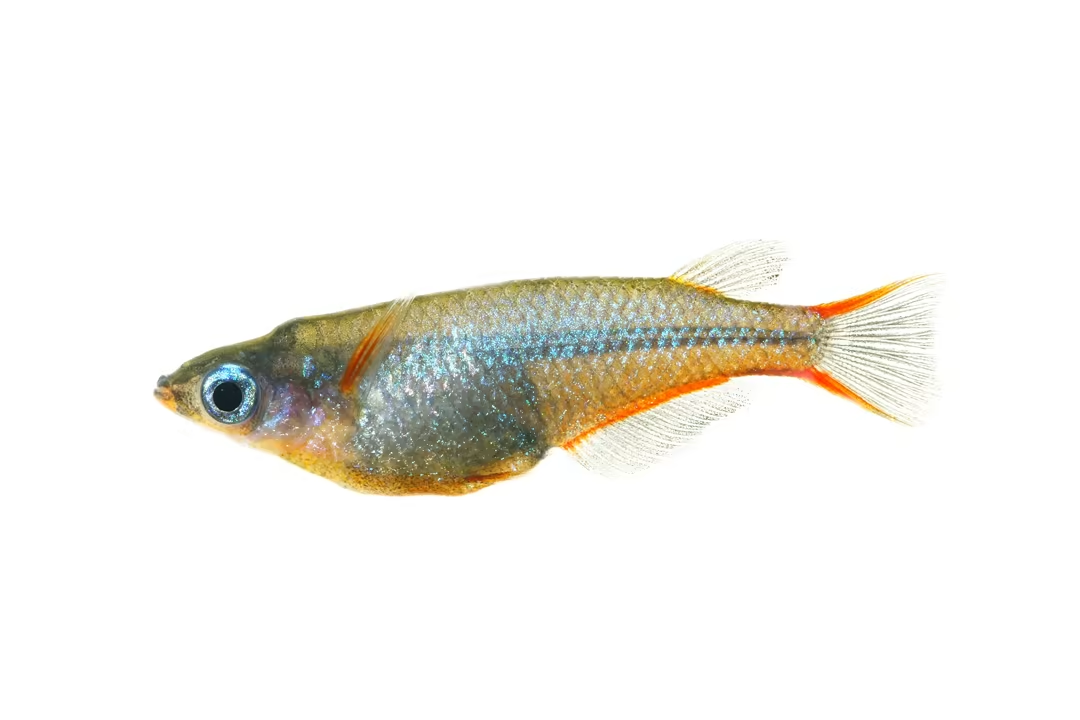
Complete Ricefish Care: Setup, Diet, & Habitat for Thriving Fish
Learn more about these slow moving fish and the care they need when added to your aquatic environment.
Updated on December 22nd, 2025
- Home & Habitat
Freshwater Fish Compatibility Chart: Choose Happy Tank Mates
Find out which freshwater fish can live together with our compatibility chart and tips for creating a harmonious aquarium.
Updated on October 23rd, 2025
- New Pet
Essential Large Marine Fish Care Guide: Tank Setup, Diet, & Tank Mates
Learn how to care for large marine fish, recommended diet and habitat setup. Find the right food, supplies and equipment at your neighborhood Petco.
Updated on October 23rd, 2025
- Health & Wellbeing
I was wondering on how I could safely move my koi fish into my home for the winter with a tank. I have two koi that are about five inches long. We weren't shure how big of a tank to get , how to feed them , and how to keep the water clean. Help? By t
Anything less than a 100 gallon tank would be insufficient for koi of your sizes. They can be fed as you feed outdoors. Filtration would be critical to maintain water quality. A combination of mechanical, biological and chemicals filtration would be required.
Updated on September 24th, 2025
- Health & Wellbeing
I'm about to buy some new fishes mostly Tetra Can you help me what fish should I buy because I am beginner in this things. Please tell me what sort of things I should bring I have a one foot tank now other than that What should I purchase from Aquar
Before you buy any fish, you will need to set up the tank. A basic set up includes: a tank, filter, hood/light, heater, gravel and some decor. The tank should run without fish for at least 4 to 6 weeks. This gives it time to cycle. The Nitrogen Cycle is critical to the health of the tank and any fish you will be keeping. During this time, beneficial bacterial will populate the filter and substrate (gravel). These bacteria will be responsible for breaking down fish wastes and other wastes (uneaten food, dead plants, etc.). You will need a home test kit to monitor water chemistry (ammonia, nitrites, nitrates, pH) or you will have to submit water samples for testing. Most pet stores will do this for free or for a small fee. At first, you will see high levels of ammonia and nitrites. Over time, as bacteria grow, these levels will drop. When ammonia and nitrites are at 0 ppm and nitrates are below 20 ppm, you can consider adding fish. Regular (every 1 or 2 weeks) partial water changes as we
Updated on September 24th, 2025
- Health & Wellbeing
I got some new fish yesterday but I am not sure what type they are as they were s gift. They are black and a bit small. I want to know what type of fish they are and what they would need. Can you please help me with what type pf fish they are and wha
As for what kind of tank you will need: Basically a square fish tank, do not get a bowl. You will likely need a heater and an air pump, and a thermometer, It is easiest to by a complete kit at a pet shop. As for size of tank: The bigger is always the better....however a minimum size will be determined by the type of fish and their average size they will grow into, So once we know what type of fish you have and how many, we can tell you how big your tank needs to be and what type of "furniture" (rocks, plants, gravel) you will need.
Updated on September 24th, 2025
- Health & Wellbeing
I just got this new baby axolotl but it was born in and kept in a higher temp at around 73°F until I got him about less than a week ago. The breeder I got him from said their 2 adults are perfectly healthy at 73°. The water he’s in now stands at abo
I really think you need to go with the recommended temperatures. Temperatures that are too high (over 74F) are associated with heat stress and death in these guys. An ideal temperature range is the low to mid 60s. An aquarium chiller is recommended if you cannot get the temperature low enough. I suggest you refer to this article: ( http://www.reptilesmagazine.com/Care-Sheets/Frogs-Amphibians/Axolotl/ )
Updated on September 24th, 2025
- Health & Wellbeing
All of my fish died after using a product purchased at Petco called ACUREL-F. How do I get their water safe to put in new fish?
I would recommend to have the water completely changed. New water should be ideally submitted for quality testing. Most pet stores will do this for free or a nominal fee. High ammonia levels, PH imbalances may be responsible for that as well. Oxygen concentration and quality of the filters should be determined as well. Please do not hesitate to contact us again on the forum or by requesting a consultation if you have any more questions or to discuss it any further.
Updated on September 24th, 2025