

Two Easy Ways to Start Earning Rewards!
Become a member today! Members-only pricing and offers, personalized care notifications, Vital Care points back on every purchase and more!
 Become a credit card member today!
Earn 2X Pals Rewards points at Petco
when you use Petco Pay!APPLY NOWLearn More About Petco Pay Benefits
K&H Pond Supplies


Related Articles & Questions
- New Pet
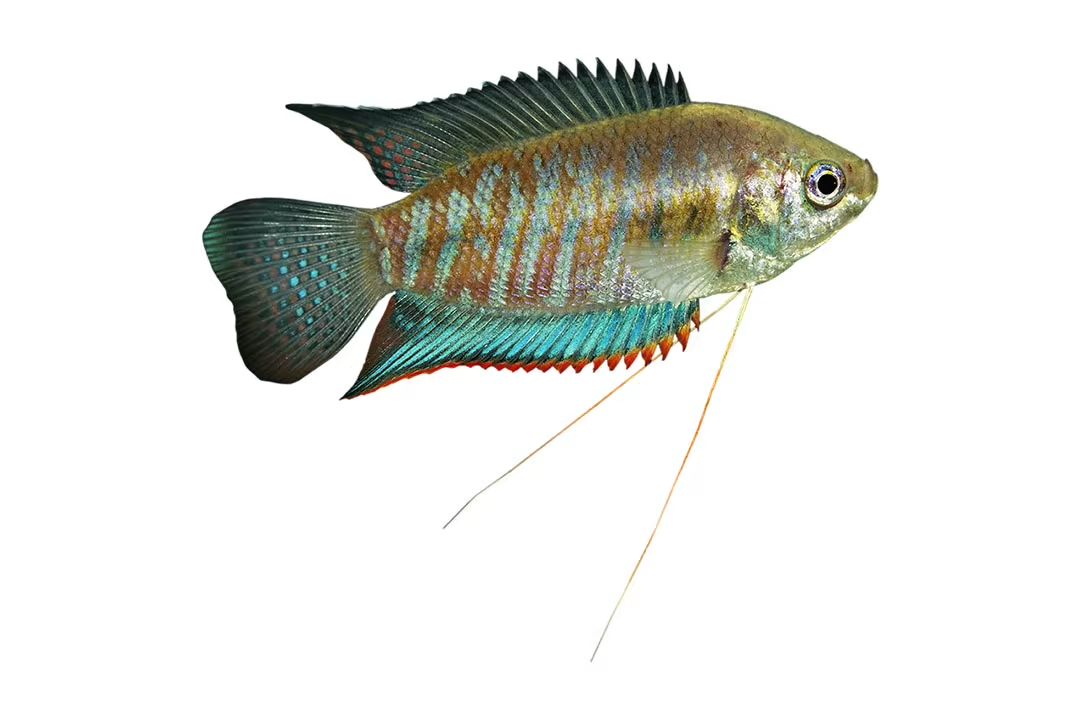
Paradise Fish Care: Complete Guide to Tank Size, Food, & Habitat Setup
Learn how to care for Paradise fish, recommended diet and aquarium setup. Find the right food, supplies and equipment at your neighborhood Petco.
Updated on October 23rd, 2025
- New Pet
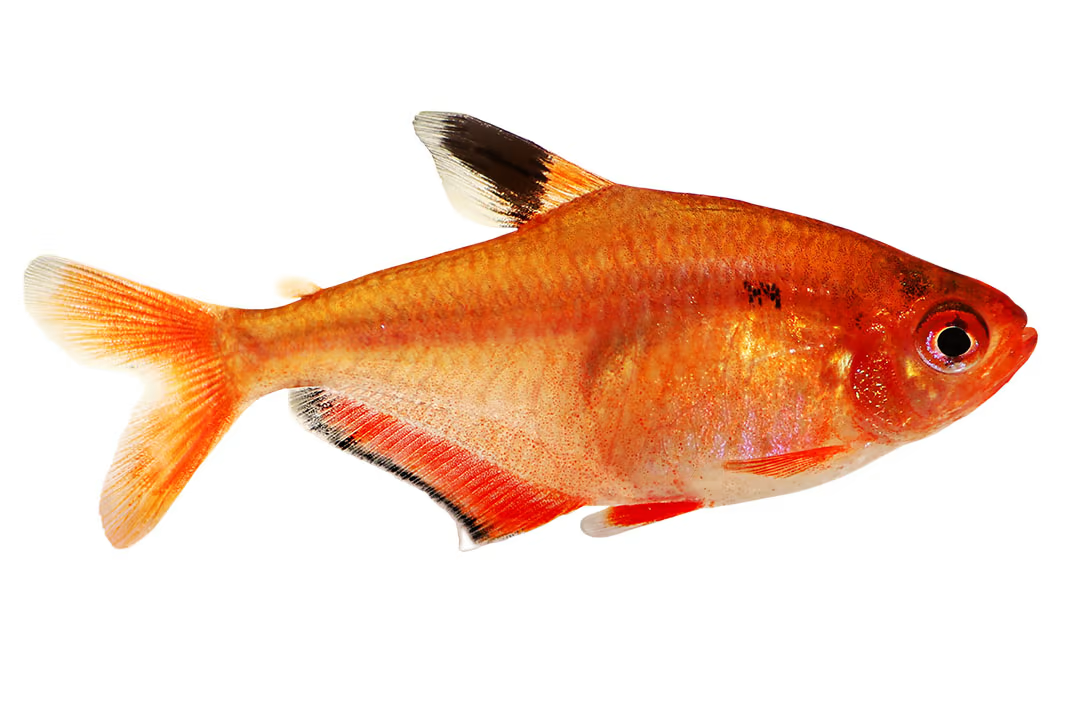
Freshwater Community Fish: Care, Setup & Compatibility Guide
Learn how to care for freshwater community fish, recommended diet & aquarium setup. Find the right food, supplies & equipment at your neighborhood Petco.
Updated on October 23rd, 2025
- New Pet
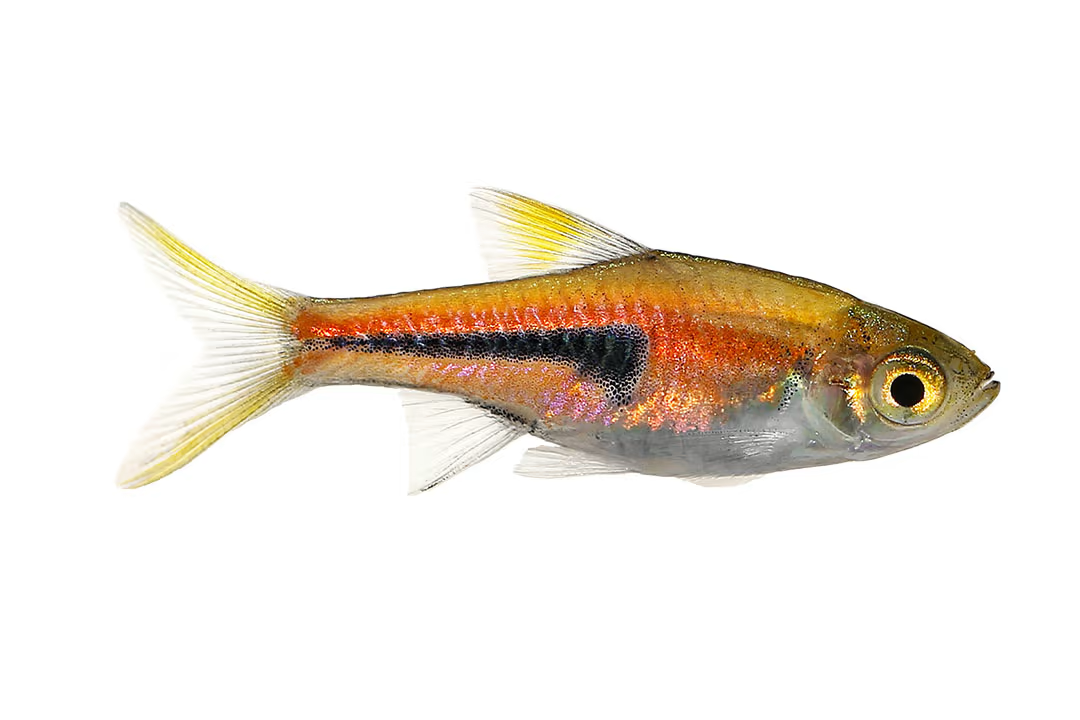
Freshwater Semi-Aggressive Fish: Top Secrets for a Thriving Tank
Learn how to care for semi-aggressive fish, recommended diet & aquarium setup. Find the right food, supplies & equipment at your neighborhood Petco.
Updated on December 21st, 2025
- Home & Habitat
How to Clean a Dirty Fish Tank: Crystal Clear Water & Happy Fish
Find out what tools you’ll need and discover the best way to get your aquarium back on track without starting over and find out how to maintain a clean fish tank.
Updated on October 23rd, 2025
- Home & Habitat
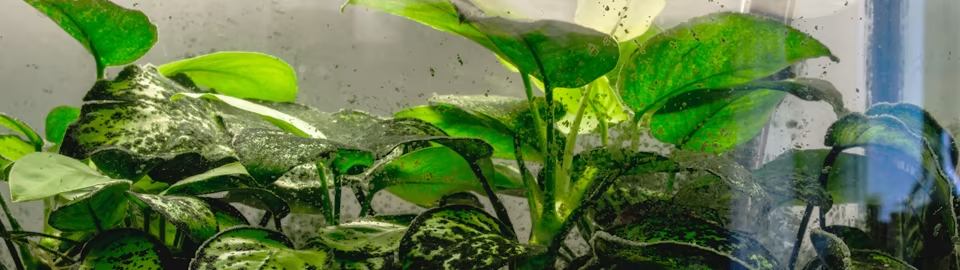
Blackwater Aquariums: Easy Setup & Benefits for Thriving Fish
Search Petco to learn about blackwater fish aquariums. We want to help you decide what lifestyle is best for your unique fish.
Updated on October 23rd, 2025
- Health & Wellbeing
One of my koi, was healthy, swimming around and eating on Tuesday afternoon at about 2:15 pm; at 2:40 pm he was found floating upside down at the side of the pond (1000 gallon pond with 3 koi and 2 goldfish) practically lifeless. We placed him in a s
Without more detailed information, it is difficult to speculate, but there are certain "hints" in your question that suggests it might be due to low oxygen levels. First it occurred mid-afternoon, typically the warmest time of the day. Warm water loses its capacity to hold onto oxygen, particularly at temperatures above 85 degrees Fahrenheit. Warm water combined with poor water circulation can create pockets of oxygen-depleted water harmful to pond inhabitants. Your koi's positive reaction to enhanced aeration during the cool of the night when water is capable of holding onto more oxygen, is another "hint." If you are experiencing an exceptionally warm summer in your area, it might be a good idea to enhance water movement and aeration in your pond. Improved circulation helps eliminate stratification or development of harmful, oxygen poor layers.
Updated on September 24th, 2025
- Health & Wellbeing
My fish is acting sick. He is not really eating and he keeps going to the surface to breathe . He is also getting these little what looks like panic attacks and swims very fast and even hits his head constantly on the edges of his tank. I started to
Check water chemistry first. Use a home test kit or submit a water sample for testing. The local Petco may do this for free or for a small fee. Aim for an absence ( 0 ppm) of ammonia and nitrites with nitrates at 20 ppm or less. Perform partial water changes, no more than 30% at a time, to stabilize chemistry and/or to improve water quality. Use only conditioned water that is temperature matched to prevent stress or shock. Check water temp as well. Any of these can drive a fish to the surface. The "flashing" (darting about) can be due to infection (bacterial, fungal or parasites). Consider a broad spectrum antibiotic or an "all in one" product to treat multiple infections. Look in the Aquarium section of the local Petco for options. Follow label directions carefully and remove the carbon filter insert during treatment if indicated.
Updated on September 24th, 2025
- Health & Wellbeing
My marine class are getting Silver Perch. We are putting them in this enclosure. What type of equipment will we need to keep them away from disease, pests, and also what filters and water temperature will we need to keep them alive. How do we breed
Depending on the number of fish you get, water quality will be the most important factor in maintaining their health. You'll need quite a large filter for a tank that size. Ideally, choose one that is rated to handle at least twice volume of water in the tank. Mechanical, chemical and biological filtration are all recommended as well as the inclusion of an ultraviolet filter. Silver perch are hardy and can tolerate a wide range of water parameters but thrive at temps between 23 C and 28 C. You may need a heater or heaters capable of maintaining that range. They will spawn anywhere between October and April depending on the age of the fish. Mature fish will spawn early, between October and February, while younger fish will spawn late winter into early Spring. They are an omnivorous species but do well on a commercial pelleted fish chow. One suggestion would be to contact local owners of fish ponds, pond builders and large scale breeders to get more detailed information and to see ope
Updated on September 24th, 2025
- Health & Wellbeing
My fish lived outside during the summer eating alge out of our pond. Now it's inside for the winter but it has developed a white growth on its forehead
Check water chemistry and filtration. Sunny may have developed a bacterial or fungal infection due to the switch in environment. Clean water is crucial to resolving infection. Perform regular partial water changes. Use only aged or conditioned water that is temperature matched to prevent further stress or shock. Maintain water temperature between 75 F and 72 F. Minor infection maybe resolved using plain aquarium salt (NOT table salt). Salt is a great general tonic. It reduces stress, improves gill function and aids in recovery. Dissolve 1 teaspoon of salt per gallon of water in a cup of tank water and gently pour it into the tank. Treat until symptoms resolve. When performing water changes, use just enough salt to treat the water being replaced, not the entire tank volume. If necessary, you can use a broad spectrum medication if symptoms persist. Look in the aquarium section of the local pet or fish store for products such as Kanaplex, Maracyn or Lifeguard by Tetra. Follow label
Updated on September 24th, 2025
- Health & Wellbeing
My black moor is sick I just got him from the fish store along with a goldfish to add with my other goldfish in a ten gallon tank I did a big water change because there was slot of nitrate and nitrite when I put him in the tank after that I noticed h
Check the water quality again use a liquid home test kit or submit a water sample for testing. The local Petco may do this for free or for a small fee Aim for an absence (0 ppm) of ammonia AND nitrites. Nitrates can be 20 ppm or less. Perform another partial water change, no more than 30% total volume, at a time. Use only conditioned water that is temperature matched to prevent stress or shock. Goldfish are cold water fish and do best between 65 F and 72 F. Additionally, a 10 gallon tank may be insufficient for 2 goldfish and a Black Moor. Goldfish produce a larger than average bio-load (waste) which can quickly overwhelm a small tank and after. Ideally, provide 20 gallons for one goldfish and an extra 10 gallons per fish. The filter should be rated for at least twice the volume of the tank. Even with a string filter, partial water changes and regular cleaning/vacuuming will be needed to maintain water quality.
Updated on September 24th, 2025