Two Easy Ways to Start Earning Rewards!
Become a member today! Members-only pricing and offers, personalized care notifications, Vital Care points back on every purchase and more!
 Become a credit card member today!
Earn 2X Pals Rewards points at Petco
when you use Petco Pay!APPLY NOWLearn More About Petco Pay Benefits
Komodo
Get It Today


Related Articles & Questions
- New Pet
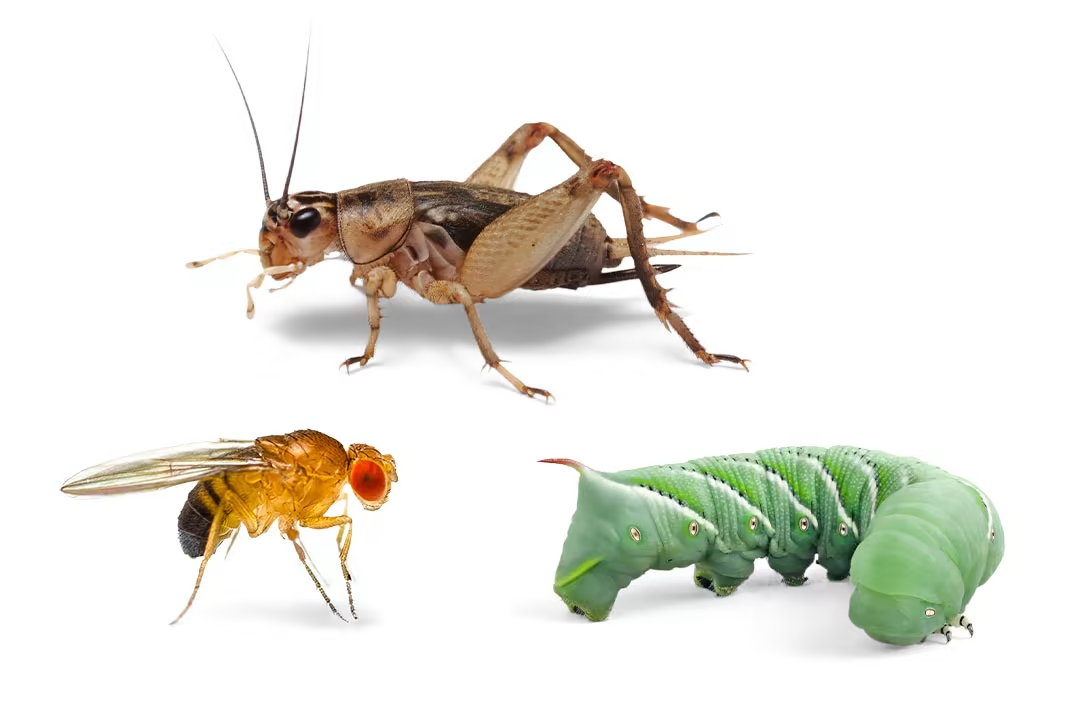
Reptile Feeding: Live Insect Selection & Care for Optimal Health
Learn about live insects for reptile feeding, recommended diet & habitat setup. Find the right food, supplies & equipment at your neighborhood Petco.
Updated on November 13th, 2025
- Home & Habitat
Reptile UVB Lighting: Help Your Pet Thrive with the Right Lamp
Learn the importance of UVB light for your reptiles and the right reptile lights for your pet’s habitat.
Updated on November 13th, 2025
- New Pet
How to Safely Handle Reptiles: Stop Salmonella, Protect Your Family
Read more about our recommendations for preventing the transmission of infectious diseases in reptiles. Keep pets safe with these best practices.
Updated on November 13th, 2025
- New Pet
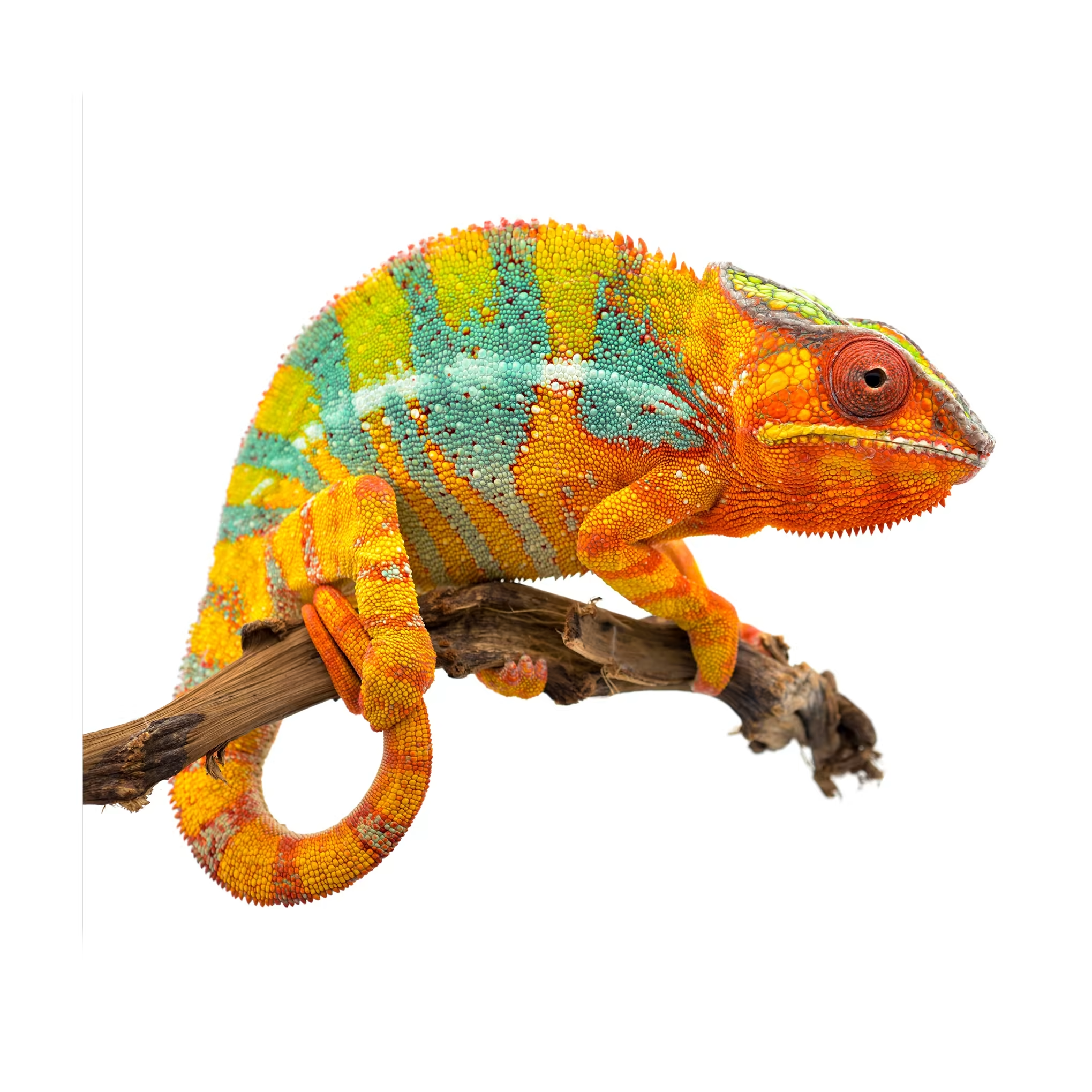
Warm Climate Chameleon Care: Best Food, Habitat & Health Tips
Learn how to care for warm climate Chameleons, recommended diet & habitat setup. Find the right food, supplies & equipment at your neighborhood Petco.
Updated on November 13th, 2025
- New Pet
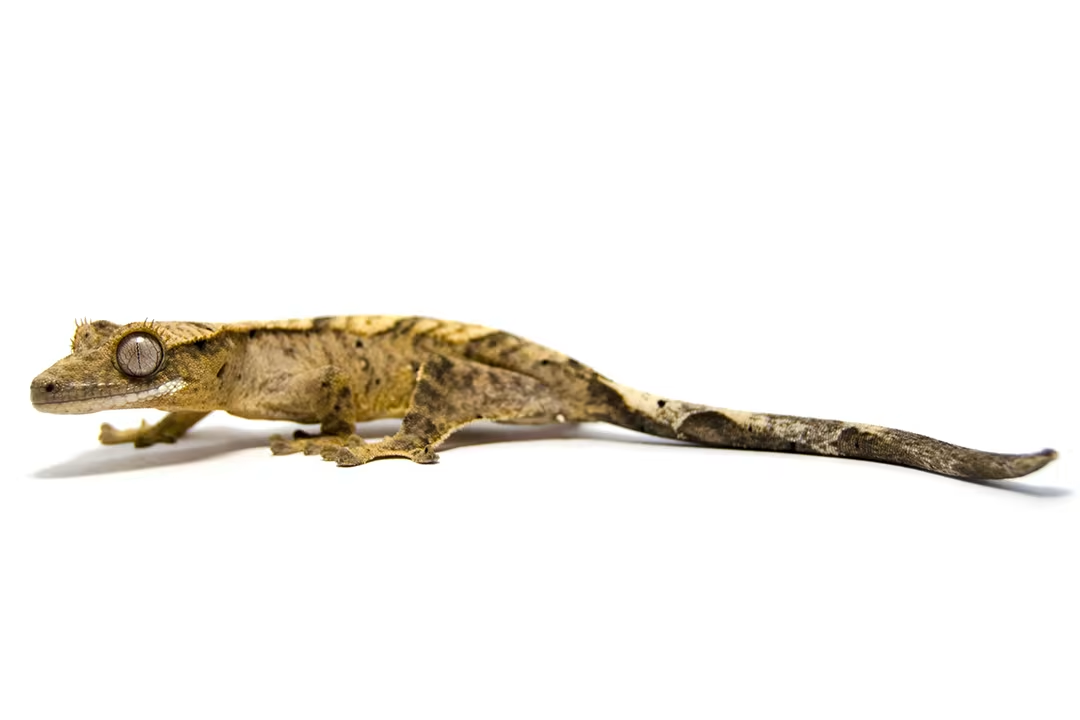
Crested Gecko Care: Habitat, Diet, Health, Supplies - Ultimate Guide
Learn how to take care of your Crested Gecko, tank size, diet & habitat setup. Find the right food, supplies and equipment at your neighborhood Petco.
Updated on November 13th, 2025
- Health & Wellbeing
Loki has a spot on his head close to his close that is changing color ND it's starting to worry me. U have any idea what it could be ND what I can do to treat it at home possibly.
Thank you for your question about Loki, and thank you for the photos - they are very helpful! From what I can see in the photos, I think that you are asking about the large white area that extends from the eyes forward to around his nose and down along his mouth. This looks like areas of retained shed on top of new skin. Difficulty shedding, or dysecdysis, is often the result of imperfections in the husbandry. I would recommend starting with soaking Loki in 85-90 F water once daily for 15-20 minutes. While in the bath, you can wet a paper towel or cloth and get the areas of retained shed wet. Use caution around his eyes and nose, however, as we don't want him to feel uncomfortable or panicked. I would also suggest evaluating the husbandry and diet closely. You can consult an online care sheet, such as anapsid.org or Reptiles Magazine, and see if there are any areas that you may need to make adjustments. Common areas that require adjustment include lighting (UV lights need to be change
Updated on August 12th, 2025
- Health & Wellbeing
I have a few questions about an ackie monitor. I want to eventually get one to add to my babies. Right now I have my beardie Loki, he is my baby. Can I build a wire cage with wood bottom half to allow soil nd sand mix for digging? Can I keep his cage
I am very glad that you are looking into husbandry before purchasing an ackie! There is a good care sheet with information on ackies on the Reptiles Magazine website. Based on your location in TX, it may work well to have the ackie outside, but there are a few things to consider. Evaluating the temperature requirements for this species in comparison to the temperatures that you have in your area during the year will be important. We don't want the monitor to get too cold at any point. Thankfully, if needed, supplemental heat sources can also be used outdoors. If these are used, please ensure that they are properly positioned so the ackie cannot access them, and that they are weather-proofed to prevent any electric shock. Also ensure that humidity is high enough in the enclosure - depending on your area, it may need to be supplemented for this species. I would recommend the use of digital thermometers and hygrometers (measure humidity) to keep an eye on the temperature and humidity i
Updated on August 12th, 2025
- Health & Wellbeing
Just received a crested gecko in the mail only to see it is a paraplegic do to bad shipping. Is there any chance it will be able to live. There are no vets around that will see him/her. It's only a baby about 2 inches long. It can't move anything hal
Paraplegia in a reptile is a very bad prognostic indicator. I would call up the company who shipped this animal to you right away and let them know what is hapening. Unfortunately, many of these companies have disclaimers regarding injuries or illness during shipping, so they may not be so willing to help you. In terms of medical care for your reptiles, I just did a quick look into your surrounding area. There are a couple of doctors in East Lansing and Grand Rapids who appear to treat reptiles. Because there aren't many around, many times they are happy to just talk to your on the telephone if you give them a call and describe what is going on. Hope this helps.
Updated on August 12th, 2025
- Health & Wellbeing
Since full spectrum growl lights for plants are supposed to mimic natural sunlight (is that correct?) then can I use that for my green anole lizard glass cage and save all that cost for a uvb light? I also have a heating pad for my back I could put u
Hello. For the best health & living conditions for your anole, please only use products designed for them. Heating pads are dangerous & reptiles are not plants & require a very specific spectrum of light to grow in a healthy manner. In the long run, you will have less problems & metabolic health issues if you prepare a proper environment for your pet. Thanks for using Boop by Petco.
Updated on August 12th, 2025
- Health & Wellbeing
Hi. Whats this and is it normal (yellowish bit on leg)? How can it be treated and where can I buy the treatment in Canada? His tank is cleaned weekly and is spot cleaned as soon as I see anything. He eats normally and is usually quite energetic. He a
This could be due to a scale rot, a superficial bacterial infection that can affect the skin. I would strongly recommend to immediately place Lenny with in a dry environment with dry substrate, good ventilation, and correct ambient temperature and humidity and then take him to your veterinarian for a check up to confirm this clinical suspicion and treat appropriately. Antibiotics may be needed. Hope this answer was helpful, but please do not hesitate to contact us again on the forum or by requesting a consultation if you have any more questions or to discuss it any further.
Updated on August 12th, 2025