

Two Easy Ways to Start Earning Rewards!
Become a member today! Members-only pricing and offers, personalized care notifications, Vital Care points back on every purchase and more!
 Become a credit card member today!
Earn 2X Pals Rewards points at Petco
when you use Petco Pay!APPLY NOWLearn More About Petco Pay Benefits
Laguna Pond Filters


Related Articles & Questions
- Home & Habitat
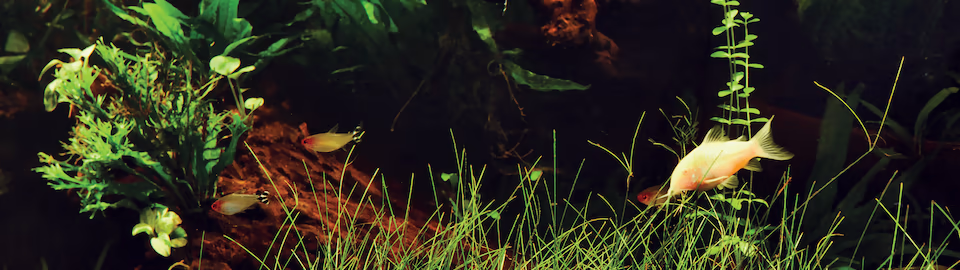
Your Guide to Healthy Freshwater Aquarium Plants & Thriving Fish
Learn how to pick the right aquarium plants, substrate, lighting, and fertilizers to ensure that your aquarium plants thrive and stay healthy.
Updated on October 23rd, 2025
- New Pet
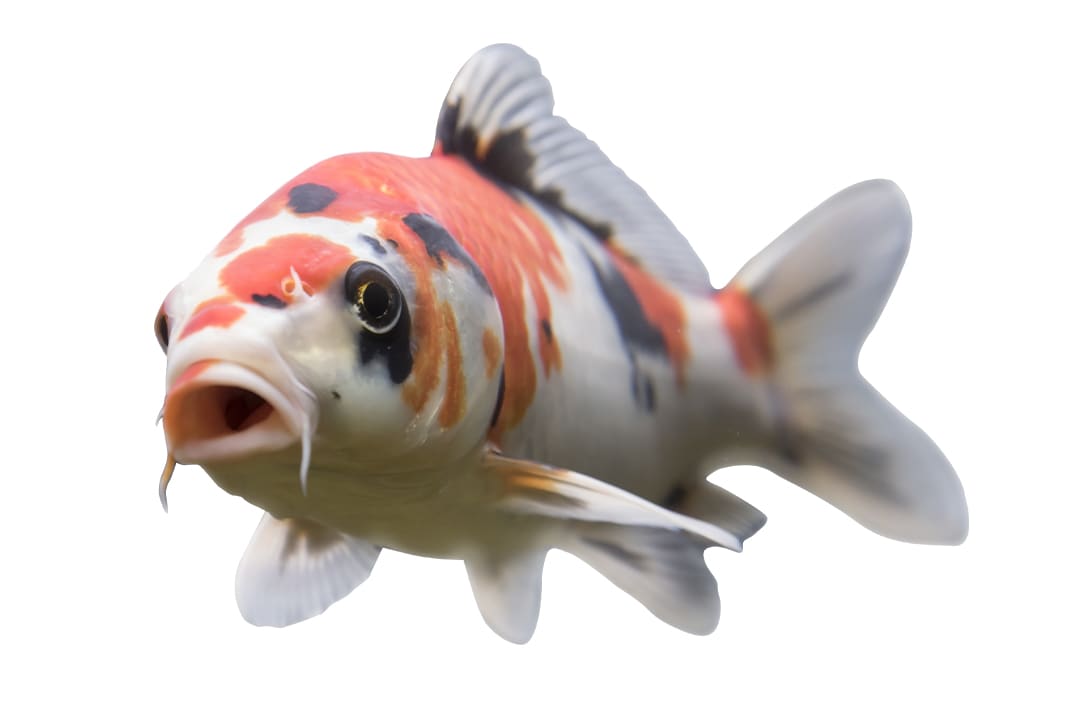
Mastering Koi Care: Optimal Tank, Food, Water Quality & Health Tips
Learn how to care for a Koi, recommended diet and aquarium setup. Find Koi for sale, supplies and equipment at your neighborhood Petco.
Updated on October 23rd, 2025
- New Pet
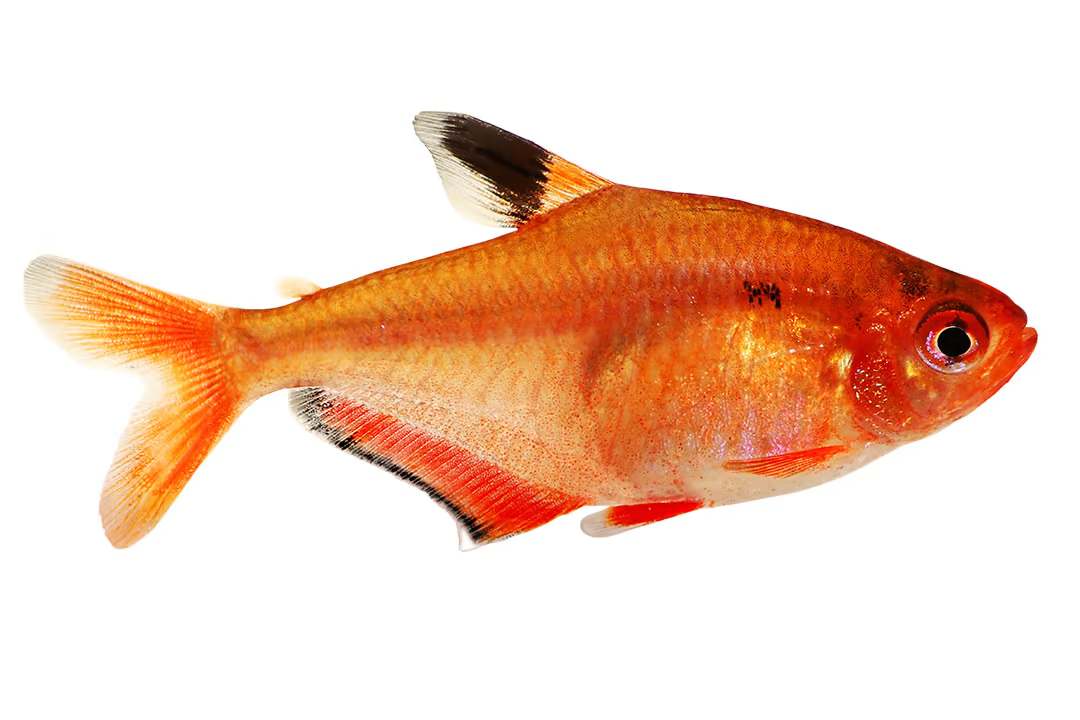
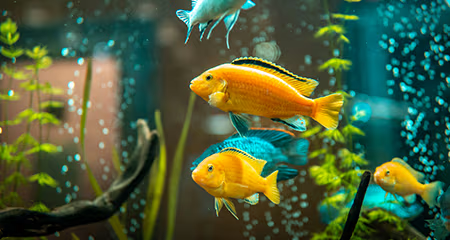
Freshwater Community Fish: Care, Setup & Compatibility Guide
Learn how to care for freshwater community fish, recommended diet & aquarium setup. Find the right food, supplies & equipment at your neighborhood Petco.
Updated on October 23rd, 2025
- Seasonal Topics
Aquaculture for Pet Fish: Essential for Healthy Tanks & Happy Pets
Although you may not realize it, aquaculture is something that touches our lives on a regular basis. Read more about what exactly aquaculture is, why it is important.
Updated on October 23rd, 2025
- New Pet
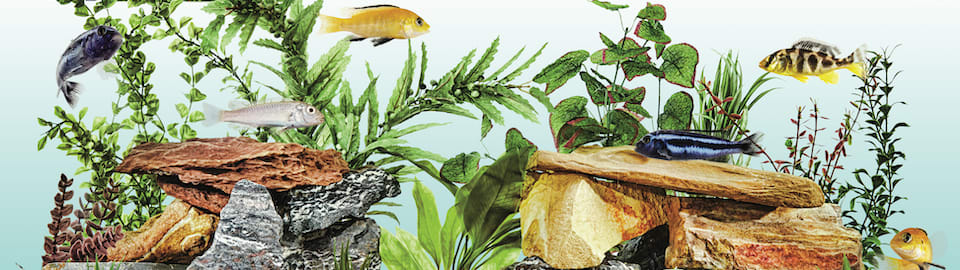
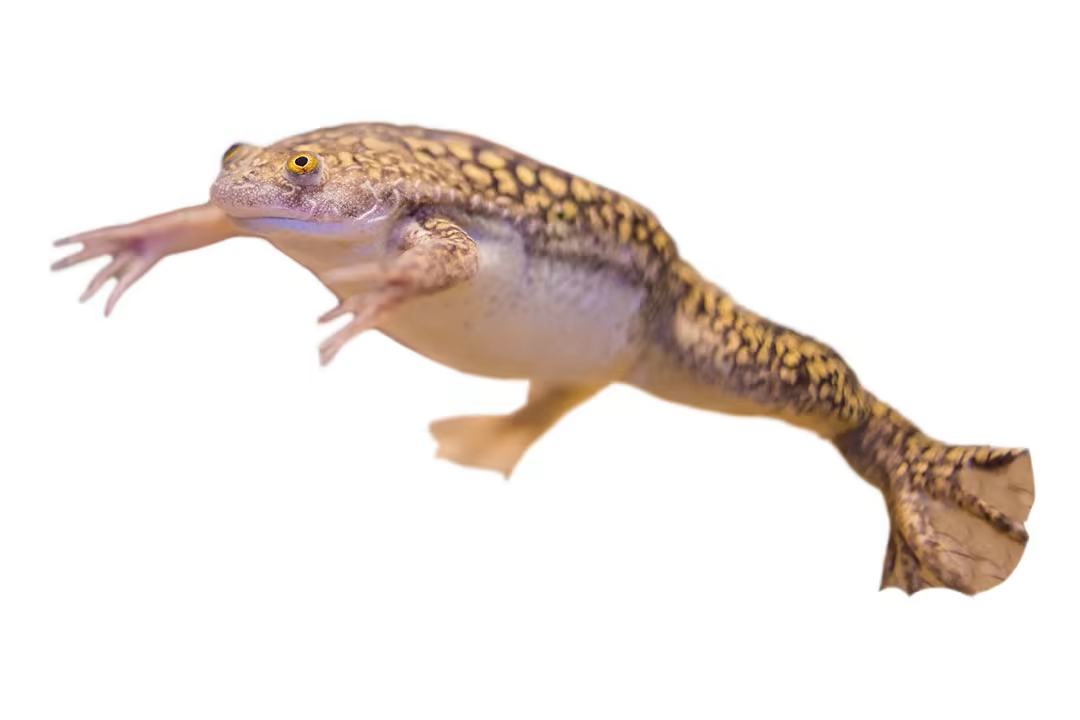
Freshwater Amphibian Care: Ultimate Tank, Food & Habitat Guide
Learn how to care for Freshwater Amphibians, recommended diet and habitat setup. Find the right food, supplies and equipment at your neighborhood Petco.
Updated on October 23rd, 2025
- Food & Nutrition
What types of fish should I buy because I'm a beginner in this . I have a 1 feet tank . One more thing I have heard that live-bearers could be best But I want your suggestion. And also what other Things I should buy and can you tell me a site that ca
Without anything to use for scale, it is hard for me to tell how big your tank is, but in general it seems very small. Also, the water that is in the tank appears very cloudy right now, so that would be the first place to start. Water quality is very important, and will make or break your ability to house and care for fish. I would recommend getting a good filter system (you can visit a local pet store to assist you with brands in your area, as I am not familiar with what you can get in India). Be sure to bring the measurements (height, length, width) of your tank, or the gallons or liters so they can tell you what capacity of filter you will need. Everything else will depend on what types of fish you get - if you plan on getting multiple fish, they will need to be small - a general rule of thumb is one square inch of fish per gallon of water. Depending on the species you get, you may need to also get a bubbler to ensure there is enough oxygen in the water for them, and you will also
Updated on September 24th, 2025
- Health & Wellbeing
I'm about to buy some new fishes mostly Tetra Can you help me what fish should I buy because I am beginner in this things. Please tell me what sort of things I should bring I have a one foot tank now other than that What should I purchase from Aquar
Before you buy any fish, you will need to set up the tank. A basic set up includes: a tank, filter, hood/light, heater, gravel and some decor. The tank should run without fish for at least 4 to 6 weeks. This gives it time to cycle. The Nitrogen Cycle is critical to the health of the tank and any fish you will be keeping. During this time, beneficial bacterial will populate the filter and substrate (gravel). These bacteria will be responsible for breaking down fish wastes and other wastes (uneaten food, dead plants, etc.). You will need a home test kit to monitor water chemistry (ammonia, nitrites, nitrates, pH) or you will have to submit water samples for testing. Most pet stores will do this for free or for a small fee. At first, you will see high levels of ammonia and nitrites. Over time, as bacteria grow, these levels will drop. When ammonia and nitrites are at 0 ppm and nitrates are below 20 ppm, you can consider adding fish. Regular (every 1 or 2 weeks) partial water changes as we
Updated on September 24th, 2025
- Health & Wellbeing
I have a small new 15 gallons tank. Can I add water and filter from my already cycled tank in the new tank for me to be able to add fish instantly?
Actually this is a good idea! I would however, make sure that the water temperature is the same as in the already running tank, so the good bacteria in the filter do not die. But , yes you can definitely do this without having to wait.
Updated on September 24th, 2025
- Health & Wellbeing
I have 3 Fancy Goldfish; Spot, Zedar and Monty. Monty has 2 white lumps on his head was swimming before but is lying inside the ship all the time. Spot is all white with black and orange spots it was spastic swimming but still eating. Then got swim b
Check the water chemistry. Use a liquid home test kit or submit a sample of water for testing. Most pet or fish stores will do this for free or for a small fee. The concern is elevated ammonia or nitrites are causing the symptoms you are seeing. The resulting stress can lead to opportunistic or secondary infections. Goldfish produce a larger than average bio load (wastes) that can quickly lead to poor water quality. For this reason, it is recorded to provide 20 gallons of water for the first goldfish then 10 additional gallons per extra fish. Any filter used should be rated for at least twice the volume of the tank. For now, perform daily partial water changes to stabilize chemistry and maintain water quality. Plain aquarium salt (NOT table salt) can be used as a general tonic to reduce stress, improve gill function, treat minor infection and aid in any recovery. Dissolve 1 teaspoon of salt per gallon of water in a cup of tank water and gently pour it into the tank. Treat for 10-14
Updated on September 24th, 2025
- Health & Wellbeing
Hi, I've 8 cichlids (2convict, 2dolphin, 2iceberg and 2livingstonii cichlids) in a 90 liter tank. My 2 dolphin cichlids are very aggressive. They always hit the others and chase them all the time. Should I seperate them or what else can I do? Also,
Remove them or provide more cover (plants and hides) for the other fish to hide or escape. When fish hang near the top, it is usually due to low oxygen levels, low water temperature or improper water chemistry. It could be related to the different filter or the water change. Confirm proper water temp and use a test kit to check water chemistry. Ammonia and nitrites should be at 0 ppm (parts per million) and nitrates should be 40 ppm or less. Monitor chemistry closely until you know how the new filter operates. Make sure it is rated for the size tank you have to ensure adequate filtration. Correct imbalances using chemical treatment and additional partial water changes using aged/conditioned water.
Updated on September 24th, 2025