Two Easy Ways to Start Earning Rewards!
Earn 2X Pals Rewards points at Petco
when you use Petco Pay!
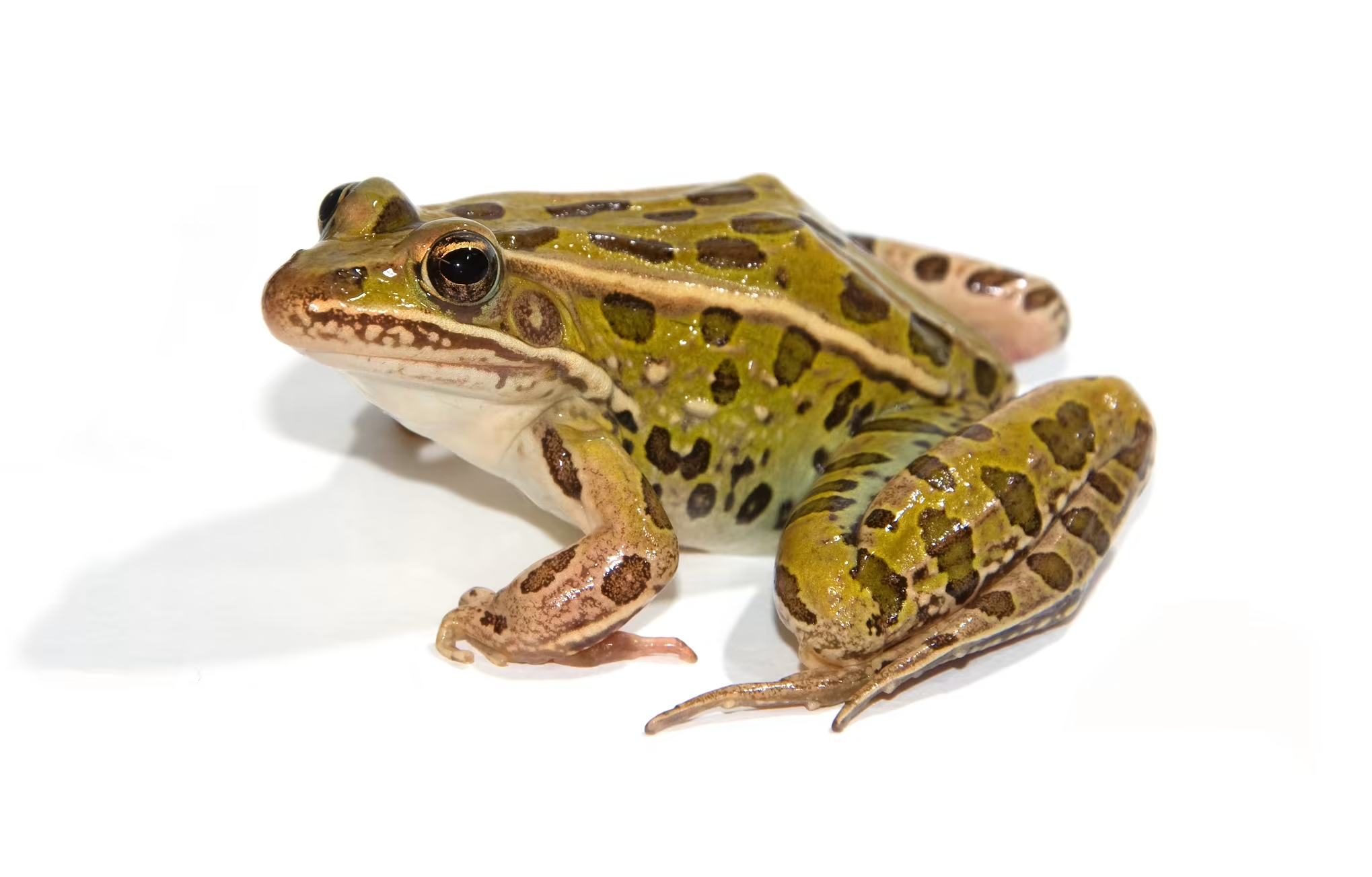
Learn how to care for large terrestrial frogs, recommended diet & habitat setup. Find the right food, supplies & equipment at your neighborhood Petco.
Updated on November 13th, 2025
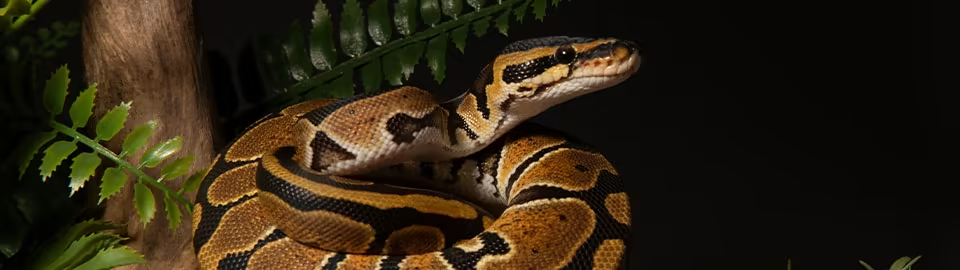
Explore our tips about what to keep in mind when choosing the right pet reptile for your family. Consider what they need to stay happy and healthy.
Updated on November 13th, 2025
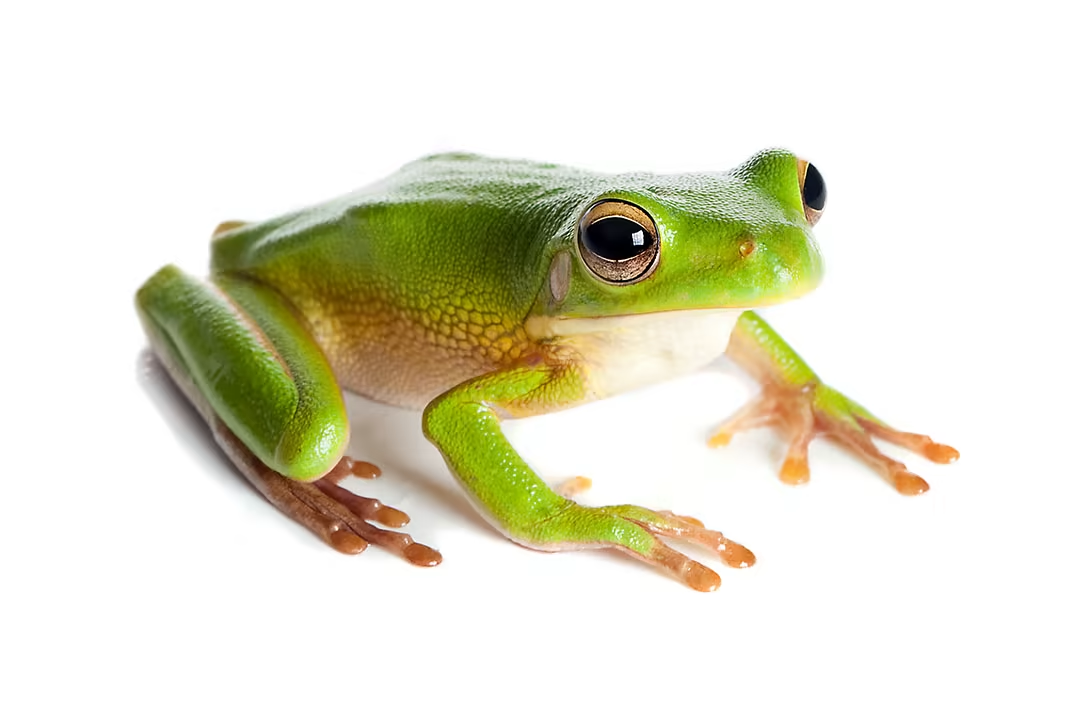
Tree Frogs love to climb, and become active and vocal and dusk. Learn how to take care of tree frogs, what to feed them, and how to set up their habitat.
Updated on November 13th, 2025
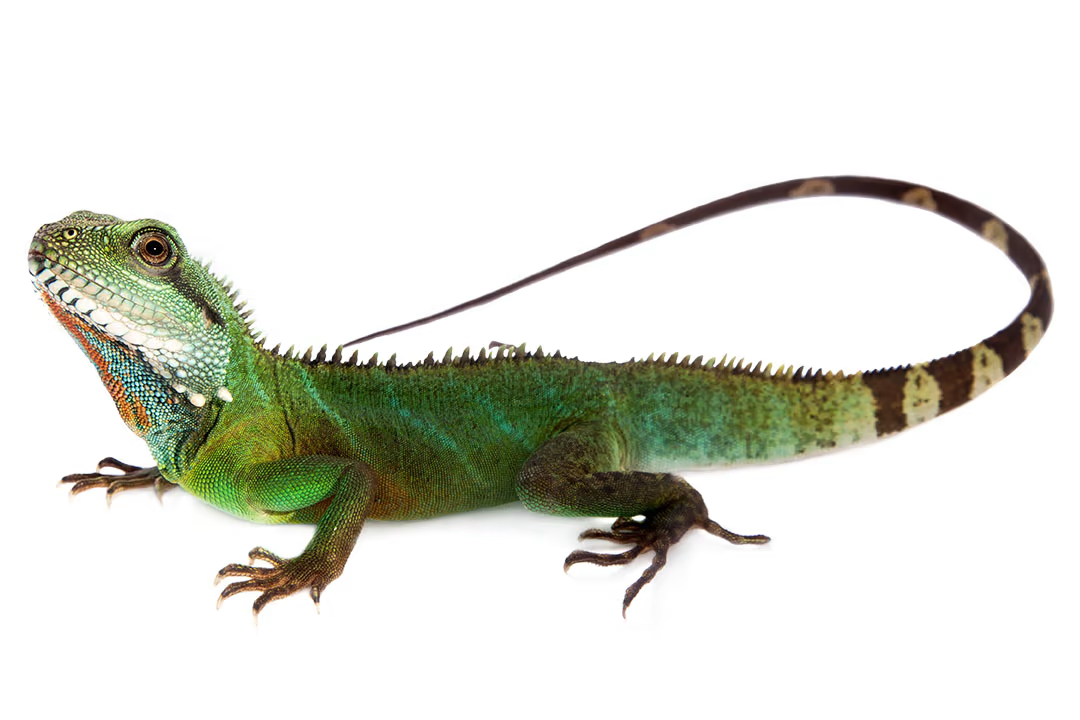
Learn how to care for tropical lizards, recommended diet & habitat setup. Find the right food, supplies & equipment at your neighborhood Petco.
Updated on November 13th, 2025
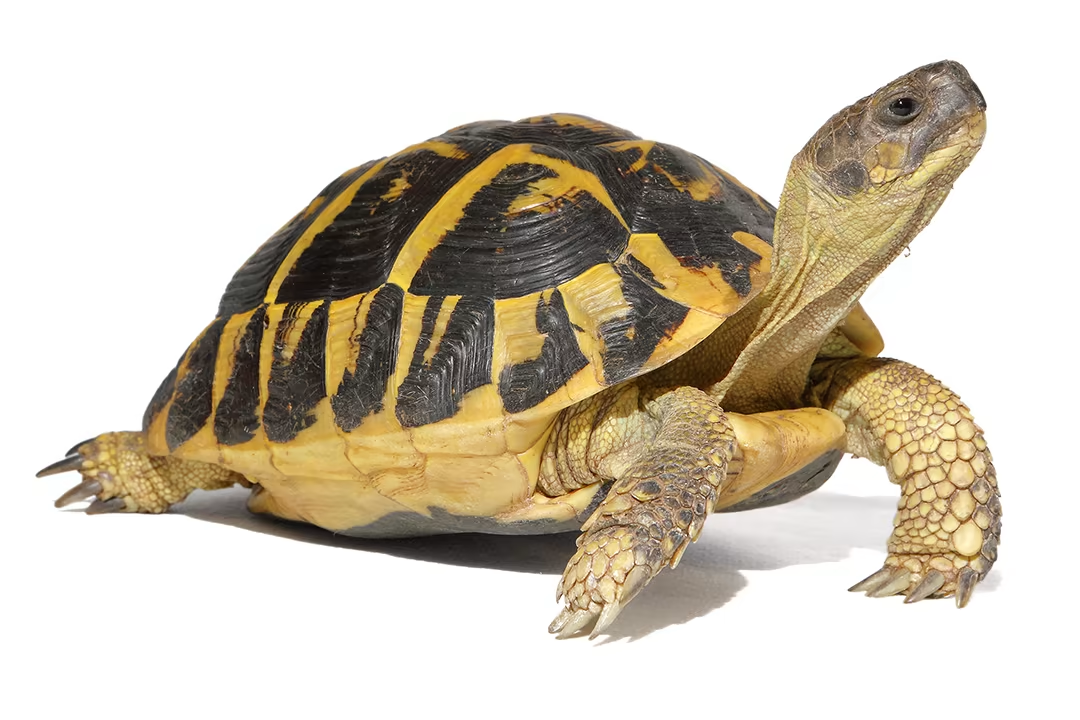
Learn how to take care of your Hermann's Tortoise, tank size, diet & habitat setup. Find the right food, supplies and equipment at your neighborhood Petco.
Updated on November 13th, 2025
A 29L is a good sized enclosure for this species of tree frog. Juvenile frogs are much more active than adults. As your frog matures, it will "settle down" and spend more time on the ground. You can still use branches and perches to make use of the vertical space. You can keep two in the tank if you choose as long as there isn't a significant size difference. Different species cannot be kept together though. They do not need a night light. They do best with a 12 hours on/off light cycle.
Updated on August 12th, 2025
Keep her in some clean water between 68 F and 77 F. Perform daily water changes using aged or conditioned water that is temperature matched to prevent further stress or shock. Clean water is the key to treating sick frogs. Aquarium salt is a great general tonic and can treat minor infection. Dissolve 1 tablespoon in 5 gallons of water and use that for water changes. You can add conditioners such as AmQuel and NovAqua as well as some StressCoat. She should begin to improve in a few days. Offer a few pellets daily, but remove them if she doesn't eat to prevent fouling the water.
Updated on August 12th, 2025
Without an image, it is difficult to determine the species. You can upload a picture to the pet profile. Most small frogs are insectivores. You can offer appropriately sized crickets, mosquito larvae or fruit fly larvae.
Updated on August 12th, 2025
Check out online sources such as LLL Reptile ( www.lllreptile.com ) and DFW Reptarium ( www.dfwreptarium.com ). You can also look up any upcoming reptile shows. A quick search showed ReptiCon ( www.repticon.com ) coming to Grapevine during the summer months.
Updated on August 12th, 2025
Reptile water conditioner usually contains chemicals such as Water, Dechloraminating Agents, Synthetic Organic Polymers (Colloids), Chelating Agents, Electrolytes. The reptile conditioner usually also has a chemical that binds calcium in the water as well as a slime protecting agent that is good for amphibians and fish. Aquarium water conditioners (for fresh water fish) contains chemicals such as sulfates such as sodium thiosulfate. Thiosulfate is a Redox reducing agent. Either should be ok for reptiles or fish, however I would stick with reptile conditioner for reptile tanks or mixed (reptile and fish) tanks and for aquaria with fish only I would use specific aquarium water conditioner. The main reason to use a water conditioner is to remove chlorine in water. This, however, can also be attained by leaving the aquarium water fresh from the tap sitting over night. The chlorine will dissipate.
Updated on August 12th, 2025