

Two Easy Ways to Start Earning Rewards!
Become a member today! Members-only pricing and offers, personalized care notifications, Vital Care points back on every purchase and more!
 Become a credit card member today!
Earn 2X Pals Rewards points at Petco
when you use Petco Pay!APPLY NOWLearn More About Petco Pay Benefits
Petco Freshwater Inverts Catfish


Related Articles & Questions
- New Pet
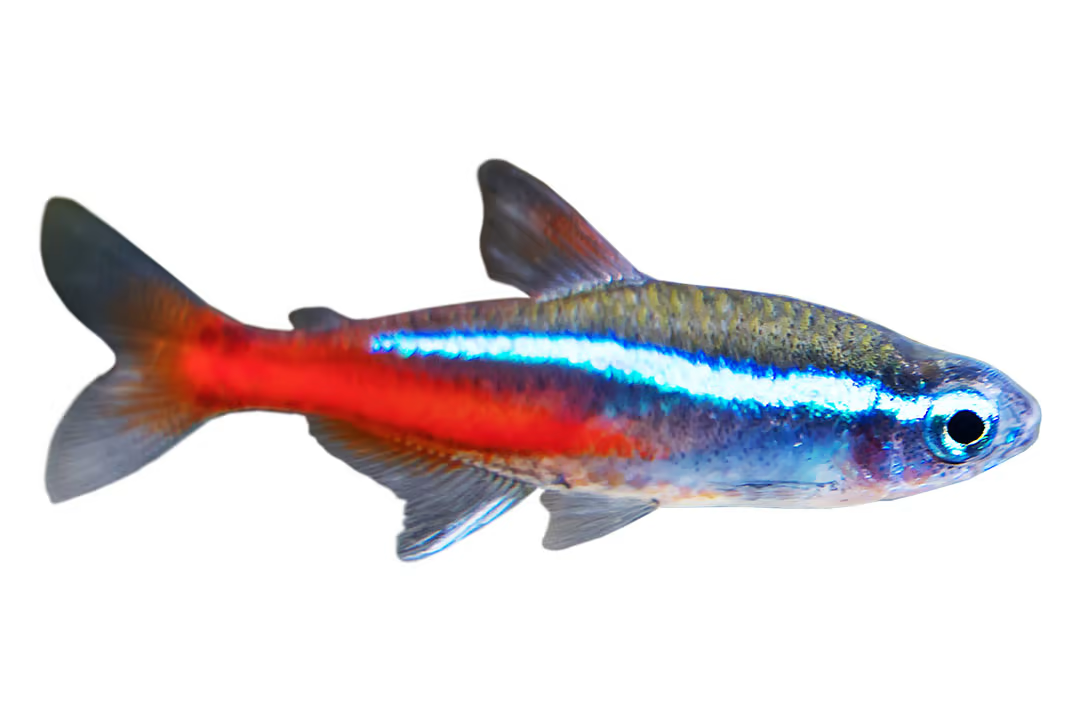
Complete Tetra Care: Tank Setup, Food, & Compatibility Tips
Learn how to care for a Tetra, recommended diet & habitat setup. Find the right food, supplies & equipment at your neighborhood Petco.
Updated on November 13th, 2025
- New Pet
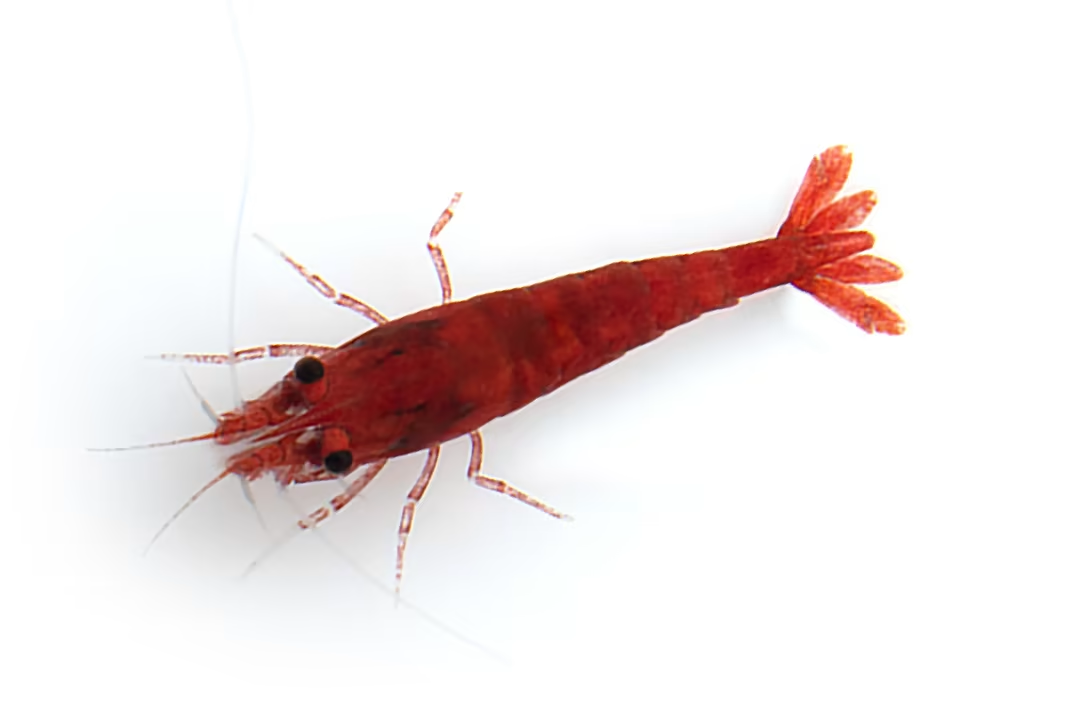
Freshwater Crustacean Care: Master Tank Setup, Food & Compatibility
Learn how to care for Freshwater Crustaceans, recommended diet and aquarium setup. Find freshwater shrimp, lobsters and crayfish species at your neighborhood Petco.
Updated on November 13th, 2025
- New Pet
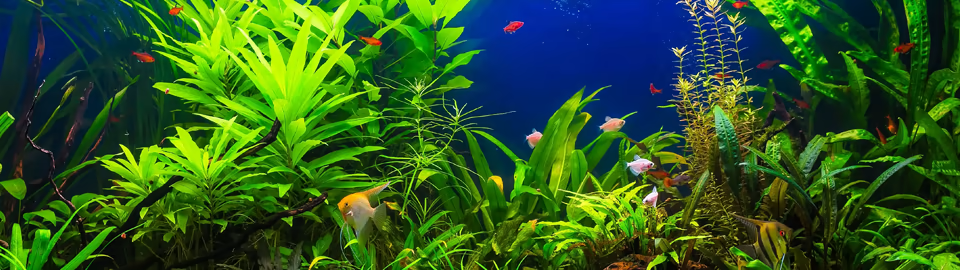
Perfect First Fish: Easy & Hardy Freshwater Pets for Beginners
Some fish species generally do well in smaller aquariums, are more adapted to aquarium life, & can be slightly more forgiving with water quality fluctuations.
Updated on November 13th, 2025
- New Pet
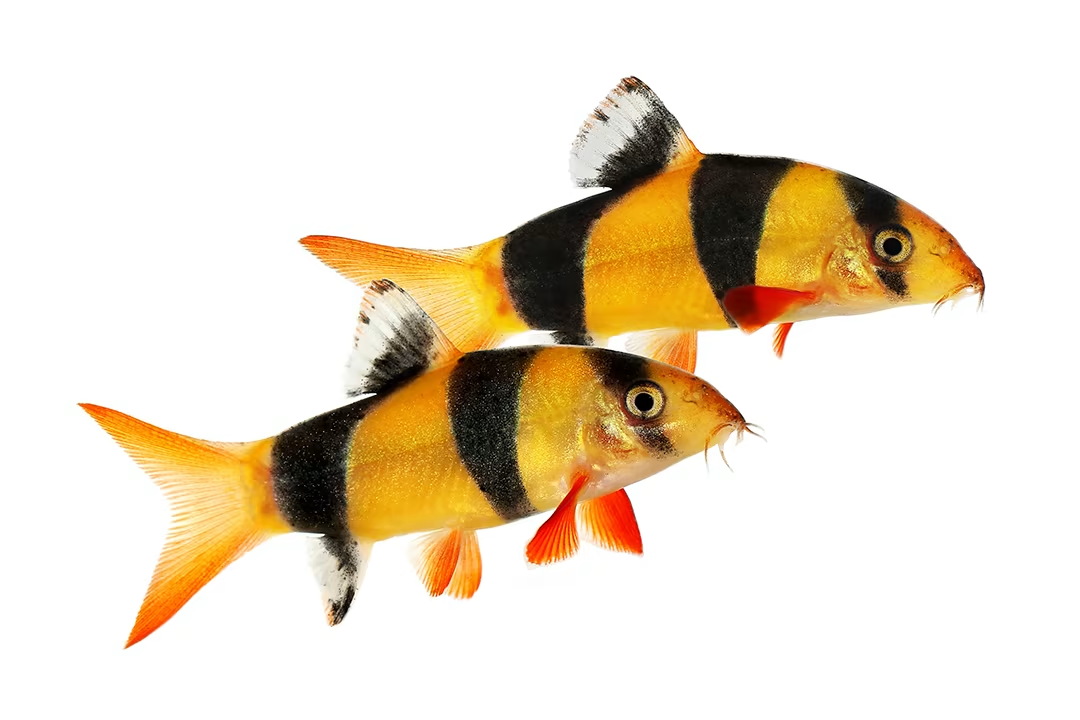
Thriving Loach Care: Tank Setup, Feeding, & Compatibility Guide
Learn more about how to care for freshwater loaches, what to feed, signs of good health and appropriate tank mates. If you are ready to add a loach to your aquarium, visit your local Pet Care Center.
Updated on November 13th, 2025
- New Pet
Marine Shrimp Care for Beginners: Tank Setup, Food, & Compatibility
Learn how to care for Marine Shrimp, recommended diet & aquarium setup. Find the right food, supplies & equipment at your neighborhood Petco.
Updated on November 13th, 2025
- Health & Wellbeing
Hi, I just got a fish from a friend and I don’t rlly know anything about that fish, it’s rlly small(about 4cm) and I want to know the breed of the fish and how to take care of it. Thanks you
Thanks for reaching out about you fish. It is believed to be a Comet goldfish. Water quality and nutrition is the key to success. Testing water parameter for pH, ammonia, nitrite and nitrate will give you guidance for a healthy environment. Purchased food should be rotated out every 3 months as vitamin C and other nutrients degrade over time. Trying to maintain water temperature can be challenging with out a heater, but most fresh water fish tolerate some changes. Good luck.
Updated on August 12th, 2025
- Health & Wellbeing
My fish has fin rot and seems lethargic. He will just sit at the bottom of his tank or in his flower. He might also have a swim bladder issue. What can I do to fix him?
Check the water chemistry and quality first. Poor quality can predispose him to infection. Use a home test kit or submit a water sample for testing. Your local Petco may do this for free or for a small fee. If ammonia and/or nitrite levels are elevated, perform partial water changes until both read 0 ppm and nitrates are 20 ppm or less. Use only conditioned water that is temperature matched to prevent further stress or shock. Providing pristine water quality is the foundation for treatment and healing. Check the water temperature since low temps can affect appetite and activity in fish. If the water is too warm, it can also affect activity since warm water does not hold as much oxygen as cooler waters. Fast the fish for 2-3 days then feed tiny bits of cooked and shelled green peas. This will aid in defecation if there is constipation. Plain aquarium salt (not table salt or Epsom salt) can be used for most fish as a general tonic to reduce stress, improve gill function, treat minor in
Updated on August 12th, 2025
- Health & Wellbeing
My fish is laying on the fake plant and barely moving.
There are several causes that can provoke these signs fro water imbalances to specific diseases like swim bladder ones. This problem requires a quite radical but logic approach. Begin by submitting a water sample for quality testing. Most pet stores will do this for free or a nominal fee. High ammonia levels, PH imbalances may be responsible for that. Oxygen concentration and quality of the filters should be determined as well. If water quality is good and there are no major imbalances, your fish should get examined to look for any sign of bacterial/fungal infection and eventually water should be treated. Please do not hesitate to contact us again on the forum or by requesting a consultation if you have any more questions or to discuss it any further.
Updated on August 12th, 2025
- Health & Wellbeing
My betta has red tips on his tail and my cat fish Cory has red spots as well
This could be bacterial infection. Most minor infection can be managed or resolved by providing pristine water conditions and a tiny bit of plain aquarium salt (NOT table or Epsom salt). Perform daily partial water changes, about 30%, using aged or conditioned water that is temperature matched to prevent further stress or shock. Dissolve about 1/2 teaspoon of plain aquarium salt per gallon of water into the tank. Treat for 10-14 days then reassess their condition. If necessary a broad spectrum antibiotic can be found in the aquarium section of the local Petco. Follow label directions carefully. As an aside, Bettas do best between 78F and 80F. Cory cats prefer cooler temps, between 60F and 75F. They do not do well at temps that Bettas are kept in, eventually they will become stressed which can lead to infection. Consider separating one or the other into a tank with the appropriate water parameters.
Updated on August 12th, 2025
- Health & Wellbeing
My pleco fish is bullying my fancy goldfish that are in the same tank. What should i do?
You can try to provide more hiding areas for your goldfish, and this may allow for it to escape from the pleco. If this doesn't work, you may need to add a barrier into the tank in order to separate the two of them. Barriers can be purchased at your local pet store, and come in a variety of shapes and sizes depending on the type/size of tank that you have. If you are able to gather information on the dimensions of your tank (gallons, length, width, and height) and take that information with you, it may be helpful for the pet store employees. If this is a recent change, you may also see if your pleco is thin - sometimes fish will become aggressive if they are hungry. You can get a general idea of the body condition of your fish by looking at their heads in comparison to their body size - if the head looks too large for the body, that can be an indicator that they are thin. Another way to tell is by looking at the belly - if it looks sunken, that is another indicator that the fish is th
Updated on August 12th, 2025