Two Easy Ways to Start Earning Rewards!
Become a member today! Members-only pricing and offers, personalized care notifications, Vital Care points back on every purchase and more!
 Become a credit card member today!
Earn 2X Pals Rewards points at Petco
when you use Petco Pay!APPLY NOWLearn More About Petco Pay Benefits
Piscine Energetics
Get It Today


Related Articles & Questions
- New Pet
Freshwater Semi-Aggressive Fish: Top Secrets for a Thriving Tank
Learn how to care for semi-aggressive fish, recommended diet & aquarium setup. Find the right food, supplies & equipment at your neighborhood Petco.
Updated on November 13th, 2025
- New Pet
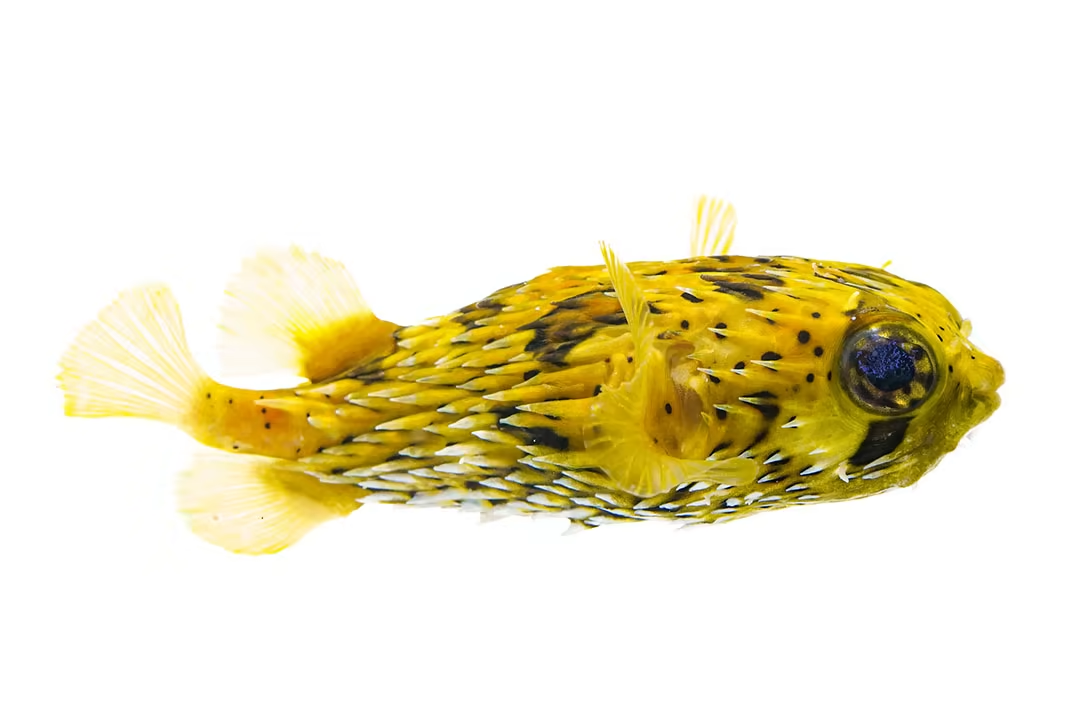
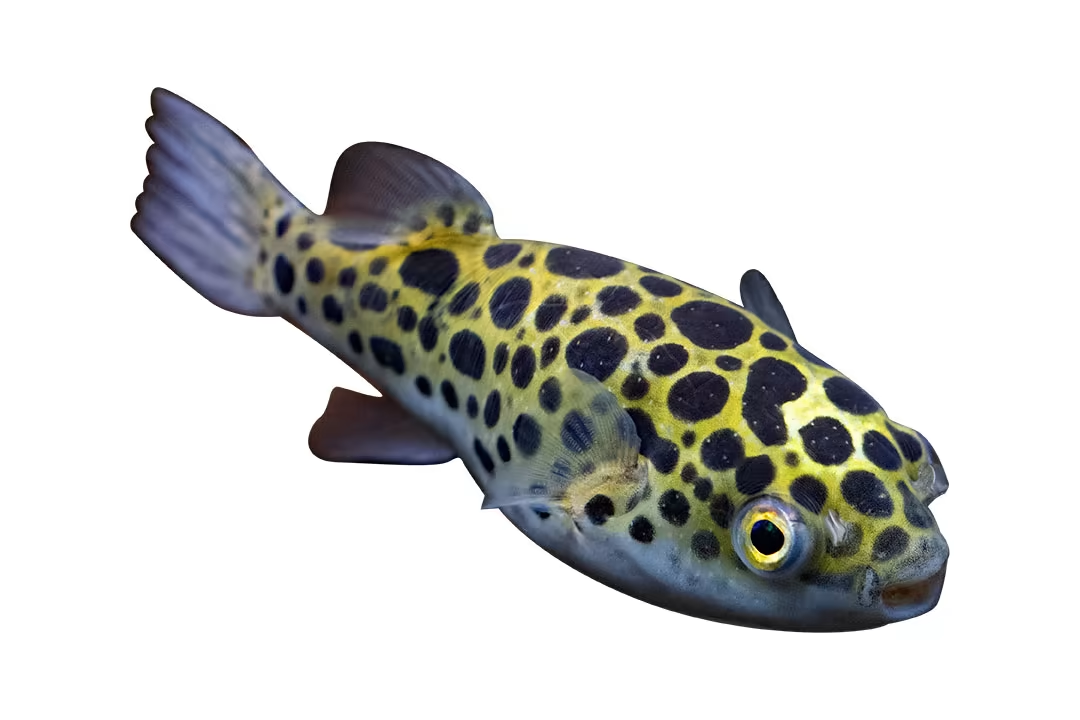
Pufferfish Care: Tank Setup, Diet, & Compatibility for Thriving Pets
Learn how to take care of Puffer Fish, recommended diet and tank size. Find the right food, supplies and equipment at your neighborhood Petco.
Updated on November 13th, 2025
- New Pet
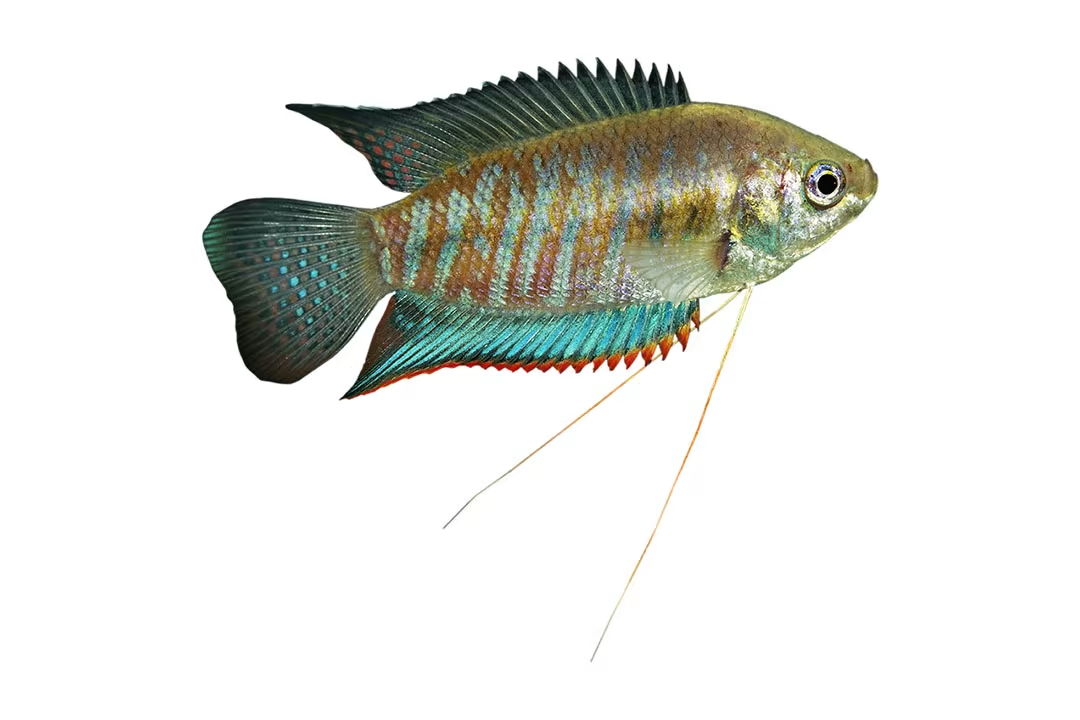
Paradise Fish Care: Complete Guide to Tank Size, Food, & Habitat Setup
Learn how to care for Paradise fish, recommended diet and aquarium setup. Find the right food, supplies and equipment at your neighborhood Petco.
Updated on November 13th, 2025
- New Pet
Brackish Water Fish Care: Your Complete Guide to Tank, Food & Species
Learn how to care for brackish water fish, recommended diet & aquarium setup. Find the right food, supplies & equipment at your neighborhood Petco.
Updated on November 13th, 2025
- New Pet
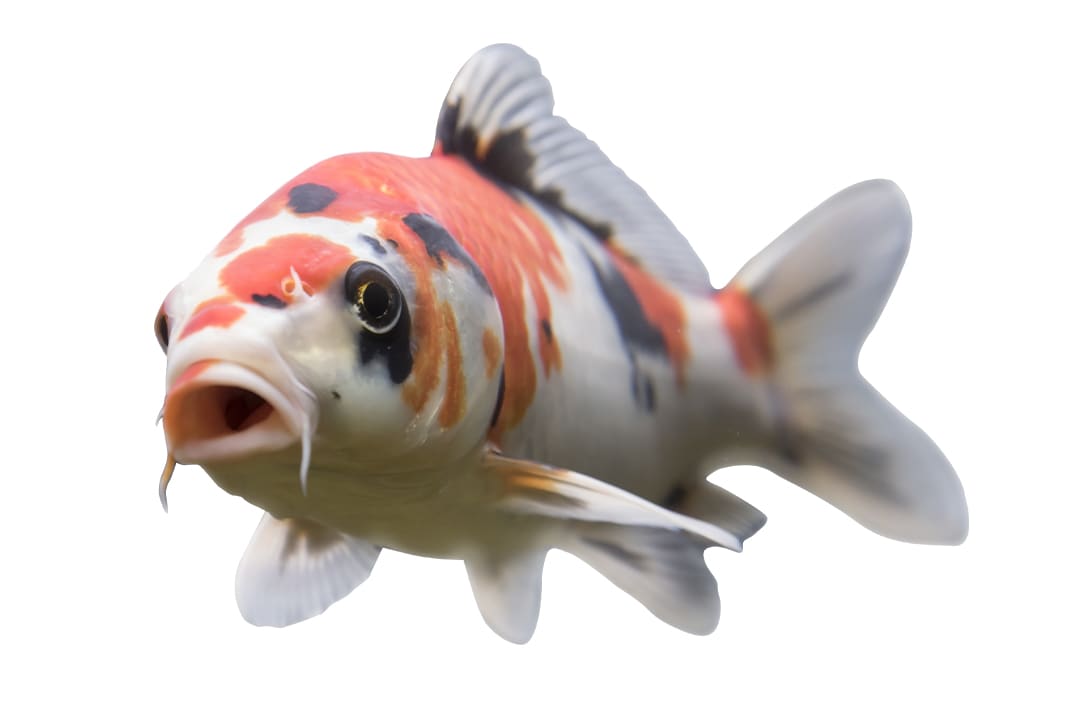
Mastering Koi Care: Optimal Tank, Food, Water Quality & Health Tips
Learn how to care for a Koi, recommended diet and aquarium setup. Find Koi for sale, supplies and equipment at your neighborhood Petco.
Updated on November 13th, 2025
- Training & Behavior
I have an issue, this involves all my fish I am moving from Georgia to Utah, and of course that’s a long distance by car, but if will also restrain me from seeing my fish due to the fact that I will be flying there. How do I feed them while they’re b
Thanks for reaching out. If is a good idea to fast for 1-2 days prior to shipment, this decreased feces and will help to keep the ammonia down. Typically clear bags are utilized with about 50% water, and 50% air/oxygen used. A local pet store might be able to assist, as they get shipment in (so have older bags and boxes, which need to be disinfected) and hopefully the skills to ship. Check with the airline also, box needs to be well labelled "LIE ANIMALS" and "THIS END UP". Sometimes a health certificate for interstate travel is needed, so contact airline and State of Utah, veterinarian. Good luck.
Updated on August 12th, 2025
- Health & Wellbeing
I'm about to buy some new fishes mostly Tetra Can you help me what fish should I buy because I am beginner in this things. Please tell me what sort of things I should bring I have a one foot tank now other than that What should I purchase from Aquar
Before you buy any fish, you will need to set up the tank. A basic set up includes: a tank, filter, hood/light, heater, gravel and some decor. The tank should run without fish for at least 4 to 6 weeks. This gives it time to cycle. The Nitrogen Cycle is critical to the health of the tank and any fish you will be keeping. During this time, beneficial bacterial will populate the filter and substrate (gravel). These bacteria will be responsible for breaking down fish wastes and other wastes (uneaten food, dead plants, etc.). You will need a home test kit to monitor water chemistry (ammonia, nitrites, nitrates, pH) or you will have to submit water samples for testing. Most pet stores will do this for free or for a small fee. At first, you will see high levels of ammonia and nitrites. Over time, as bacteria grow, these levels will drop. When ammonia and nitrites are at 0 ppm and nitrates are below 20 ppm, you can consider adding fish. Regular (every 1 or 2 weeks) partial water changes as we
Updated on August 12th, 2025
- Health & Wellbeing
Hi, I'm planning on getting a betta fish and I'm wondering what foods are best for it
These are the two highest rated foods for your Betta! You can pick some up when your go in to purchase your Betta; Freeze dried bloodworms https://m.petco.com/shop/en/petcostore/product/omega-one-freeze-dried-betta-treat# Aqueon Natural Beta Food https://m.petco.com/shop/en/petcostore/product/aqueon-betta-color-enhancing-pellets-betta-food#
Updated on August 12th, 2025
- Health & Wellbeing
I have a 20 gallon tank. I'm thinking of buying +5 fish. Which fish could I buy and what would I need for the fish and tank?
A fish tank will need a filter, a light/hood and a heater. Make sure the filter is rated for at least twice the tank volume. The heater should be adjustable since water temperature will depend on the species of fish. Good "starter" fish include Tetras, Mollies, Danios or Tetras. A new tank should be set up and left running empty for several weeks before adding fish. A pinch of flake food can be sprinkled in daily. This "cycling" will allow a population of beneficial bacteria to colonize the tank and filter. These bacteria will break down wastes (ammonia, nitrites and nitrates) which are toxic to fish.
Updated on August 12th, 2025
- Health & Wellbeing
Hi I'm really scared because I went to my boyfriends parents house and I left my sister to look after my 7 Fish and she sent me a photo and I saw (HEAPS) of food layers on the to and I had to cut my holiday short my 11 days and I get back to sad babi
Check the water chemistry to rule out elevated ammonia or nitrite levels. You can do this using a home test kit or by submitting a water sample for testing. Most pet stores will do this for free or for a small fee. Perform partial water changes (no more than 30% total volume at a time) to stabilize chemistry and/or to improve water quality. use only aged or conditioned water that is temperature matched to prevent further stress or shock. If all 7 fish are goldfish, a large tank is strongly recommended. The general rule is 20 gallons for the first fish and 10 additional gallons per extra fish. This is due to the goldfish producing a larger than average bio load (wastes) which can quickly overwhelm a small tank. Check the water temperature as well. Goldfish are cold water fish and do best between 65 F (18.3 C) and 72 F (22.2 C). The use of antibiotics or other medications would not be recommended in the absence of symptoms of illness or infection. Plain aquarium salt (NOT table or Epsom
Updated on August 12th, 2025