Two Easy Ways to Start Earning Rewards!
Become a member today! Members-only pricing and offers, personalized care notifications, Vital Care points back on every purchase and more!
 Become a credit card member today!
Earn 2X Pals Rewards points at Petco
when you use Petco Pay!APPLY NOWLearn More About Petco Pay Benefits
Rep-Cal Reptile
Get It Today


Related Articles & Questions
- New Pet
Reptile Enclosure Setup: Create a Thriving Habitat for Your Pet
Learn how to setup your reptiles terrarium to ensure your reptile lives a wholesome & happy life. Shop at your local Petco for all reptile terrarium needs.
Updated on November 13th, 2025
- New Pet
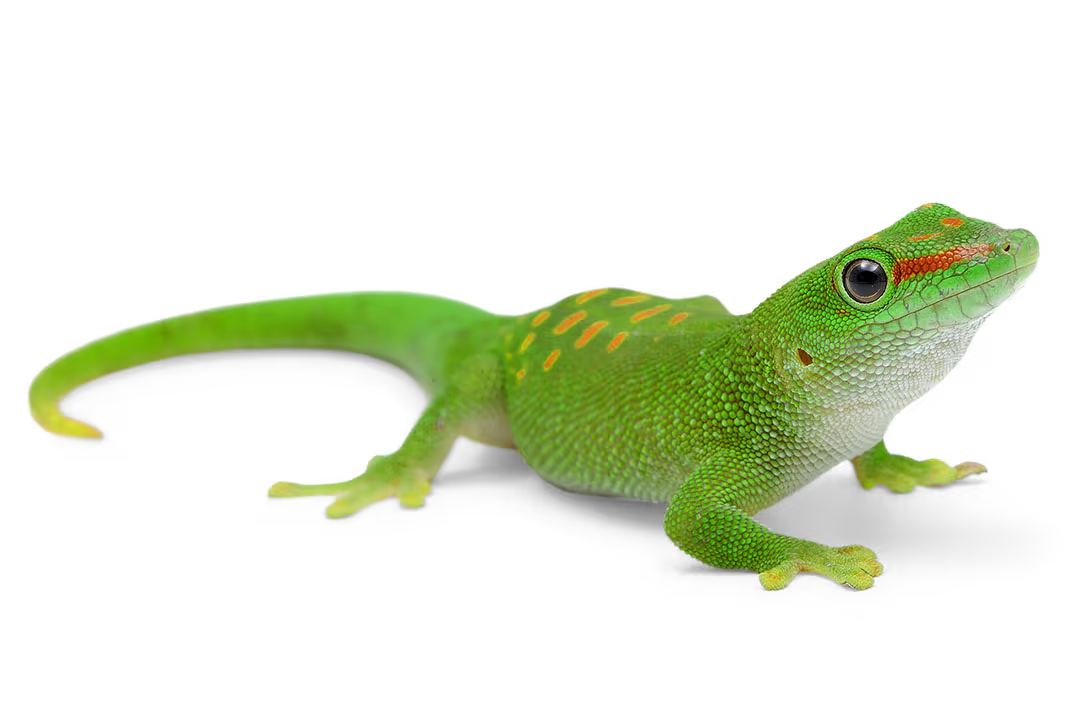
Raise a Thriving Giant Day Gecko: Habitat, Food & Health Guide
Learn how to care for a Giant Day Gecko, recommended diet & habitat setup. Find the right food, supplies & equipment at your neighborhood Petco.
Updated on November 13th, 2025
- New Pet
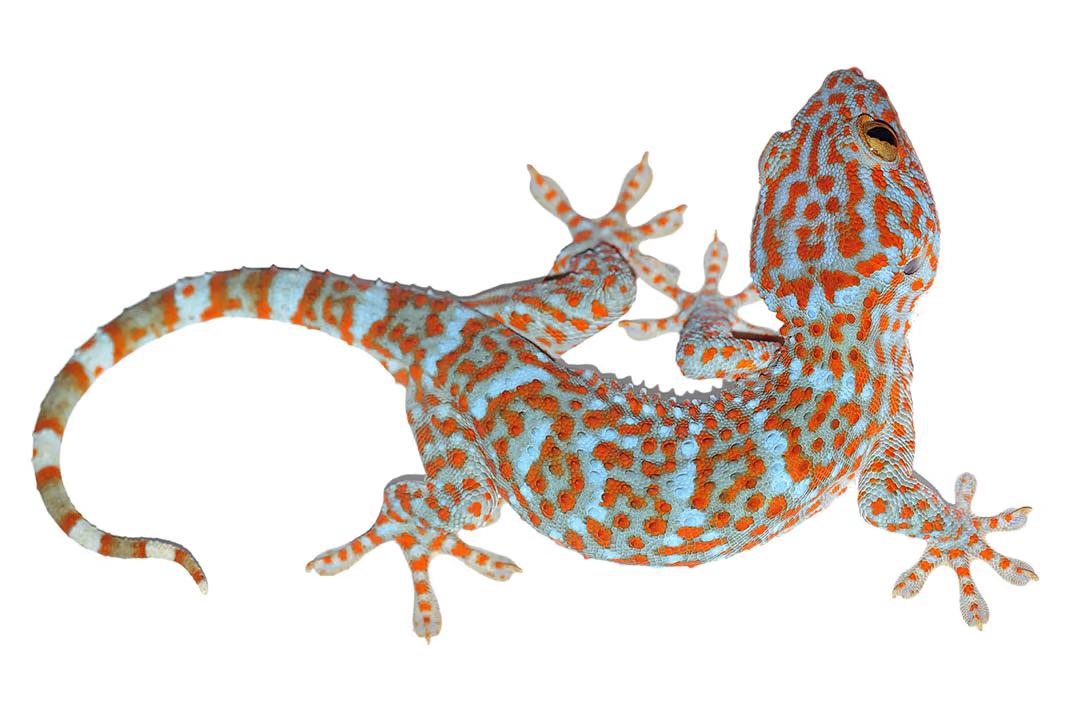
Tokay Gecko Care: Food, Habitat & Health for Experienced Owners
Learn how to care for a Tokay Gecko, recommended diet & habitat setup. Find the right food, supplies & equipment at your neighborhood Petco.
Updated on November 13th, 2025
- New Pet
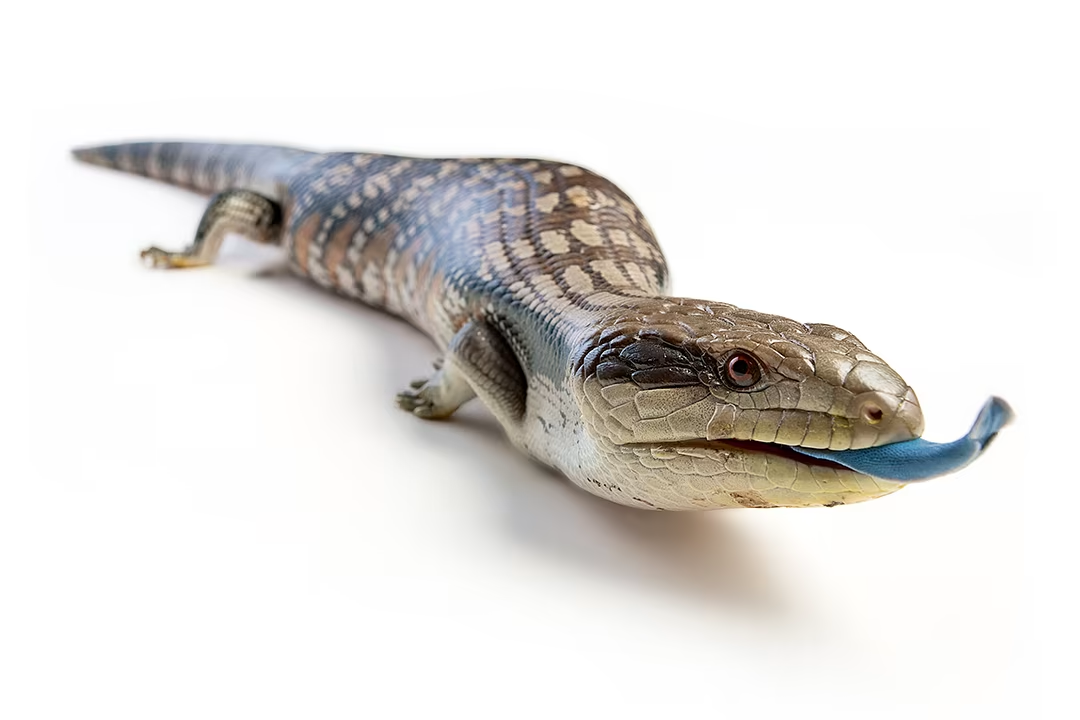
Tropical Skink Care: Habitat, Food, Health & Handling Guide
Learn how to care for Blue-Tongued Skink, recommended diet and habitat setup. Find the right food, supplies and equipment at your neighborhood Petco.
Updated on November 13th, 2025
- Food & Nutrition
Chameleon Vitamin A: Spot Deficiency Early & Ensure Pet Health
A varied diet is critical to the overall health of a chameleon to prevent a nutritional deficiency of vitamin A.
Updated on November 13th, 2025
- Health & Wellbeing
What should I feed my red ear slider with shell pyramiding and how often?Also which heat lamp would you recommend?Picture 1 or 2?How many watts should I get for the heat lamp?
A proper diet for red-eared sliders includes a complete pellet, such as those made by ReptoMin, and dark leafy green vegetables. This can be fed once per day, and the amount should be based on how many pellets Cooper can eat in 5-7 minutes. This is just a guideline, and your veterinarian can help you to determine if this is appropriate based on Cooper's body condition score (i.e. whether she is overweight or not). For a heat lamp - photo 1 just looks like the dome, and there doesn't appear to be a bulb in it. The second lamp looks like it is a daytime only heat lamp - it is often beneficial to have a heat source that can be used during the day or at night, and if that is what you are looking for, I would recommend a ceramic heat bulb. If you are looking for only a daytime basking bulb, there are many brands that would be appropriate. The key words that you should look for are "daytime basking bulb." For watts - it depends on how far the bulb is away from your turtle - there are some b
Updated on August 12th, 2025
- Health & Wellbeing
My Pet is a mid size lizard. Tegu began to tremble upper and lower toes. I could see his muscles spaz. He really cares for no food such as crickets and worms. He had a mouse 5 days ago. There was some soured watermelon in his cage I removed. I rea
Check the temperature in his enclosure. Low temps can affect appetite in reptiles. If he isn't eating or not exposed to high quality UVB lighting, he can become calcium deficient which could account for the tremors. If he is less than 30 inches long, confirm a basking temp of around 115 F. If he is bigger, bump basking temp to between 125 F and 135 F. Multiple lower wattage lights over a larger area are recommended over one high intensity light source. Try to get him to eat and offer a calcium supplement. If you can get a liquid supplement, that would be best right now. Zoo Med and Fluker's offer such a supplement.Soak him in a warm 50/50 solution of water and unflavored PediaLyte to treat or prevent minor dehydration. if he doesn't eat or if the tremors worsen, have him examined by your veterinarian or a vet experienced in treating reptiles as soon as possible.
Updated on August 12th, 2025
- Health & Wellbeing
I have a turtle I got as a hatchling whose shell has started to curve. I’ve read this could be due to too much protein, too weak of uv/uvb lights, or a combination that makes him grow too fast for the shell to keep up. I’m going to the pet supply sto
He should be eating some greens and vegetables as well. Avoid the fish flakes as they are high in protein. Use both a multivitamin powder and a calcium powder on the food. Rep-Cal and Zoo Med products can be found in the local Petco. Make sure the UVB light is not blocked by glass, plexiglass or fine mesh. Depending on the strength of the bulb, place the source between 12 and 18 inches from the surface of the basking area. Provide a piece of cuttlebone to float in the tank as a calcium supplement for when he wants to munch it. If you can provide the species of turtle in a new post, we may be able to provide more accurate and comprehensive advice.
Updated on August 12th, 2025
- Health & Wellbeing
Is pydialite safe for pets to eat and soak in? How does it help? How does it help reptiles skin?
Pedialyte is a balanced electrolyte replacement solution that has sodium, potassium & chloride, & sometimes high amounts of glucose (sugar). It is used primarily in humans, but can be utilized in other species, especially dogs & cats. Since there is no balanced electrolyte solutions for reptiles, if you decide to use some for your reptile, then make sure it is unflavored. It is generally not used for soaking, but as an oral drench in dehydrated animals. Thank you for using Boop by Petco.
Updated on August 12th, 2025
- Health & Wellbeing
I've never had a crested gecko before and I'm about to rescue one from a girl. This gecko has MBD. I need all advice and tips on how to help it. Thank you!
As you probably know MBD is a metabolic disease due to lack of Calcium. Treatment must be done properly at your local vets, while prevention (or cure of mild forms of MBD) can be achieved by following these recommendations: Gut load live food prior to feeding making them more nutritious, dust live food with Nutrobal, Calcium, and/or Calcium D3, use correct UVB light, avoid excessive phosphorous in a diet (most fruits are high in P and low in Ca).
Updated on August 12th, 2025