

Two Easy Ways to Start Earning Rewards!
Become a member today! Members-only pricing and offers, personalized care notifications, Vital Care points back on every purchase and more!
 Become a credit card member today!
Earn 2X Pals Rewards points at Petco
when you use Petco Pay!APPLY NOWLearn More About Petco Pay Benefits
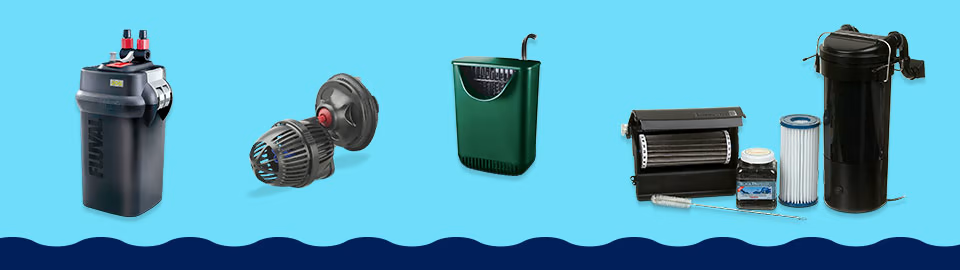
Seachem Saltwater Filters & Media
Get It Today


Related Articles & Questions
- Product Guides
Aquarium Filtration: Pick the Best Filter for a Thriving Tank
Discover the fish tank filter system that’s right for your aquarium. Learn about mechanical, chemical, and biological filtration at Petco.
Updated on October 23rd, 2025
- New Pet
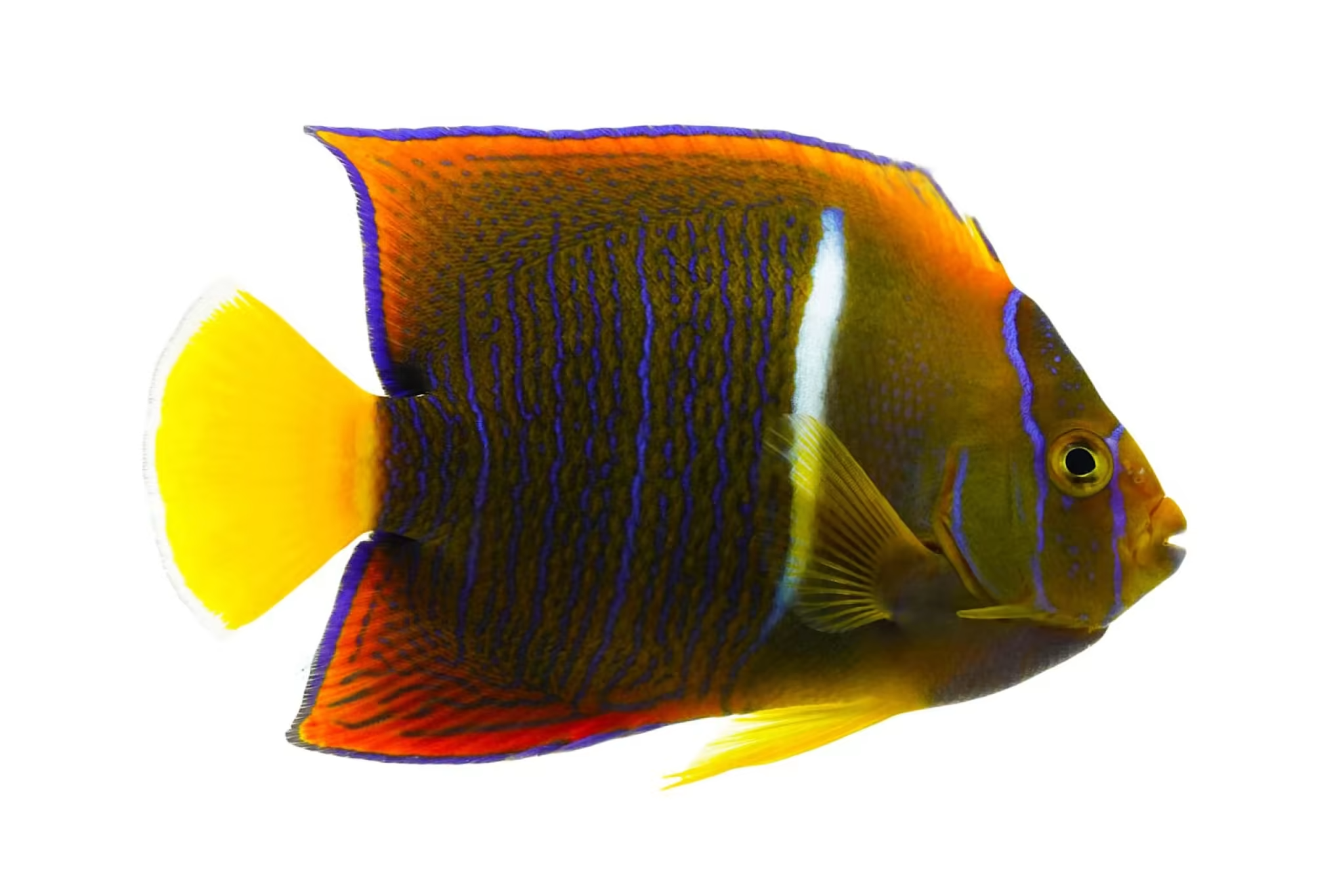
Essential Large Marine Fish Care Guide: Tank Setup, Diet, & Tank Mates
Learn how to care for large marine fish, recommended diet and habitat setup. Find the right food, supplies and equipment at your neighborhood Petco.
Updated on October 23rd, 2025
- New Pet
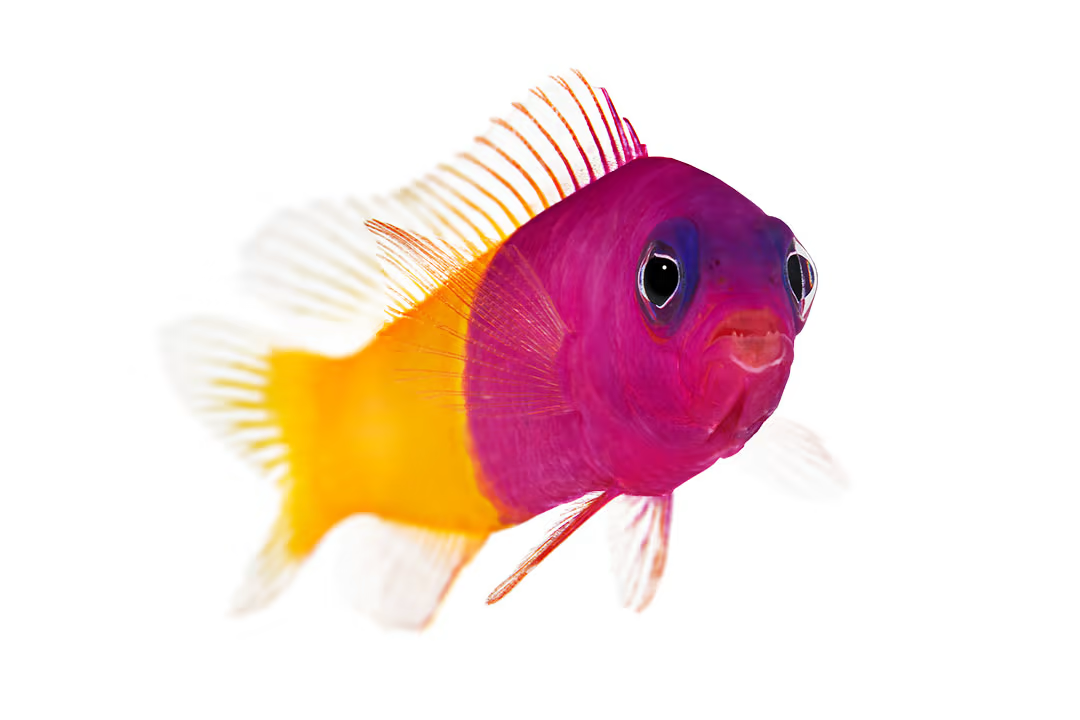
Master Small Marine Fish Care: Tank Setup, Food, & Compatibility Guide
Small Marine Fish are favorites with marine aquarists and includes a wide range of species.
Updated on October 23rd, 2025
- New Pet
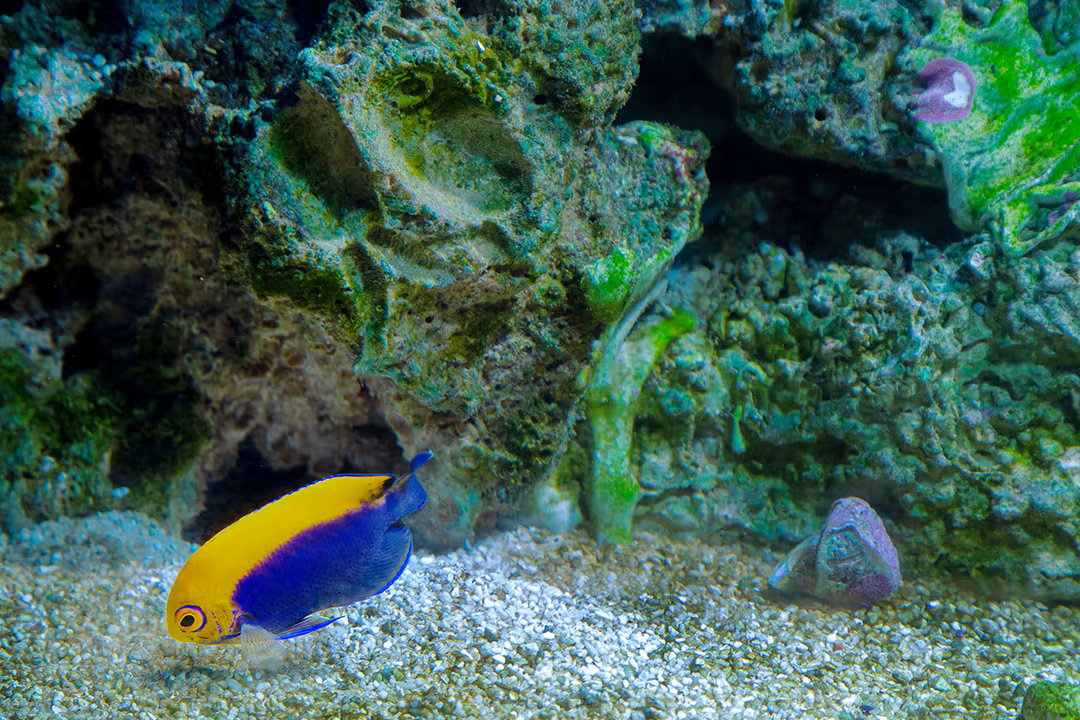
Your FOWLR Marine Tank: Easy Setup Guide for Live Rock Fish
Learn how to care for Marine FOWLR Aquariums. These tanks have easier upkeep and require less testing and supplementation than a reef tank. You can keep many fish who would generally consume corals and invertebrates, making it a popular setup choice for more aggressive fish.
Updated on October 23rd, 2025
- New Pet
Freshwater Community Fish: Care, Setup & Compatibility Guide
Learn how to care for freshwater community fish, recommended diet & aquarium setup. Find the right food, supplies & equipment at your neighborhood Petco.
Updated on October 23rd, 2025
- Health & Wellbeing
If I make water for salt water fish, about how much sea salt I need to put in water? And does the sea salt must be cleared
If your are using a product such as Instant Ocean ( www.instantocean.com ) or Reef Crystals ( http://www.instantocean.com/Products/Sea-Salt-Mixes/reef-crystals-sea-salt.aspx ), then directions will be on the container. Other products may also include instructions. The amount of sea salt will depend on the specific gravity you desire. Ocean water, or water used in marine tanks, has a specific gravity of 1.025, so you will need to dissolve enough salt into a quantity of water to reach that level. You will need to allow for 24 hours to make sure the salt has completely dissolved. If you want a step by step guide, click the link below. http://www.saltwatersmarts.com/guide-to-mixing-saltwater-517/
Updated on September 24th, 2025
- Health & Wellbeing
will an iron rich fertilizer hurt my fish? I just got a Green Wendth to help my small aquarium with 2 small neon fish. i am tring to naturally balance the environment. Do i need to get specific rocks for the bottom? oh , i also got one of those g
When used as instructed, plant nutrients and fertilizers designed specifically for aquarium plants will not harm aquarium fish. Allow new aquarium plants to settle and establish themselves before adding any fertilizers. Use aquarium plant substrates such as CaribSea Eco-Complete Plant Substrate http://www.drsfostersmith.com/product/prod_display.cfm?pcatid=9087 to get your plants established faster. Seachem Flourish Advance Natural Phytohormone Supplement http://www.drsfostersmith.com/product/prod_display.cfm?pcatid=33890 will help stimulate root growth vital for overall plants health. Even though you have plants with low to moderate light requirements, be sure to use aquarium light specifically designed for planted aquarium use (sometimes called plant lights) and have the lights on between 10 and 12 hours a day. You may need to adjust the photoperiod (the amount of time the light is on) depending on how your plants are doing and to prevent unwanted nuisance algae growth.
Updated on September 24th, 2025
- Health & Wellbeing
My fish swims to eat but then goes back to the bottom of the tank and stays there, I am treating him for ich too. His breathing is slow and steady but he just stays at the bottom of the tank. His friend died a few days ago too, could he be lonely ?
Thanks for reaching out about Nemo and including photos. There is no evidence of Ich in the photos. Have you tested water quality for pH, ammonia, nitrites and nitrates? Correct problems. If having difficulty breathing (slow gill rate) add an air stone. A veterinary visit is recommended to assess and provide a diagnostic/treatment plan. Good luck.
Updated on September 24th, 2025
- Health & Wellbeing
hi, I need some help with water condition of my fish tank. I’ve recently got 6 new fish and added in my 10 gallon fish tank three days ago. I did set up my tank for 48 hours before adding fish but now the water gets cloudy with tiny air bubbles on th
48 hours is not long enough for a tank to properly cycle. Several weeks to a couple months are needed for beneficial bacteria to populate the substrate and filter. These bacteria break down wastes (ammonia, nitrites, nitrates) that are harmful to fish and can promote bacterial blooms resulting in cloudy water. The overfeeding likely contributed to the bacterial bloom. You can cycle with or without fish, however cycling with fish will increase the risk of loss. You'll need to monitor chemistry using a liquid test kit. The kits with strips are not as accurate. Perform partial water changes, no more than 25%, every few days or if ammonia levels begin to affect fish. Use only aged or conditioned water that is temperature matched to prevent stress or shock. Feed them every other day. Normally, you would add one fish at a time but that isn't possible for you now. Monitor chemistry and perform water changes until ammonia and nitrites are 0.25ppm or less and nitrates are 40ppm or less. This
Updated on September 24th, 2025
- Health & Wellbeing
I’m worried about betta 1 weekago I spoke to someone about my betta cause I putapleco in his tank and the pleco gave him a bacterial infection cause it got sick. I was told to get this treatment to put in the water which seems to be doing some what w
He does look very stressed. You can tell by the clamped fins and loss of color. There is also evidence of fin rot. The product pictured may aid in treatment of minor infections, but at this point, your little guy may need antibiotics. The cornerstone of treatment and recovery of any infection in fish is clean water. Use a home test kit or submit a water sample to test water chemistry. The local Petco may do this for free or for a small fee. Water chemistry can affect quality which can lead to stress and illness. Aim for an absence (0 ppm) of ammonia and nitrites with nitrates at 20 ppm or less. Perform partial water changes (no more than 30% total volume) every few days to stabilize chemistry and/or to improve water quality. Use only conditioned water that is temperature matched to prevent further stress or shock. Bettas do best between 78 F and 80 F. Also, turn down the filter flow, if possible, to the lowest setting. Bettas prefer slow moving water. The plain aquarium salt pictured
Updated on September 24th, 2025