

Two Easy Ways to Start Earning Rewards!
Become a member today! Members-only pricing and offers, personalized care notifications, Vital Care points back on every purchase and more!
 Become a credit card member today!
Earn 2X Pals Rewards points at Petco
when you use Petco Pay!APPLY NOWLearn More About Petco Pay Benefits
Sera Pond Fish Food
Get It Today


Related Articles & Questions
- Food & Nutrition
Worry-Free Fish Feeding: Vacation Sitters & Auto Feeder Guide
Do you have questions about feeding your fish while on vacation? Petco has the answers! Visit us to learn about fish dietary needs.
Updated on October 23rd, 2025
- New Pet
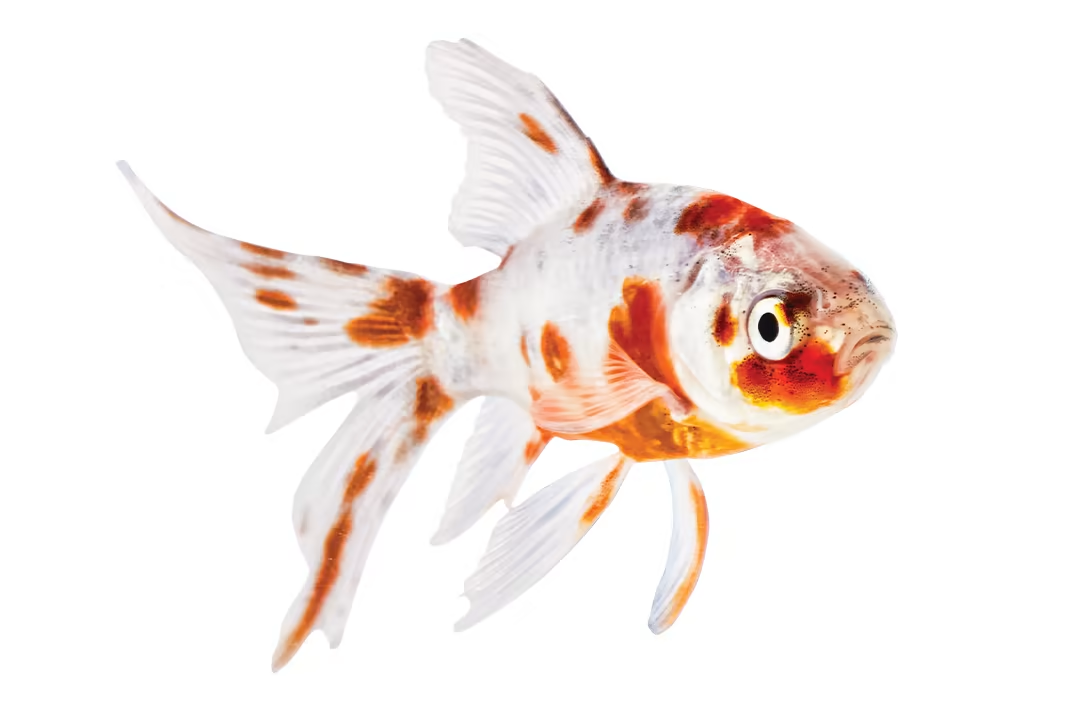
Goldfish Care Guide: Tank Size, Food, Water Quality for Thriving Fish
Learn how to care for Goldfish, recommended diet and aquarium setup. Find the right food, supplies and equipment at your neighborhood Petco.
Updated on October 23rd, 2025
- New Pet
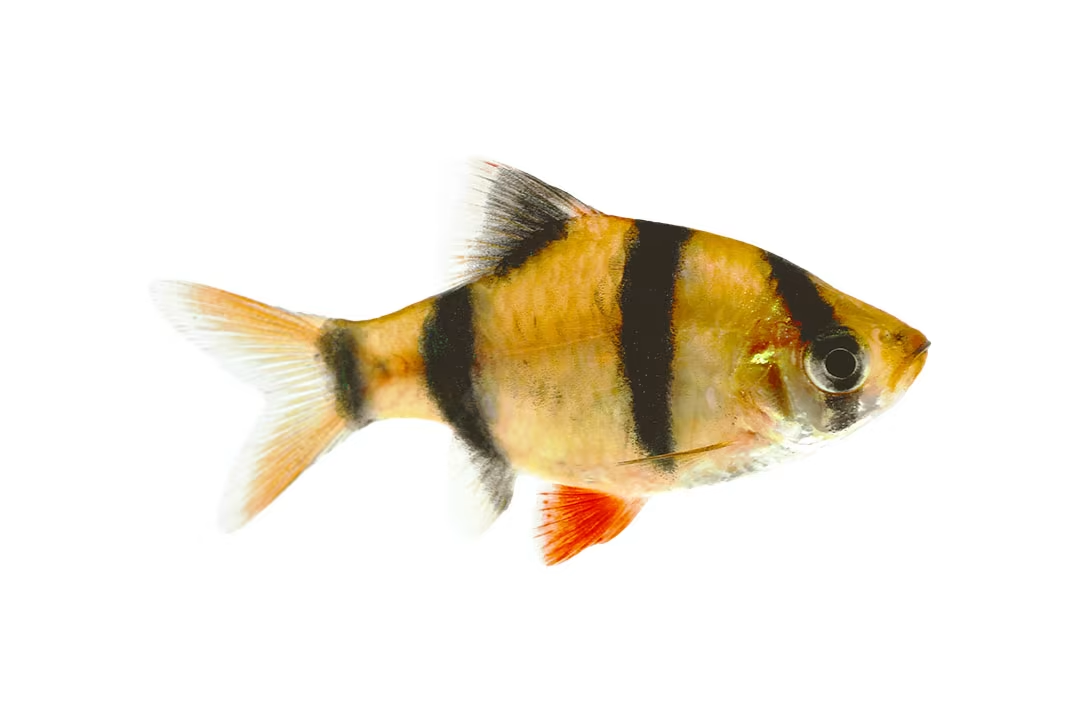
Barbs Fish Care Guide for Beginners: Tank, Food & Compatibility
Learn how to care for Barbs fish, recommended diet and aquarium setup. Find Barbs for sale, supplies and equipment at your neighborhood Petco.
Updated on October 23rd, 2025
- New Pet
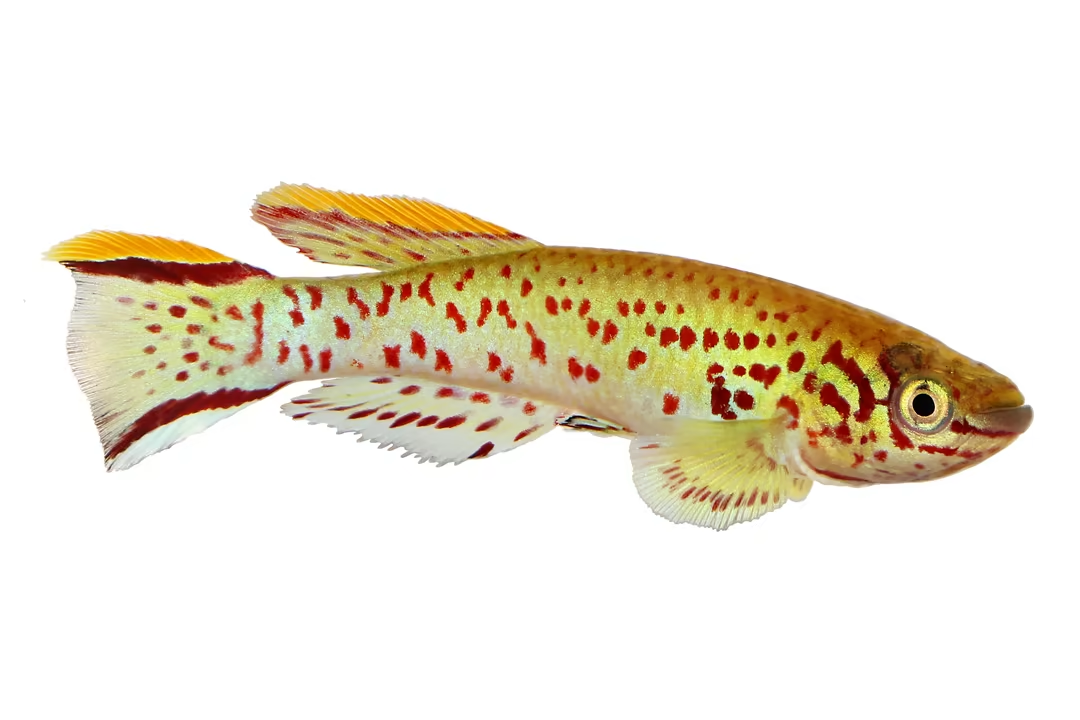
Killifish Care Guide: Unlock Vibrant Health for Your Aquarium Fish
Learn more about Killifish and their care to see if they are the right aquatic life to begin or add to your aquarium.
Updated on October 23rd, 2025
- Training & Behavior
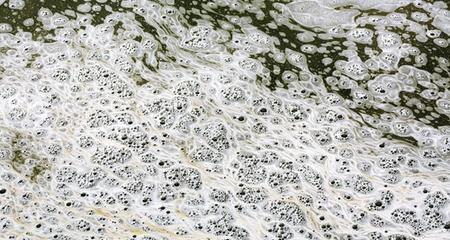
Why Your Fish Pond Foams: Causes, Solutions for a Clear Pond
Foam buildup on your pond's surface can be an unsightly problem with multiple causes. Learn how good filtration, water changes, & water additives can help your pond foam problem on PetCoach.
Updated on October 23rd, 2025
- Food & Nutrition
What types of fish should I buy because I'm a beginner in this . I have a 1 feet tank . One more thing I have heard that live-bearers could be best But I want your suggestion. And also what other Things I should buy and can you tell me a site that ca
Without anything to use for scale, it is hard for me to tell how big your tank is, but in general it seems very small. Also, the water that is in the tank appears very cloudy right now, so that would be the first place to start. Water quality is very important, and will make or break your ability to house and care for fish. I would recommend getting a good filter system (you can visit a local pet store to assist you with brands in your area, as I am not familiar with what you can get in India). Be sure to bring the measurements (height, length, width) of your tank, or the gallons or liters so they can tell you what capacity of filter you will need. Everything else will depend on what types of fish you get - if you plan on getting multiple fish, they will need to be small - a general rule of thumb is one square inch of fish per gallon of water. Depending on the species you get, you may need to also get a bubbler to ensure there is enough oxygen in the water for them, and you will also
Updated on September 24th, 2025
- Food & Nutrition
My koi fish in the dam just had babies. What food must I give them? Must I give them smaller fish pallets or must I just continue with the fish pallets that I'm currently giving them?
Koi fry can be fed daphnia, brine shrimp (live or freeze dried), krill or hard boiled eggs ( remove the yolk, blend, mix with water and pour into the tank). Feed them multiple times a day. Once they grow some, you can switch to "fry powder". This is basically finely ground koi pellets.
Updated on September 24th, 2025
- Health & Wellbeing
I was wondering on how I could safely move my koi fish into my home for the winter with a tank. I have two koi that are about five inches long. We weren't shure how big of a tank to get , how to feed them , and how to keep the water clean. Help? By t
Anything less than a 100 gallon tank would be insufficient for koi of your sizes. They can be fed as you feed outdoors. Filtration would be critical to maintain water quality. A combination of mechanical, biological and chemicals filtration would be required.
Updated on September 24th, 2025
- Training & Behavior
My fishes are being soo Inactive. I've checked every, the temperature and all. Air flow too, but they are still inactive. They only get active when I feed them
Hi, and thanks for your question. Begin by submitting a water sample for quality testing. Most pet stores will do this for free or a nominal fee. Clinical examination should always include a water quality check, even if you have done so already. Water testing should be performed with a quality test kit, measuring NH4, NO2 and NO3. High ammonia levels, PH imbalances may be responsible for these signs. Oxygen concentration and quality of the filters should be determined as well. If water quality is good and there are no major imbalances, your fish should get examined to look for any sign of bacterial/fungal infection and eventually water should be treated. Hope this answer was helpful, but please do not hesitate to contact us again on the forum or by requesting a consultation if you have any more questions or to discuss it any further. If this answer was helpful please let us know, this will be used to improve our service!
Updated on September 24th, 2025
- Health & Wellbeing
My koi are loosing scales and one of my goldfish has white bumps on it's head. What could it be?
This could be bacterial or parasitic infection. It is difficult to determine definitively since the image provided is not clear. Fish can be difficult to photograph. Basic care includes checking water quality and chemistry. This can be done using a home test kit or by submitting a water sample for testing. The local Petco may do this for free or for a small fee. There should be an absence of ammonia and nitrites with nitrates at 20-60 ppm. pH should be as close to 7 as possible, avoiding large swings. Koi can tolerate a wide range in temperature, but generally do best between 65 F and 75 F. Again, avoid large swings in temperature to prevent stress or shock. If necessary, a partial water change can be done to stabilize chemistry and/or improve water quality. If you have other koi, consider placing this one in a hospital tank to make treatment easier and to prevent spread if the condition is infectious. Plain aquarium salt (NOT table or Epsom salt) can be used to reduce stress, impro
Updated on September 24th, 2025