

Two Easy Ways to Start Earning Rewards!
Become a member today! Members-only pricing and offers, personalized care notifications, Vital Care points back on every purchase and more!
 Become a credit card member today!
Earn 2X Pals Rewards points at Petco
when you use Petco Pay!APPLY NOWLearn More About Petco Pay Benefits
TetraBetta
Get It Today


Related Articles & Questions
- Health & Wellbeing
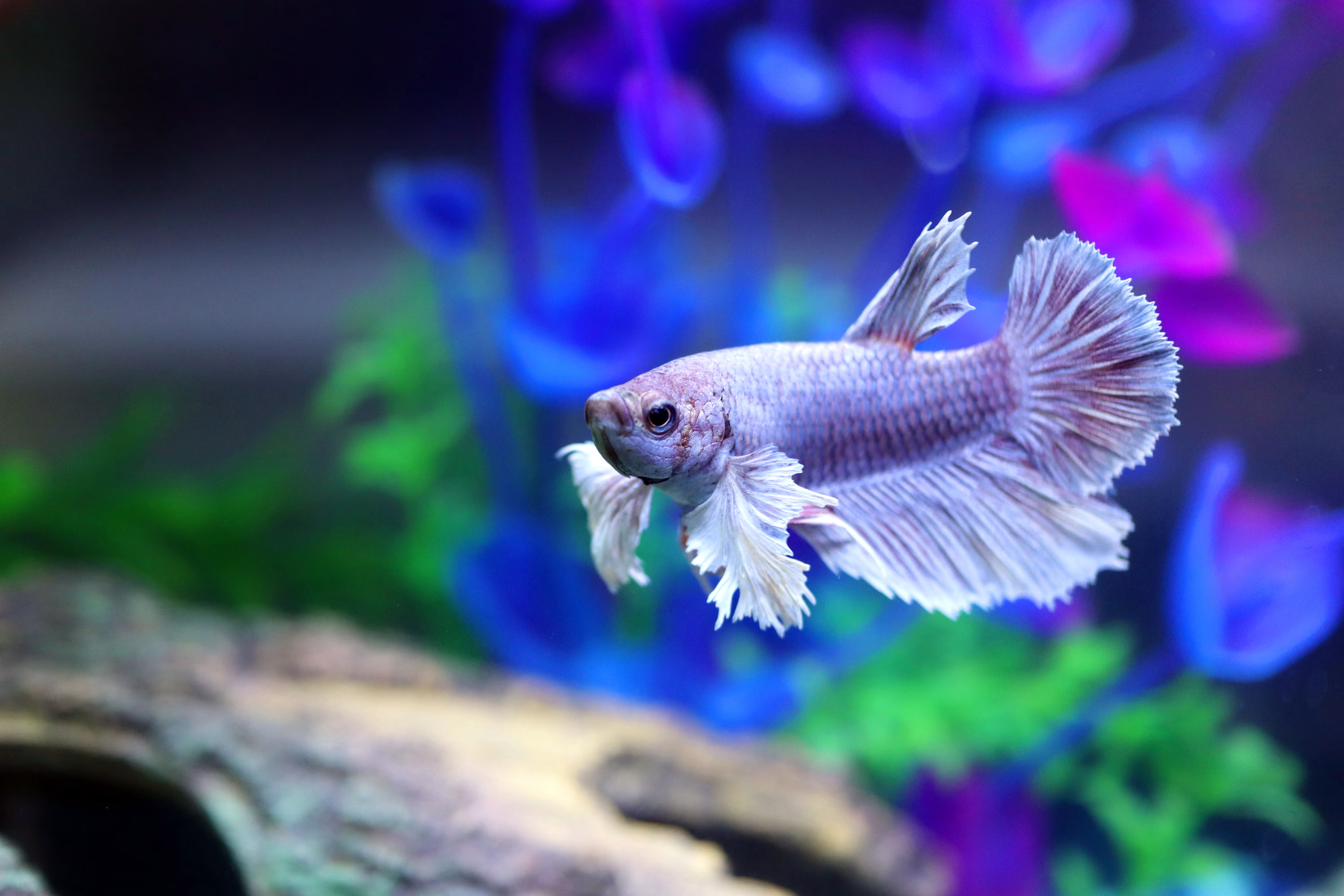
Play with Your Betta Fish: Easy Ways to Engage & Keep Them Happy
You may not take your betta fish for a walk, but this aquatic pet still needs daily activity. Petco shares how to encourage daily exercise and play into your betta fish's life.
Updated on October 23rd, 2025
- Home & Habitat
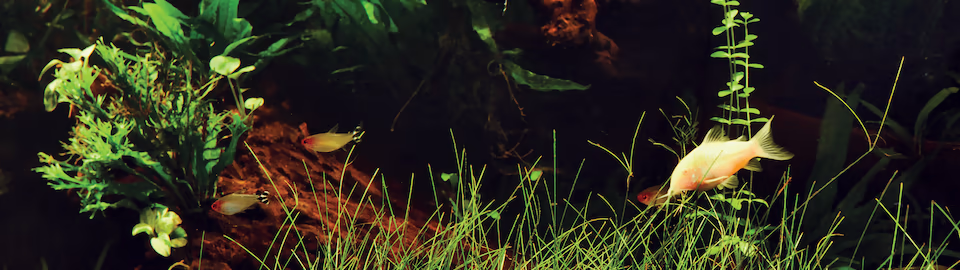
Your Guide to Healthy Freshwater Aquarium Plants & Thriving Fish
Learn how to pick the right aquarium plants, substrate, lighting, and fertilizers to ensure that your aquarium plants thrive and stay healthy.
Updated on October 23rd, 2025
- Seasonal Topics
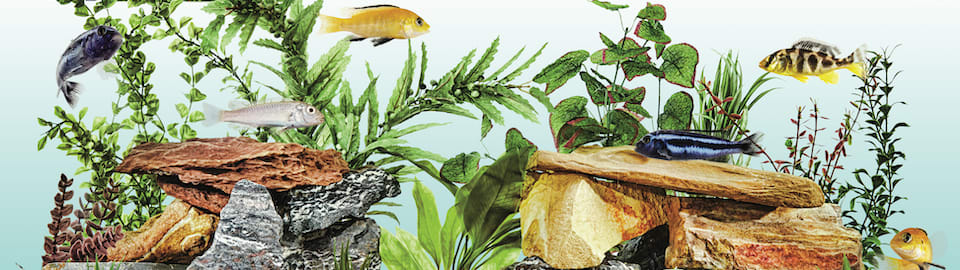
Aquaculture for Pet Fish: Essential for Healthy Tanks & Happy Pets
Although you may not realize it, aquaculture is something that touches our lives on a regular basis. Read more about what exactly aquaculture is, why it is important.
Updated on October 23rd, 2025
- New Pet
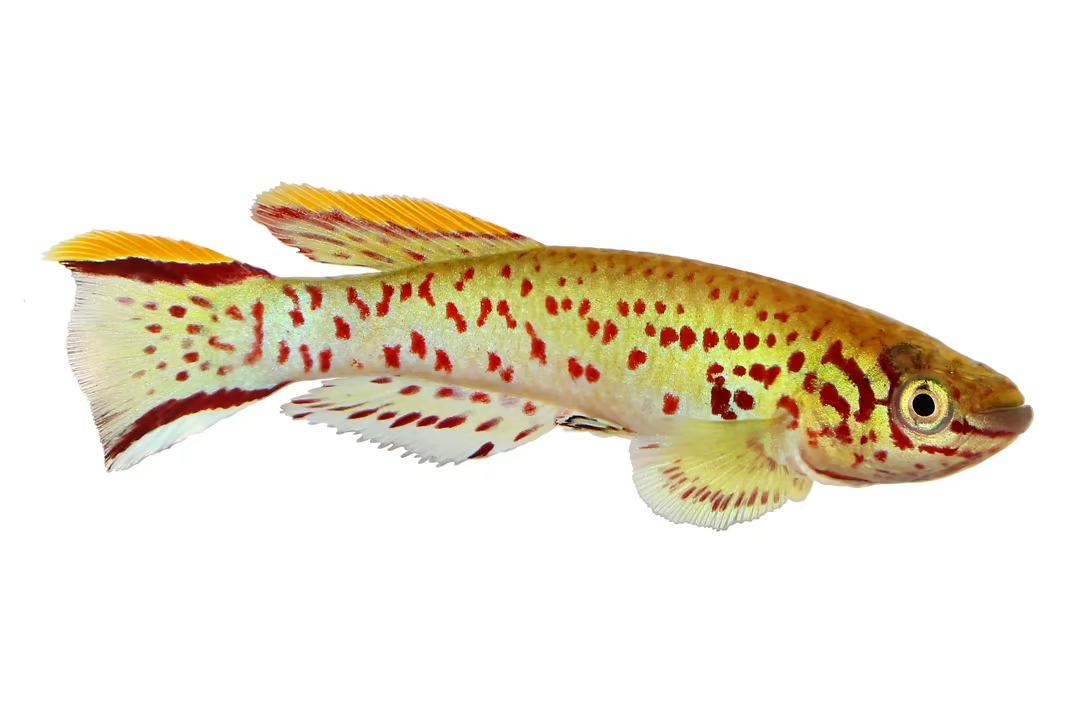
Killifish Care Guide: Unlock Vibrant Health for Your Aquarium Fish
Learn more about Killifish and their care to see if they are the right aquatic life to begin or add to your aquarium.
Updated on October 23rd, 2025
- Home & Habitat
Thriving Aquarium: Build a Self-Sustaining, Low-Maintenance Tank
Learn how to make a self-sustaining aquarium. Visit Petco to learn all the steps to create the self-sustaining aquarium of your dreams!
Updated on March 30th, 2026
- Health & Wellbeing
I'm about to buy some new fishes mostly Tetra Can you help me what fish should I buy because I am beginner in this things. Please tell me what sort of things I should bring I have a one foot tank now other than that What should I purchase from Aquar
Before you buy any fish, you will need to set up the tank. A basic set up includes: a tank, filter, hood/light, heater, gravel and some decor. The tank should run without fish for at least 4 to 6 weeks. This gives it time to cycle. The Nitrogen Cycle is critical to the health of the tank and any fish you will be keeping. During this time, beneficial bacterial will populate the filter and substrate (gravel). These bacteria will be responsible for breaking down fish wastes and other wastes (uneaten food, dead plants, etc.). You will need a home test kit to monitor water chemistry (ammonia, nitrites, nitrates, pH) or you will have to submit water samples for testing. Most pet stores will do this for free or for a small fee. At first, you will see high levels of ammonia and nitrites. Over time, as bacteria grow, these levels will drop. When ammonia and nitrites are at 0 ppm and nitrates are below 20 ppm, you can consider adding fish. Regular (every 1 or 2 weeks) partial water changes as we
Updated on September 24th, 2025
- Health & Wellbeing
I got a baby betta fish and was wondering how do I care for it : as in habitat , water changes , feeding and heating
Mushu is very cute! Betta care is very easy. Ideally, a 5 gallon tank should be used to house your Betta. A smaller tank can be used, but the maintenance (water changes) will be much more frequent. A filter is always recommended otherwise water changes will be required every few days to maintain water quality. With a filter, 20% water changes can be done weekly or every two weeks. Use only aged or conditioned water that is temperature matched to prevent stress or shock. Choices for conditioners include AmQuel Plus, NovAqua, StressCoat, Prime or StressZyme. A small submersible heater is necessary since Bettas are tropical fish. They do best in slow moving water between 78F and 80F. You can feed a pelleted diet such as Hikari Micro Pellets until he grows bigger. Baby brine shrimp, daphnia, bloodworms and blackworms can also be fed. Feed one or twice daily. He should only need 2-3 pellets at each feeding. The conditioners and food can be found in the aquarium section of the local P
Updated on September 24th, 2025
- Training & Behavior
How to introduce betta fish to neon tettra, guppies
Betta are definitively very territorial and you may notice multiple fights for space at the beginning. Definitively the aquarium must have multiple spots for hiding like Terra Cotta Flowerpots and PVC Piping, moss or bushy plants, ornaments, rocks and driftwoods. This will avoid open fights and will provide good places to have some rest.
Updated on September 24th, 2025
- Health & Wellbeing
What type of fish can I keep with my adult male betta fish, he is in a 3 gallon tank.
Most of the compatible fish are schooling fish that do best in groups of 4-8. This would include Neon Tetras, Ember Tetras, Harlequin Rasboras or White Cloud Minnows. That many fish may be too much for a 3 gallon tank. Other non-fish option include Ghost Shrimp, Zebra Snails or African Dwarf Frogs.
Updated on September 24th, 2025
- Health & Wellbeing
My betta fish has hole like markings on his head and is having trouble swimming...spends a lot of time floating on top. He has still been eating but not as much and missing his food more than anything. I've noticed an improvement in body color and ma
Hi and thanks for your request. These lesions could be caused by a bacterial skin infection. Generally speaking you can follow these guidelines: - set up quarantine tank (if he shares the environment with other fish): make sure the tank is well oxygenation and has some plants for hiding; - add 1 teaspoon of aquarium salt per gallon; - add this product https://www.liveaquaria.com/product/4410/?pcatid=4410 as indicated; - leave your fish there and feed him regularly for 3-4 days until you don't see any improvement - If no results at all are seen after 4 days a check up would be needed as more specific tests may be needed to establish a specific diagnosis. Hope this answer was helpful, but please do not hesitate to contact us again on the forum or by requesting a consultation if you have any more questions or to discuss it any further. Please find the time to give us a feedback about the consultation as that will be used to improve our service.
Updated on September 24th, 2025