Two Easy Ways to Start Earning Rewards!
Earn 2X Pals Rewards points at Petco
when you use Petco Pay!
Get It Today
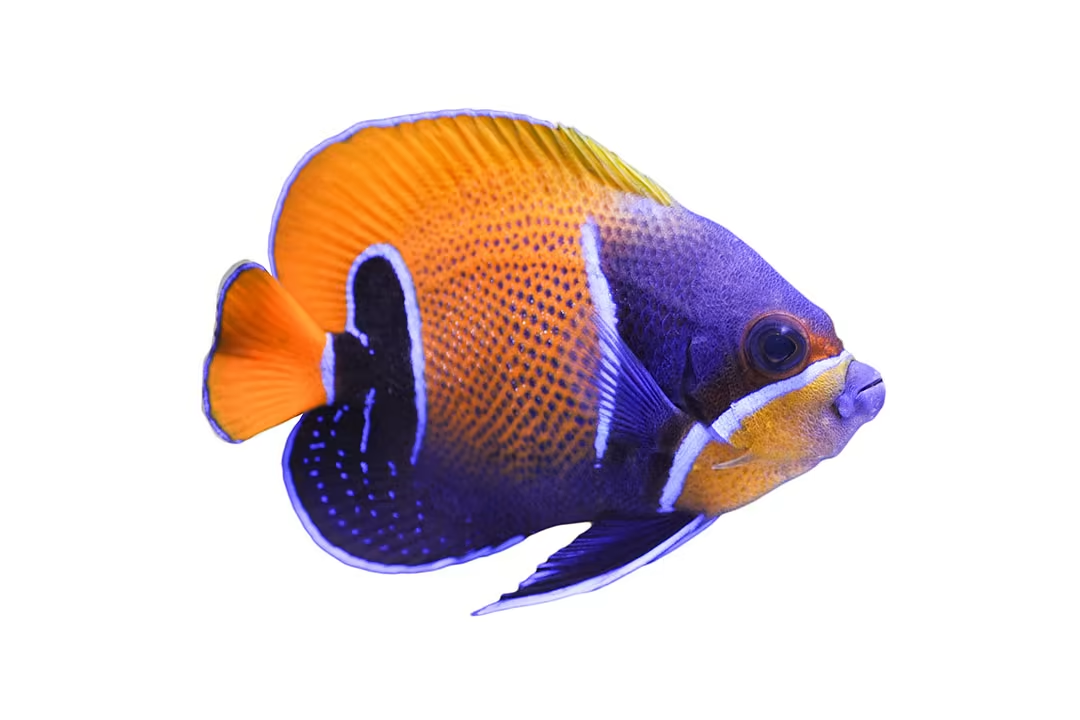
Learn how to take care of Large Marine Angelfish, recommended diet and tank setup. Find the right food, supplies and equipment at your neighborhood Petco.
Updated on November 13th, 2025
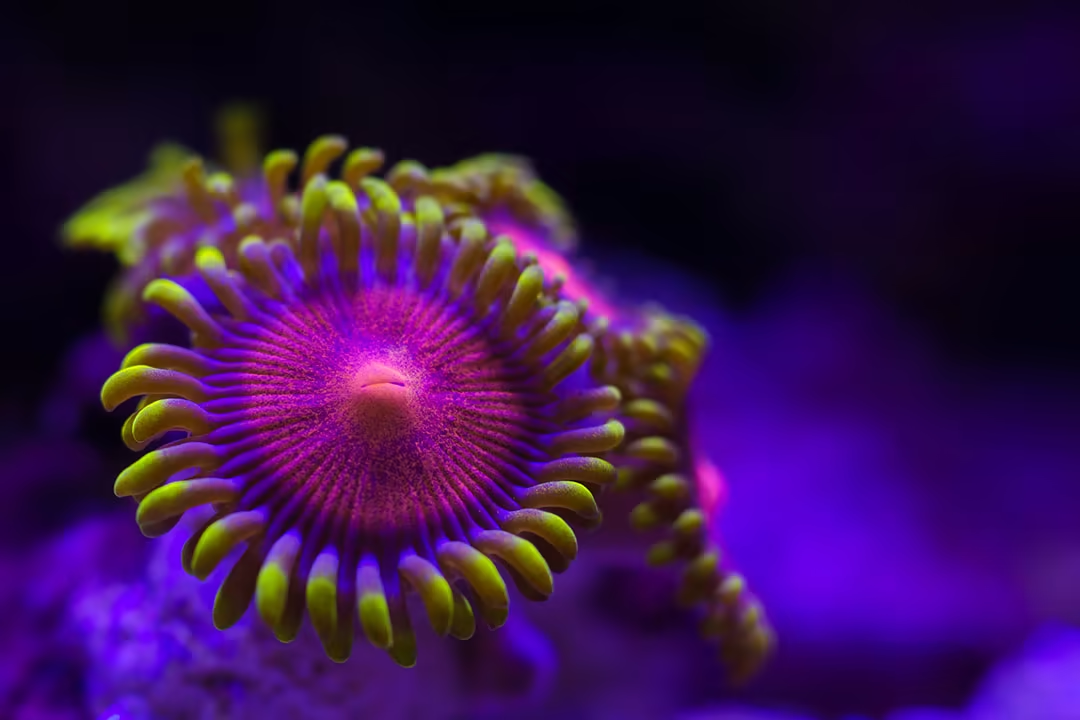
Learn how to care for soft coral, recommended care & habitat setup. Find the right food, supplies & equipment at your neighborhood Petco.
Updated on November 13th, 2025
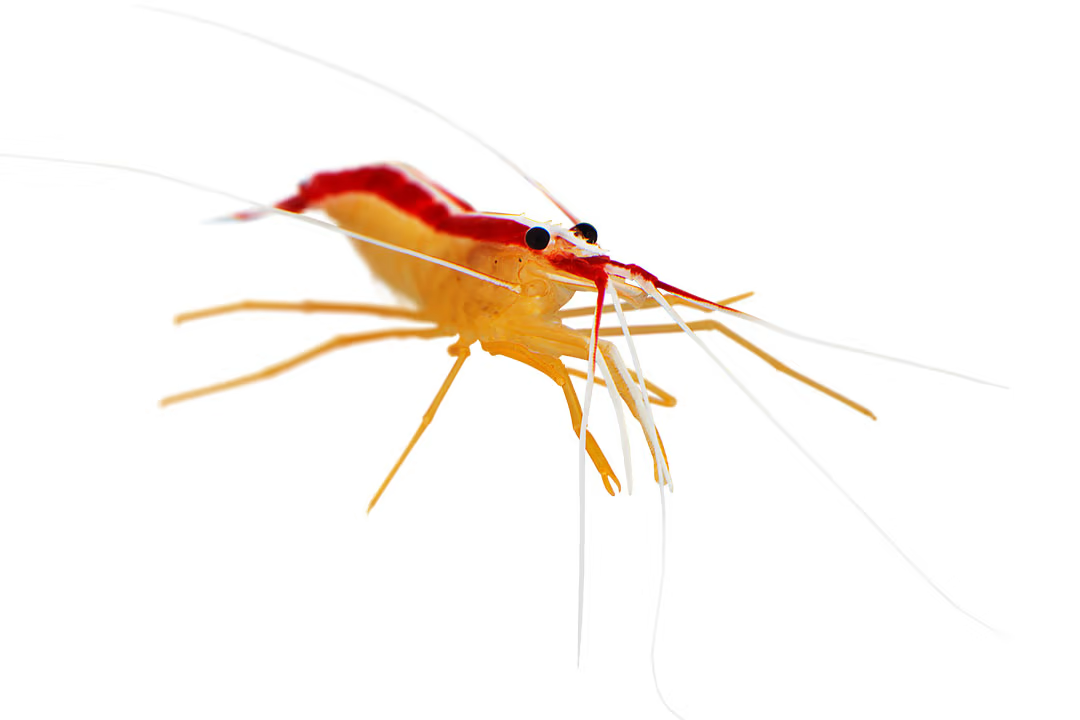
Learn how to care for Marine Shrimp, recommended diet & aquarium setup. Find the right food, supplies & equipment at your neighborhood Petco.
Updated on November 13th, 2025
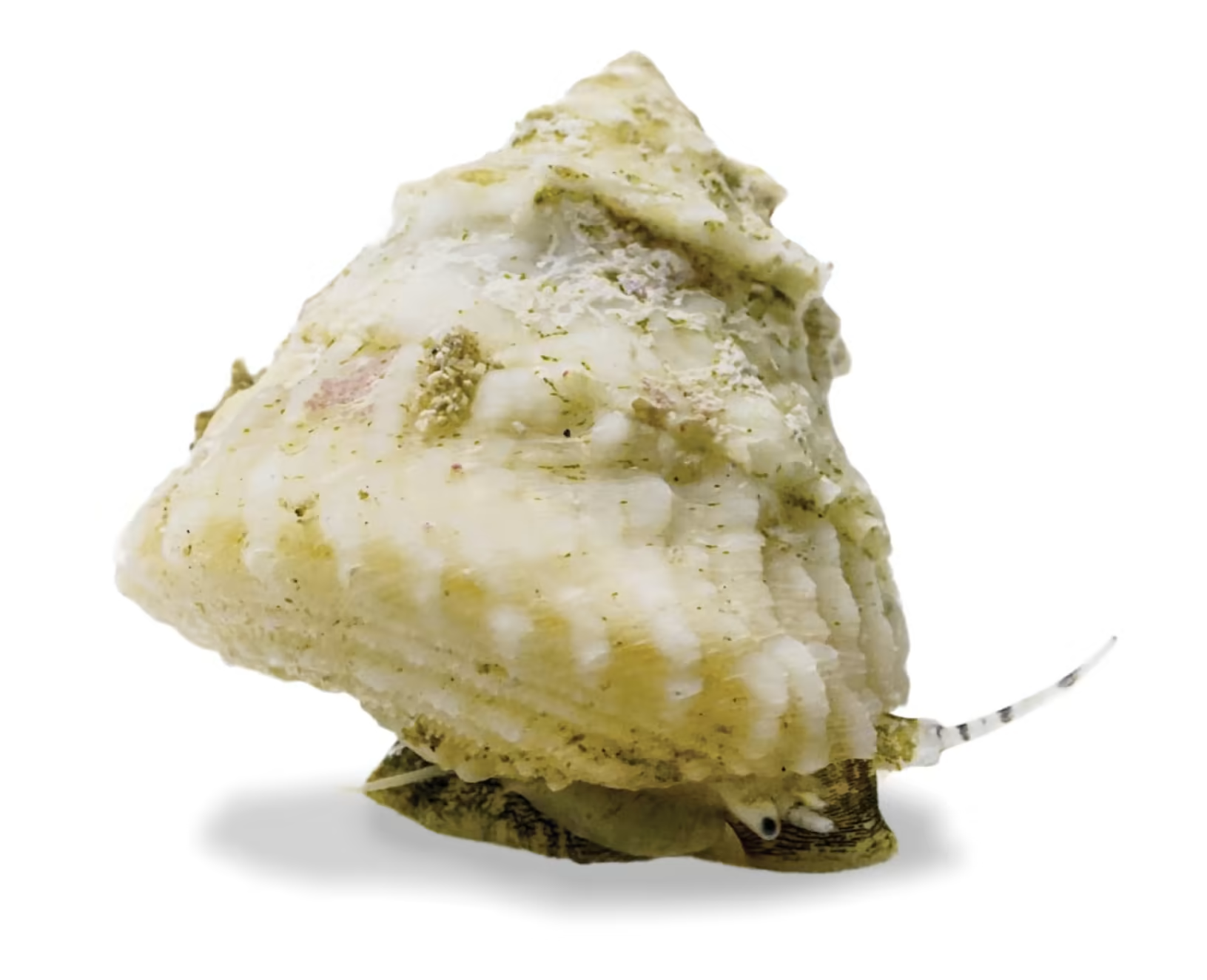
Learn how to care for a marine snail, recommended diet and aquarium setup. Find marine snails for sale, supplies and equipment at your neighborhood Petco.
Updated on November 13th, 2025
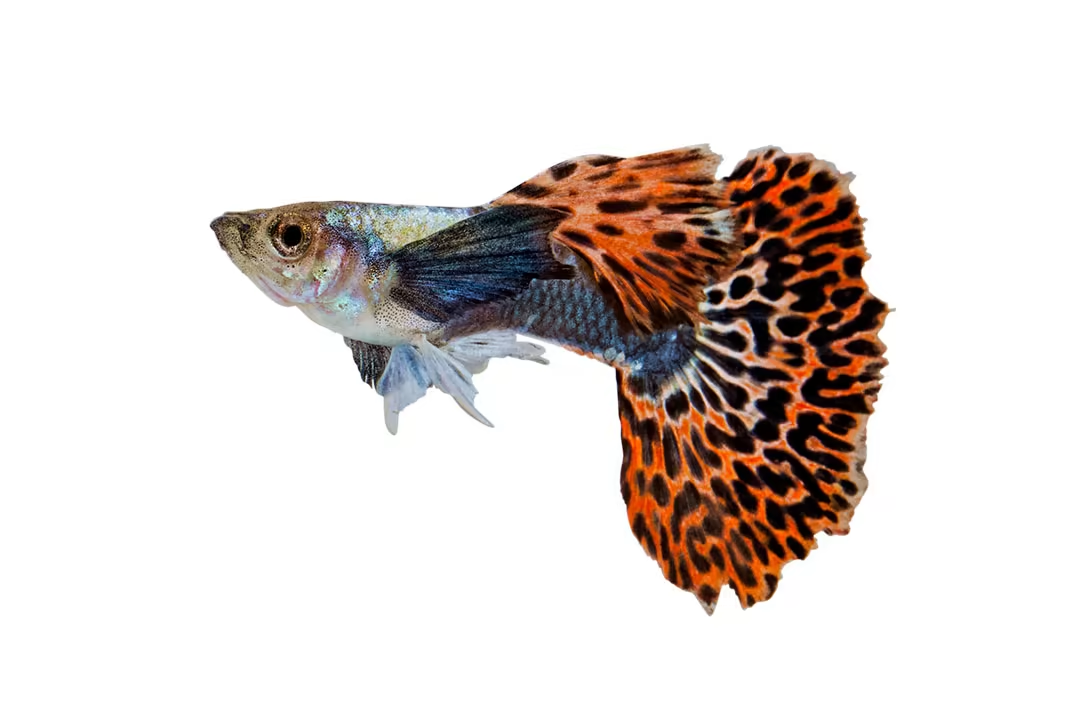
Learn how to care for freshwater livebearers, recommended diet & aquarium setup. Find the right food, supplies & equipment at your neighborhood Petco.
Updated on November 13th, 2025
Check water chemistry first. Use a home test kit or submit a water sample for testing. The local Petco may do this for free or for a small fee. Aim for an absence ( 0 ppm) of ammonia and nitrites with nitrates at 20 ppm or less. Perform partial water changes, no more than 30% at a time, to stabilize chemistry and/or to improve water quality. Use only conditioned water that is temperature matched to prevent stress or shock. Check water temp as well. Any of these can drive a fish to the surface. The "flashing" (darting about) can be due to infection (bacterial, fungal or parasites). Consider a broad spectrum antibiotic or an "all in one" product to treat multiple infections. Look in the Aquarium section of the local Petco for options. Follow label directions carefully and remove the carbon filter insert during treatment if indicated.
Updated on August 12th, 2025
Pimafix is an acceptable "natural" antifungal treatment. Melafix is for bacterial infections. Kanamycin, erythromycin or metronidazole are good broad spectrum antibiotics. Fungus Cure (by API) is an excellent antifungal. You can find these medications in the aquarium section of most pet stores or even online. Follow label directions carefully and remove the carbon filter insert during treatment if indicated. The cornerstone of any treatment is to first maintain pristine water quality and stable chemistry.
Updated on August 12th, 2025
The Tang, Clownfish, and Chromis are marine fish requiring a saltwater aquarium while guppies are freshwater fish. These fish are not compatible as they require two completely different setups to accommodate their different environmental needs. If you are going to set up a marine aquarium - a 20 gallon aquarium is too small for the fish you have listed. A small Percula Clownfish maybe suitable in a 20 gallon aquarium temporarily, but be prepared to upgrade to a larger aquarium as it grows larger. In general, 50+ gallon aquariums are recommended to properly house marine fish as they tend to grow large and require plenty of room to swim. If you are planning to set up a freshwater aquarium, a 20 gallon setup is adequate to house guppies.
Updated on August 12th, 2025
Maintain pristine water quality. This is the foundation of treatment. It will require partial water changes every few days and a complete cleaning of the substrate (if any) and any tank furniture. I see you have frogs, which can make treatment trickier. In tanks without amphibians or scaleless fish, plain aquarium salt (NOT table or Epsom salt) can be used at 1 tablespoon per 5 gallons of water for 14 days. You can remove the frog(s) and treat them separately if you want to use salt. The Pimafix, or Melafix also, can be used in conjunction with salt.
Updated on August 12th, 2025
It is no trouble at all. It is why we are here! The first thing to check would be water chemistry. This can be done using a home test kit or by submitting a water sample for testing. Most pet stores will do this for free or for a small fee. Aim for 0 ppm ammonia and nitrites with a nitrate level of 20 ppm or less. Perform a partial water change, no more than 30% total volume, daily to stabilize or improve water chemistry. Use only aged or conditioned water that is temperature matched to prevent stress or shock. The species of fish you have do best in the mid to high 70s F up to about 82 F. If you have a newly set up tank, it may not have cycled properly or adequately. This would have led to toxic levels of ammonia which likely killed your fish. A tank needs to run, without fish ideally, for 4-6 weeks to establish a Nitrogen Cycle. This time period allows beneficial populations of bacteria to colonize the substrate and filter media. These bacteria are responsible for breaking down ammo
Updated on August 12th, 2025