Two Easy Ways to Start Earning Rewards!
Become a member today! Members-only pricing and offers, personalized care notifications, Vital Care points back on every purchase and more!
 Become a credit card member today!
Earn 2X Pals Rewards points at Petco
when you use Petco Pay!APPLY NOWLearn More About Petco Pay Benefits
Zilla Ball Python Cages, Tank & Terrariums
Get It Today


Related Articles & Questions
- New Pet
Ultimate Ball Python Care: Setup, Feeding, & Health for Beginners
Learn how to care for a Ball Python, recommended diet and habitat setup. Find the right food, supplies and equipment at your neighborhood Petco.
Updated on November 13th, 2025
- Home & Habitat
Reptile UVB Lighting: Help Your Pet Thrive with the Right Lamp
Learn the importance of UVB light for your reptiles and the right reptile lights for your pet’s habitat.
Updated on November 13th, 2025
- New Pet
Boa Constrictor Care: The Ultimate Food, Habitat & Health Guide
Learn how to care for Boas, recommended diet & habitat setup. Find the right food, supplies & equipment at your neighborhood Petco.
Updated on November 13th, 2025
- Health & Wellbeing
Ball Python Not Eating? Expert Solutions to Feeding Problems
Search Petco for answers to all your questions about ball pythons. We’ve got the information to help you figure out why your ball python is not eating.
Updated on November 13th, 2025
- New Pet
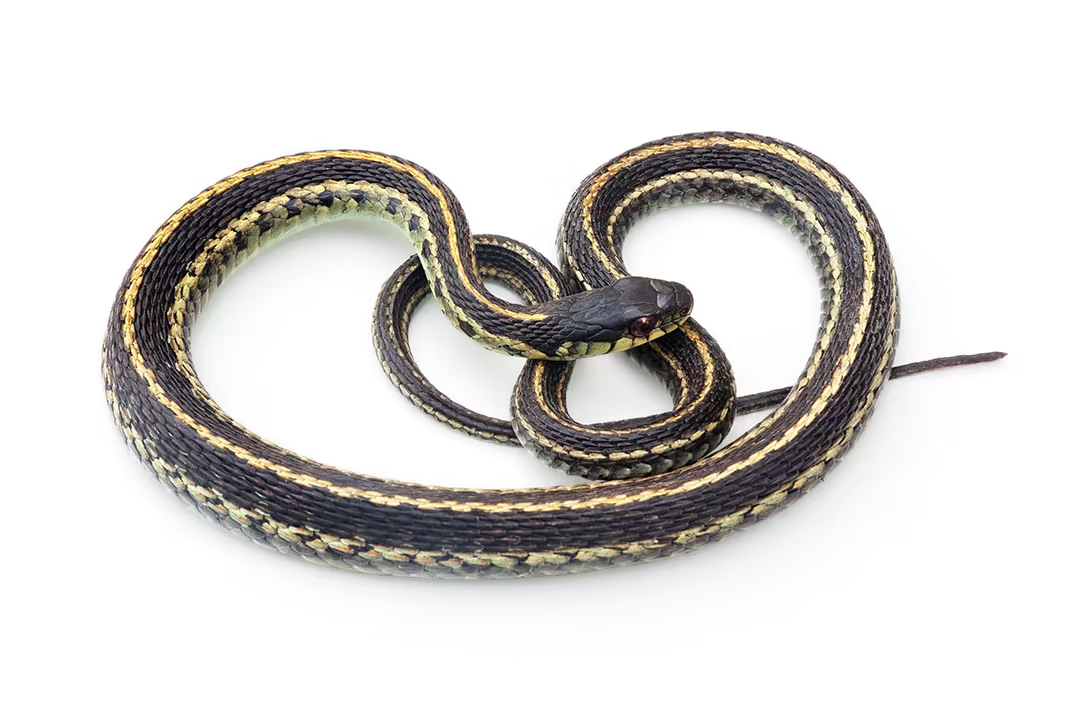
Garter & Water Snake Care: Help Your Pet Thrive! Habitat, Food, Health
Learn how to take care of Garter & Water Snakes, recommended diet and habitat setup. Find the right food, supplies and equipment at your neighborhood Petco.
Updated on November 13th, 2025
- Health & Wellbeing
I have a new Ball Python that eats allright, but it stays in it's hide all the time, day and night. I keep the temperature gradient consistant. The hide is the black square with a hole in one end. I feed him in a separate clear habitat. The substrate
Once he acclimates to his new home, he may become more active. Ball pythons are mostly nocturnal also, so if the room is bright he may seek dark spots and come out at dusk or overnight. Keep a large bowl of water in the tank. A deep layer of porous substrate may hold moisture longer. You can even add some moss. Use a hygrometer to monitor humidity. If it's too high, you can predispose your python to respiratory infection.
Updated on August 12th, 2025
- Training & Behavior
My snake has become very aggressive after biting me once, it use to be very sweet and calm. Now when i walk past the cage or try to pick or handle it , it strikes .
Ball pythons are typical not very aggressive unless it is a female protecting her eggs. Also, juveniles can be a bit mouthy but they typically outgrow it with regular handling and as they mature. Reedus may be stressed. Survey the area in and around the enclosure for any negative stimuli. This may include loud noises, strong vibrations, bright lights or high traffic. Reduce or eliminate any if found. Provide a hide on each side of the enclosure. If Reedus will allow, handle him/her for ever increasing periods of time. You can place a small article of your clothing in the enclosure to get him/her used to your scent. If the behavior persists, consider an exam with your veterinarian or a vet experienced in treating reptiles to diagnose illness or injury. Either can cause a sudden change in behavior.
Updated on August 12th, 2025
- Health & Wellbeing
I just want to know if my tank looks ok and if I might need anything else. P.S. the temperature isn't as high because I just connected the lights because I was cleaning the tank. The grass is fake btw
Ideally, the UVB light source should run the entire length of the tank. A thermometer/hygrometer should be on each end of the tank to confirm cool and warm sides. Use a digital thermometer to verify temps. Those little ones you have can be inaccurate. Provide a hide on both sides as well. Personally, I would remove the fake grass as it has the potential to cause eye injuries. Your tank looks good otherwise.
Updated on August 12th, 2025
- Health & Wellbeing
My ball pythons humidity keeps rising and I cant seem to get it to go down it's at 85% humidity right now.
Increase air flow in the enclosure. You can use a small fan to blow over the cage or in the room. A sack (or sock) filled with plain, uncooked rice can also help decrease humidity. Hang it where your python cannot reach it. You can also use a small water bowl in the cage.
Updated on August 12th, 2025
- Health & Wellbeing
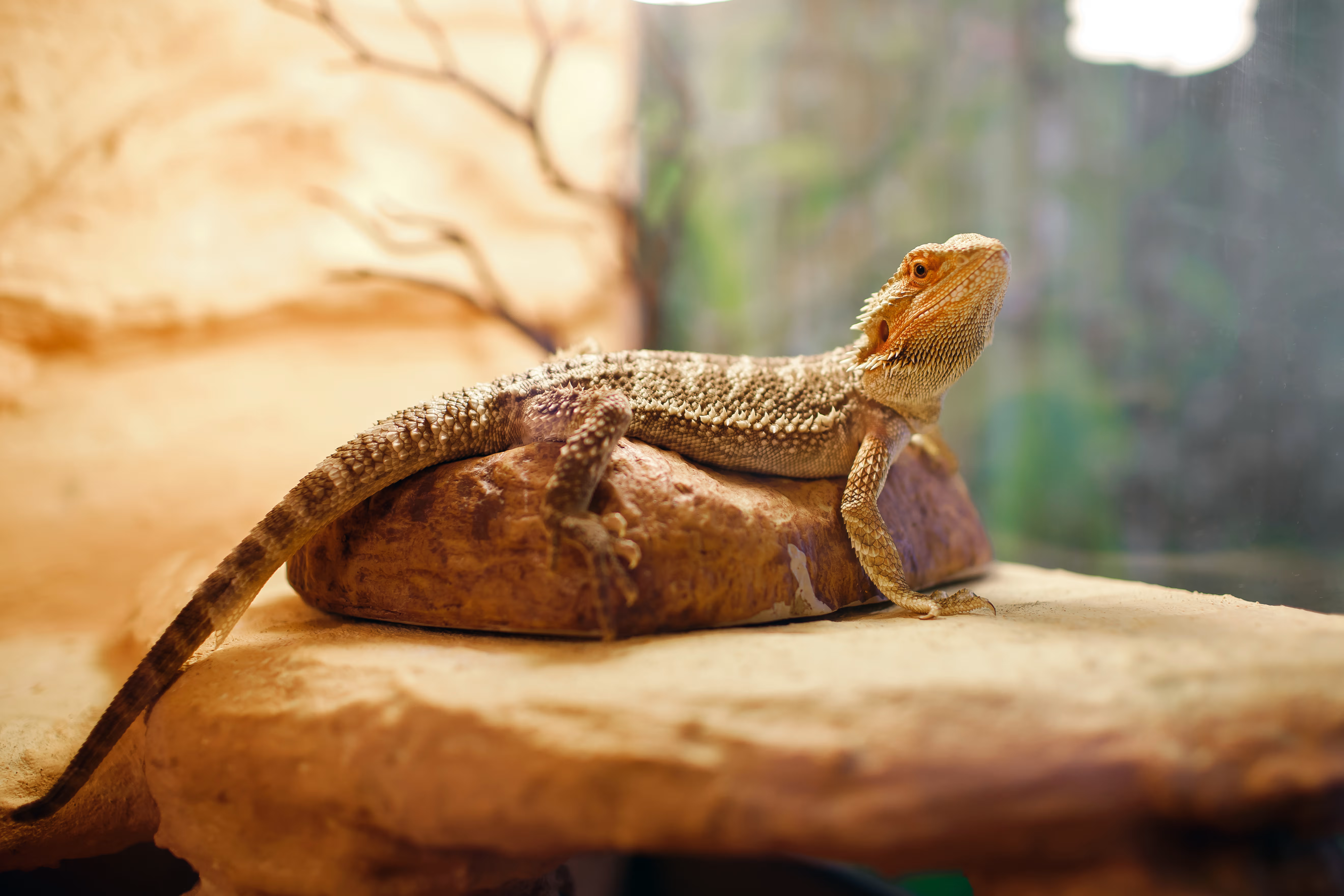
Is my set up for my bearded dragon good? (See attachment)
Thanks for your question about Smaug, and thanks for the photo as well! I think that you have a good start to your set up, and that we can tweak a few items. First, your lighting situation appears adequate - I see a UVB light (please change this bulb every 4-6 months), a basking light, and a ceramic heat bulb. I would ensure that your temperatures are appropriate for this species, and that you are monitoring them using digital thermometers (I think that you see both a digital and analog thermometers currently) at the level of Smaug. Analog thermometers are inaccurate, so I don't recommend using them (also, they are high up on the sides of the enclosure, so they wouldn't be giving an accurate temperature read for Smaug). For the cage furniture that you have, I like that you have places for Smaug to climb and hide. However, I would recommend having a hide on both the warm side of the enclosure and the cool side so that Smaug has choices. Same for the climbing structures. I may have misse
Updated on August 12th, 2025