

Two Easy Ways to Start Earning Rewards!
Become a member today! Members-only pricing and offers, personalized care notifications, Vital Care points back on every purchase and more!
 Become a credit card member today!
Earn 2X Pals Rewards points at Petco
when you use Petco Pay!APPLY NOWLearn More About Petco Pay Benefits
Soft Sided Dog Crates
Get It Today


Related Searches
Soft Sided Dog Crates for Home, Outdoors, and More
Soft sided dog crates aren’t for every canine. So how do you know if it’s best for your furry friend? To start, think about your lifestyle. If you’re always on the go and love having your pup by your side, this type of pet containment may come in handy. Because they’re often made of lightweight and flexible materials, they’re easy to set up and tear down. If you’re more of the outdoorsy type, pop up dog crates lend a familiar spot for your canine to relax while on an impromptu beach or camping trip. Find out more about soft sided dog crates including what they’re made of and which pets they’re best for.
Frequently Asked Questions
-
Soft-sided dog crates, also known as fabric crates or portable crates, are generally considered safe for dogs when used as directed. These crates are made of lightweight, durable materials and are designed to be portable and easy to store. They can be a good option for dogs who travel frequently or for owners who need a crate that is easy to move around.
However, it is important to use caution when using a soft-sided crate and to follow the manufacturer's instructions for use. Here are some tips for using a soft-sided crate safely:
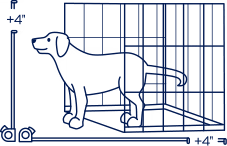
- Choose the right size: Make sure to choose a crate that is the appropriate size for your dog. A crate that is too small may be cramped and uncomfortable, while a crate that is too large may not provide enough support and stability.
- Secure the crate properly: Follow the manufacturer's instructions for setting up and securing the crate. Make sure that all zippers and other closures are fastened securely and that the crate is sturdy and stable.
- Supervise your dog: As with any type of crate, it is important to supervise your dog while they are in the crate and to never leave them unattended for extended periods of time.
- Use for short-term confinement only: Soft-sided crates are not intended for long-term confinement and should not be used as a permanent living space for a dog.
Overall, soft-sided crates can be a useful tool for providing a safe and secure place for a dog to stay while traveling or for short-term confinement. However, it is important to use caution and to follow the manufacturer's instructions to ensure the crate is used safely and appropriately. If you have any concerns about the safety of a soft-sided crate, it is a good idea to consult with a veterinarian or a professional dog trainer.
-
Both soft-sided crates and hard-sided crates can be suitable options for dogs, and which type is best will depend on the individual dog and the specific needs of the owner. Here are some factors to consider when deciding between a soft-sided crate and a hard-sided crate:
- Portability: Soft-sided crates are typically lighter and more portable than hard-sided crates, making them a good option for owners who need a crate that is easy to move around or to travel with.
- Comfort: Some dogs may find a soft-sided crate to be more comfortable, as the fabric sides can provide a sense of security and insulation. Hard-sided crates may be more suitable for dogs who are used to being in a crate and who do not need the added comfort of a fabric crate.
- Durability: Hard-sided crates are generally more durable and long-lasting than soft-sided crates, which may be more prone to wear and tear.
- Size: Both soft-sided crates and hard-sided crates are available in a range of sizes, so it is important to choose a crate that is the appropriate size for your dog.
Ultimately, the best crate for a dog will depend on the individual dog and the specific needs of the owner. It is important to consider the portability, comfort, durability, and size of the crate when making a decision. If you are unsure which type of crate is best for your dog, it is a good idea to consult with a veterinarian or a professional dog trainer.
-
Yes, it is possible to crate train a dog using a soft-sided crate. Crate training is a process that involves gradually getting a dog used to being in a crate and using the crate as a safe and secure place to stay.
When crate training with a soft-sided crate, it is important to follow the same principles as crate training with a hard-sided crate. Here are some general steps to follow when crate training with a soft-sided crate:
- Introduce the crate gradually: Start by placing the crate in an area of the house where your dog spends a lot of time, such as the living room or kitchen. Leave the door open and encourage your dog to explore the crate on their own.
- Make the crate a positive place: Place treats and toys in the crate to encourage your dog to go inside. Gradually increase the amount of time your dog spends in the crate, starting with short periods of time and gradually increasing to longer periods.
- Use the crate for confinement: Begin using the crate for short-term confinement, such as when you are away from home or when your dog cannot be supervised. Gradually increase the amount of time your dog spends in the crate, making sure to provide plenty of breaks for exercise and bathroom breaks.
- Use the crate as a nighttime sleeping area: When your dog is comfortable being in the crate during the day, you can begin using the crate as a nighttime sleeping area. Place a comfortable bed or blanket in the crate and encourage your dog to sleep there.
It is important to remember that crate training is a process that takes time and patience, and it is normal for there to be some setbacks along the way. If you are having trouble crate training your dog or if you have any concerns about their behavior, it is a good idea to consult with a veterinarian or a professional dog trainer for guidance.