

Two Easy Ways to Start Earning Rewards!
Become a member today! Members-only pricing and offers, personalized care notifications, Vital Care points back on every purchase and more!
 Become a credit card member today!
Earn 2X Pals Rewards points at Petco
when you use Petco Pay!APPLY NOWLearn More About Petco Pay Benefits
Aquabella Aquarium Water Conditioners & Additives


Related Searches
Related Articles & Questions
- Home & Habitat
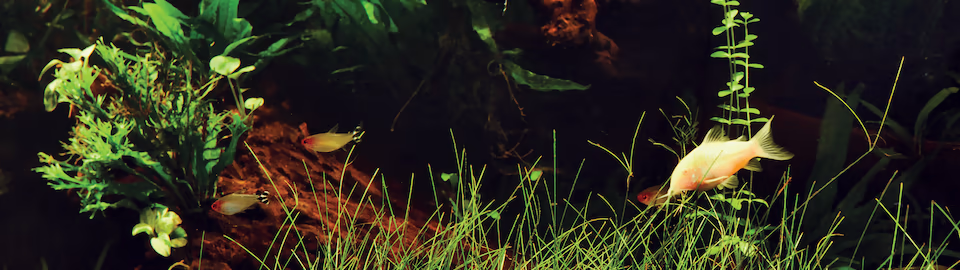
Your Guide to Healthy Freshwater Aquarium Plants & Thriving Fish
Learn how to pick the right aquarium plants, substrate, lighting, and fertilizers to ensure that your aquarium plants thrive and stay healthy.
Updated on October 23rd, 2025
- Home & Habitat
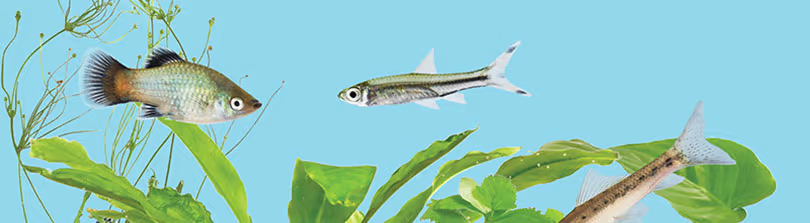
Aquarium CO2: Lush Plants, Vibrant Tanks & Thriving Aquatic Life
Wondering why you may need CO2 in your fish aquarium? Learn the basics from a Petco aquatics specialist.
Updated on October 23rd, 2025
- New Pet
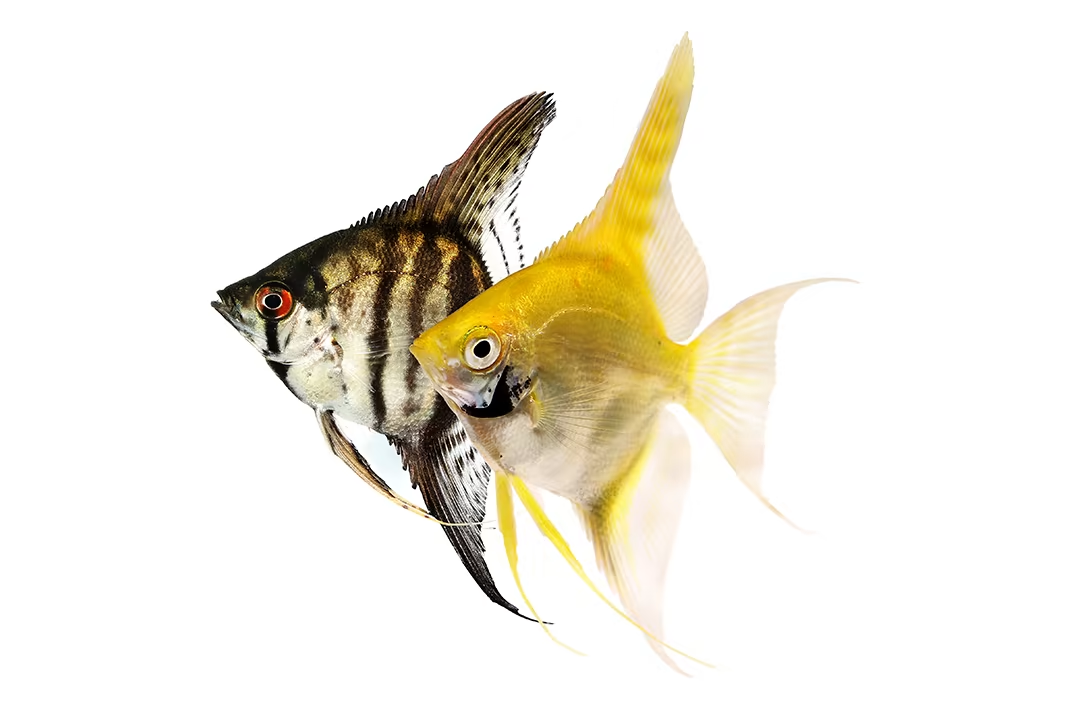
Freshwater Angelfish Care: Tank, Food, & Happy, Healthy Fish
Learn how to care for angelfish, recommended diet and aquarium setup. Find the right food, supplies and equipment at your neighborhood Petco.
Updated on October 23rd, 2025
- New Pet
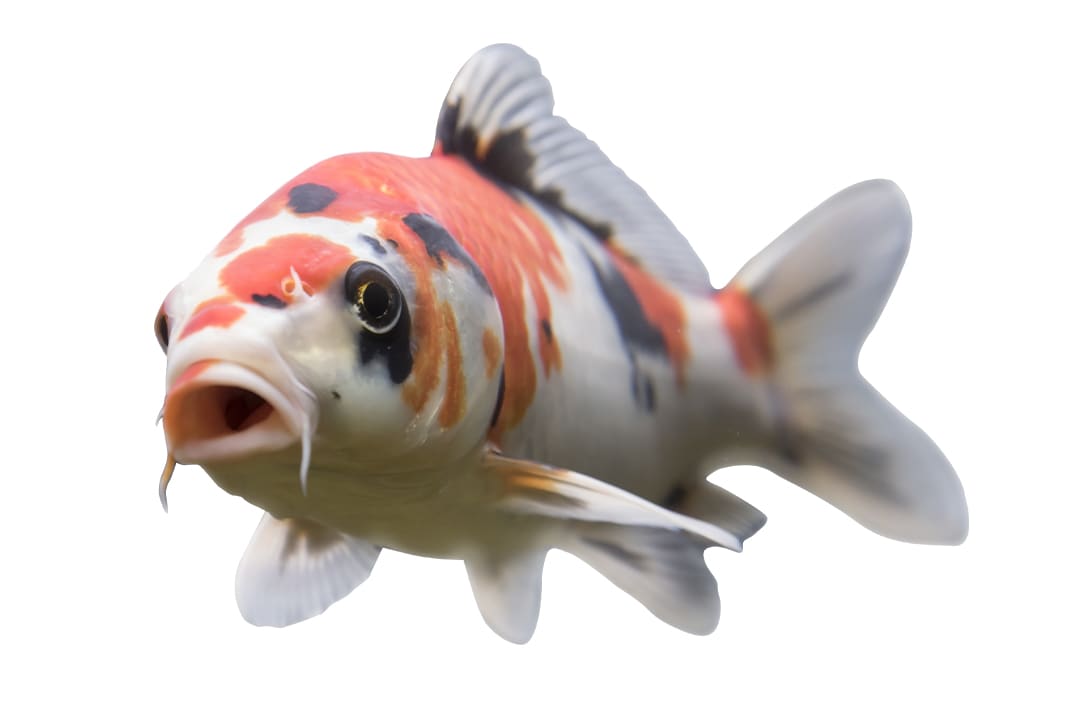
Mastering Koi Care: Optimal Tank, Food, Water Quality & Health Tips
Learn how to care for a Koi, recommended diet and aquarium setup. Find Koi for sale, supplies and equipment at your neighborhood Petco.
Updated on October 23rd, 2025
- Home & Habitat
Blackwater Aquariums: Easy Setup & Benefits for Thriving Fish
Search Petco to learn about blackwater fish aquariums. We want to help you decide what lifestyle is best for your unique fish.
Updated on October 23rd, 2025
- Health & Wellbeing
Hello! Things didn’t go so well with cichlids and I only have one remaining which I moved to a different tank. The 45 is now empty and the others besides one blue African cichlid has died. I did water tests and most came out fine except the Carbonate
Water conditioning can be complicated and I recommend to stop by your local aquarium store. They are most often familiar with the local water quality and can give recommendations specific to your location. Some areas need buffering solutions to help control things like the water pH. Here are a few links which may help answer some of your questions about water condition: https://www.aqueon.com/articles/freshwater-aquarium-water-quality https://www.petcoach.co/article/aquarium-water-management-alkalinity-vs-water-hardness/ Before moving your goldfish, make sure all the conditions are appropriate for goldfish: https://www.aqueon.com/information/care-sheets/goldfish https://www.petcoach.co/article/how-to-help-your-new-goldfish-thrive/ I hope this helps and please feel free to post any additional questions.
Updated on September 24th, 2025
- Health & Wellbeing
We are new to having aquariums, we really didn't realize so many things played a factor with the water. We currently have a 10 gallon tank but want to increase to a 29 gallon tank. We currently buy gallons of water but with the 29 gallon tank we real
Water softeners leave very little salt residue in the treated water. Most, not all, fish *should* do fine in softened water. Make sure you get species that does better in soft water. Use a hardness kit and monitor KH. This parameter is what can affect pH. You can set aside a gallon or two and test it after it has aged for 24-48 hours to confirm it is safe to use. Check the softener unit for a bypass valve. Some units will have one or you can get one installed. Taps/faucets outside may not be in line with the softener, so you can use water from there if necessary.
Updated on September 24th, 2025
- Health & Wellbeing
how do I change the ammonia, nitrates in my aquiarium
The best and safest method is through daily partial water changes, about 30-40% of total tank volume. Use only aged or conditioned water that is temperature matched to prevent stress or shock. Recommended water conditioners are AmQuel, NovAqua and StressCoat. These can be purchased online or in most pet stores or fish stores. A home test kit should be used to monitor levels. If a tank is properly cycled, beneficial bacteria will break down these toxins. Overfeeding, excessive light or heat and dead plants can cause spikes in ammonia and nitrite levels.
Updated on September 24th, 2025
- Health & Wellbeing
We have added fish to our newly set up aquarium twice now and both times the fish were dead or dying within 24 hours. The pH is at the proper level. The tank was filled with spring water. Why do our fish keep dying?
It is possible the tank has not cycled properly which results in high ammonia and nitrite levels which can kill fish. Allow the tank to run, without fish, for at least 4-6 weeks. During this time, use a home test kit or submit a water sample for testing every few days. The local Petco may do this for free or for a small fee. What you are looking for is to have ammonia and nitrites at 0 ppm and nitrates at 20ppm or less. pH can hover around 7 for most community fish. Avoid large, rapid swings in pH though. What is happening in the tank during this time is that beneficial bacteria are populating the gravel/substrate and the filter. These bacterial populations are responsible for the Nitrogen Cycle. This cycle breaks down wastes from fish, uneaten food and plant matter into by-products that are filtered out or dissipate. You can "cycle" a tank with fish, however this increases the risk of loss. Once your tank has cycled, you can add fish. You will still need to monitor water chemistry a
Updated on September 24th, 2025
- Health & Wellbeing
My fish tank got infested with pink algae and green algae and the fish are acting lethargic and dying.
Check the water chemistry using a home test kit or submit a water sample for testing. The local Petco may do this for free or for a small fee. Aim for an absence (0 ppm) of ammonia and nitrites with nitrates at 20ppm or less. Perform partial water changes to stabilize chemistry and/or to improve water quality. Rinse the filter media in tank water, not tap water, and replace it. Use only conditioned water that is temperature matched to prevent stress or shock. To limit algae growth, maintain pristine water quality via filtration and regular water changes. If possible, turn up filter flow to keep water moving. If this stresses the fish though, do not do it. Do not overfeed and remove any uneaten food promptly. Limit lighting to 8 hours daily and closely monitor water temperature as well. All these can promote algae overgrowth.
Updated on September 24th, 2025