Two Easy Ways to Start Earning Rewards!
Become a member today! Members-only pricing and offers, personalized care notifications, Vital Care points back on every purchase and more!
 Become a credit card member today!
Earn 2X Pals Rewards points at Petco
when you use Petco Pay!APPLY NOWLearn More About Petco Pay Benefits
Exo-Terra Reptile Food
Get It Today


Related Articles & Questions
- New Pet
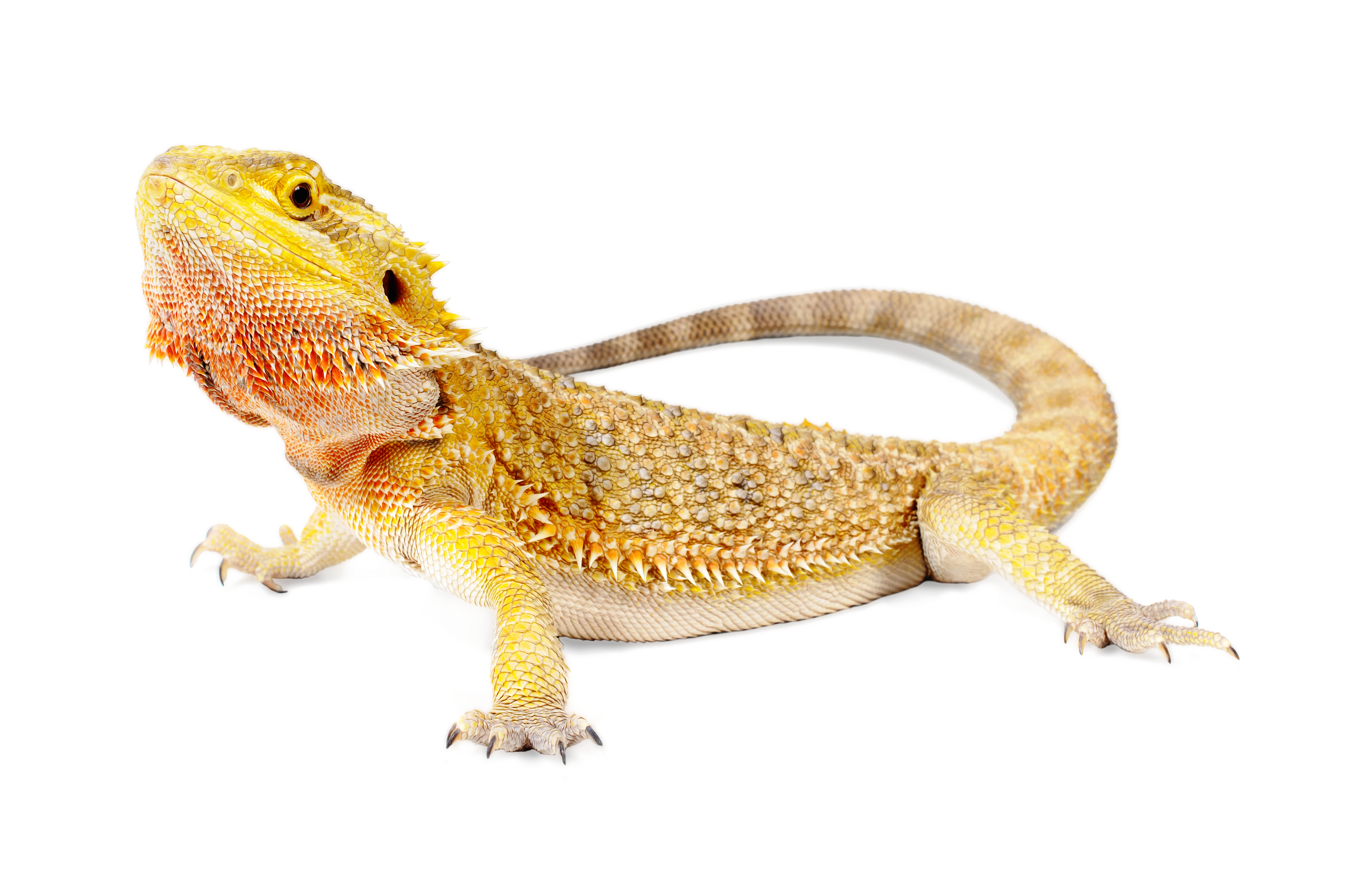
Arid Lizard Care: Expert Tips for Optimal Habitat, Diet & Health
Learn how to care for arid lizards, recommended diet & habitat setup. Find the right food, supplies & equipment at your neighborhood Petco.
Updated on November 13th, 2025
- New Pet
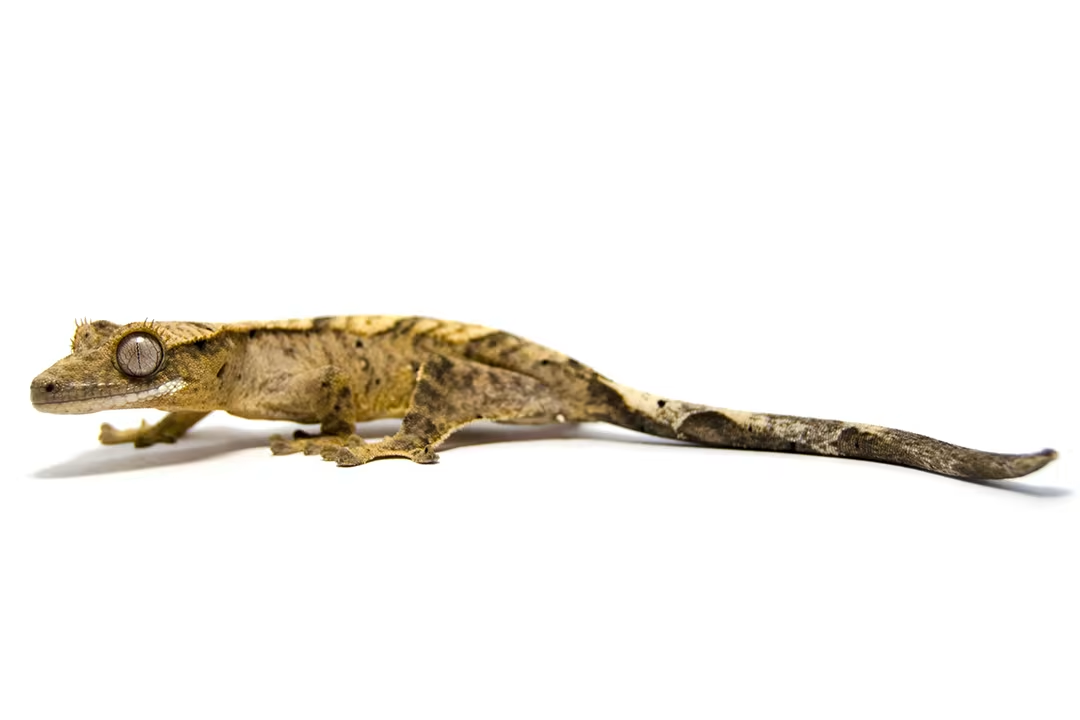
Crested Gecko Care: Habitat, Diet, Health, Supplies - Ultimate Guide
Learn how to take care of your Crested Gecko, tank size, diet & habitat setup. Find the right food, supplies and equipment at your neighborhood Petco.
Updated on November 13th, 2025
- New Pet
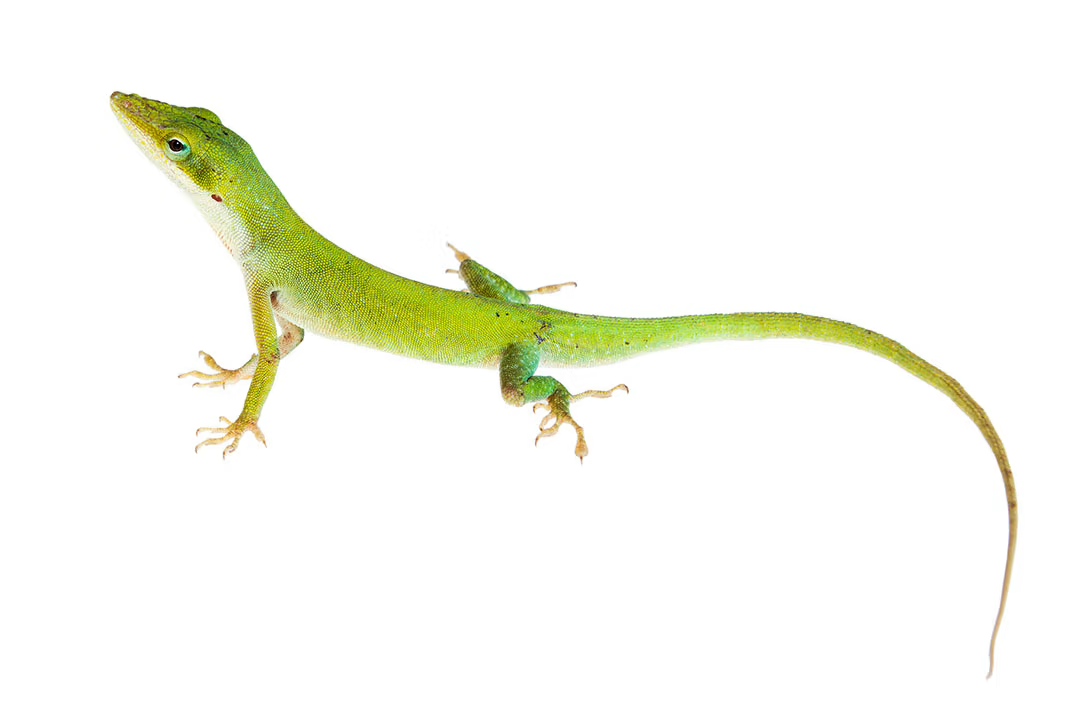
Green & Bahama Anole Care: Your Guide to Habitat, Food & Health
Learn how to take care of Green & Bahama Anoles, recommended diet and tank size. Find the right food, supplies and equipment at your neighborhood Petco.
Updated on November 13th, 2025
- New Pet
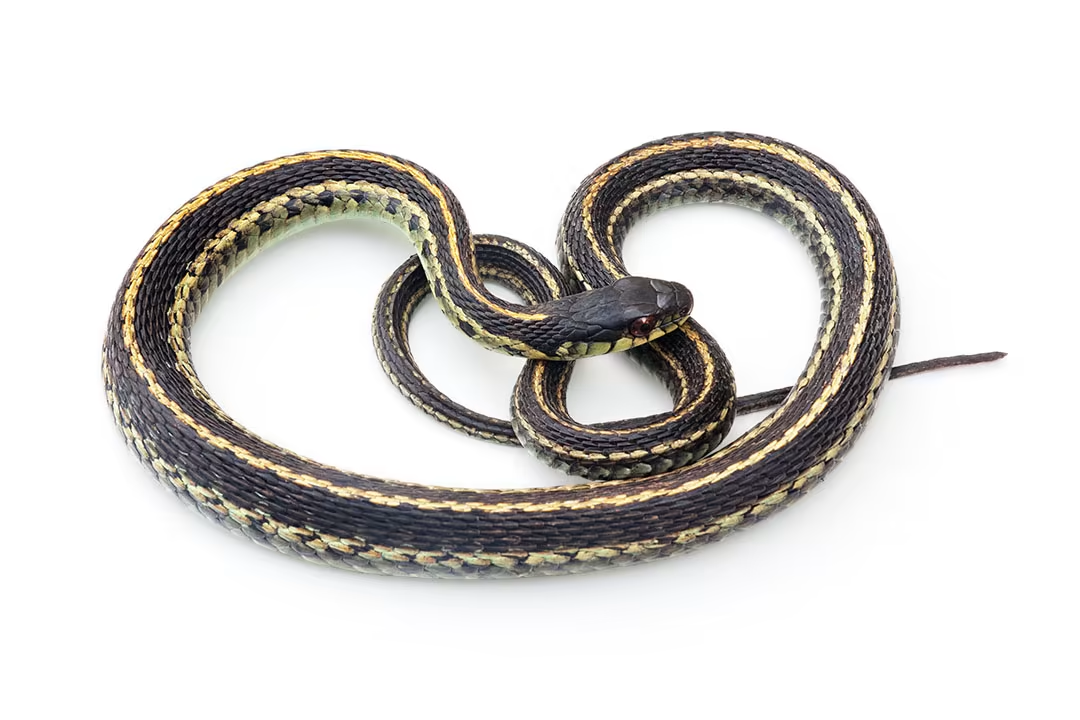
Garter & Water Snake Care: Help Your Pet Thrive! Habitat, Food, Health
Learn how to take care of Garter & Water Snakes, recommended diet and habitat setup. Find the right food, supplies and equipment at your neighborhood Petco.
Updated on November 13th, 2025
- New Pet
How to Prevent Reptile Illness: Safe Handling & Habitat Cleaning
Read these guidelines about handling reptiles to provide a safe and fun environment for your pet, friends and family.
Updated on November 13th, 2025
- Food & Nutrition
My female leopard gecko has gone slightly pale and has lost some weight. She goes for the live foods I hand feed her but when she strikes at it and gets it in her mouth, she then just drops it and let's it go. Then she will follow it, sometimes catch
Go back to basics. Check the temperature and humidity in the enclosure, make sure prey aren't too big and confirm she isn't ill or injured. This may require a physical exam with your veterinarian. Consider supplementing with Fluker's Repta-Boost, or similar product, to get additional nutrients and calories into her.
Updated on August 12th, 2025
- Training & Behavior
So my friends leopord gecko stopped eating or is eating little for like 3 or 4 weeks and she has been digging a lot it says it could be of a cold tank but the temp is 80 and we are starting to get worried
Thanks for reaching out about Ruby. The tank needs to be warmed to 95-100 F in the basking area and no place in the tank should drop below 80F at night. UVB spectrum is important as is the proper diet. Anorexia for 3-4 weeks is serious and a veterinary visit is recommended to assess and provide a diagnostic/ treatment plan. Intestinal parasites, infections, malnutrition and others are possible. Good luck.
Updated on August 12th, 2025
- Health & Wellbeing
Hi, my hatchling red foot tortoise has a problem with keeping his eyes open for very long, he hasn't been eating as much as usual and when he closes his eyes I have to soak him in water to get him to open them back up. When his eyes close it almost l
Check the lighting in his enclosure. It may be too bright for him which can be irritating. Rinse his eyes with a sterile saline solution in case he has debris from the substrate. An exam with your veterinarian or a vet experienced in treating reptiles would be needed to diagnose eye infection or injury. Another possibility may be a Vitamin A deficiency. Feed a good quality commercial diet as well as dark, leafy greens (spinach, collard greens, dandelion greens, etc), carrots, squash and broccoli. Dust food with a calcium and multivitamin supplement as well.
Updated on August 12th, 2025
- Health & Wellbeing
Hello i have got this turtle for3 days and my turtle is not eating.i feed him turtle food and dry worms but turtle is not eating.What should I do and plz tell me how to take care of it.
Thanks for reaching out about Green and including photos. First, check and correct water quality and temperature. If water or basking site is too cold, appetite is inhibited. Movement will sometimes stimulate a reaction, so a live small worm (mealworm, etc.). If these don't work, a veterinary visit would be recommended.
Updated on August 12th, 2025
- Health & Wellbeing
Question is too long to fit in this text box, please see attached photo! Regarding a leopard gecko & trouble eating
Confirm proper environmental parameters, especially temperature. If it is too cold, reptiles will not eat or properly digest meals. The crickets pictured may be a bit too big for her. Feed prey no larger than the space between her eyes. You can go down in size, just feed more of them. Gut load crickets for 24 hours prior to feeding and dust regularly with calcium and multivitamin supplements to maximize nutritional value. Give her a few days to acclimate to her new surroundings. Soak in a warm 50/50 solution of water and unflavored PediaLyte to prevent or treat mild dehydration. If her appetite does not improve, have her examined by a veterinarian experienced in treating reptiles. Submit a stool sample to diagnose intestinal parasites. This link will provide more information regarding care: http://www.anapsid.org/leopardgek.html You can find an experienced herp vet here: http://www.anapsid.org/vets/califs.html
Updated on August 12th, 2025