Two Easy Ways to Start Earning Rewards!
Earn 2X Pals Rewards points at Petco
when you use Petco Pay!
Get It Today
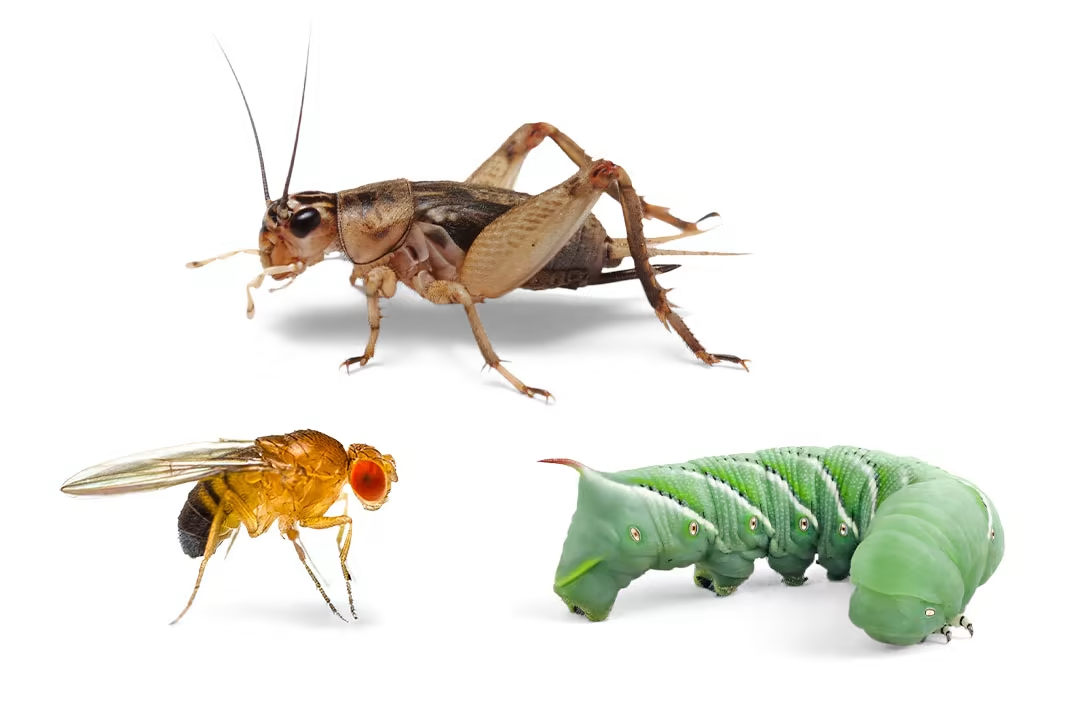
Learn about live insects for reptile feeding, recommended diet & habitat setup. Find the right food, supplies & equipment at your neighborhood Petco.
Updated on November 13th, 2025
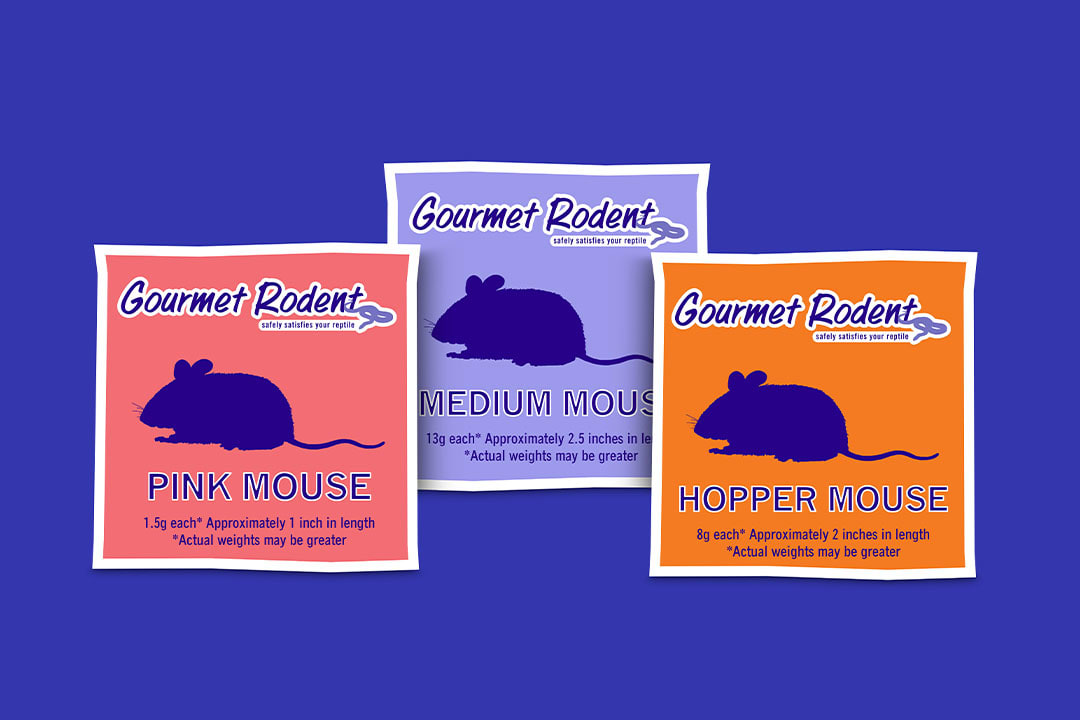
Learn how to thaw frozen mice for feeding time. Find out how to safely prepare and clean up after frozen meals at Petco.
Updated on November 13th, 2025
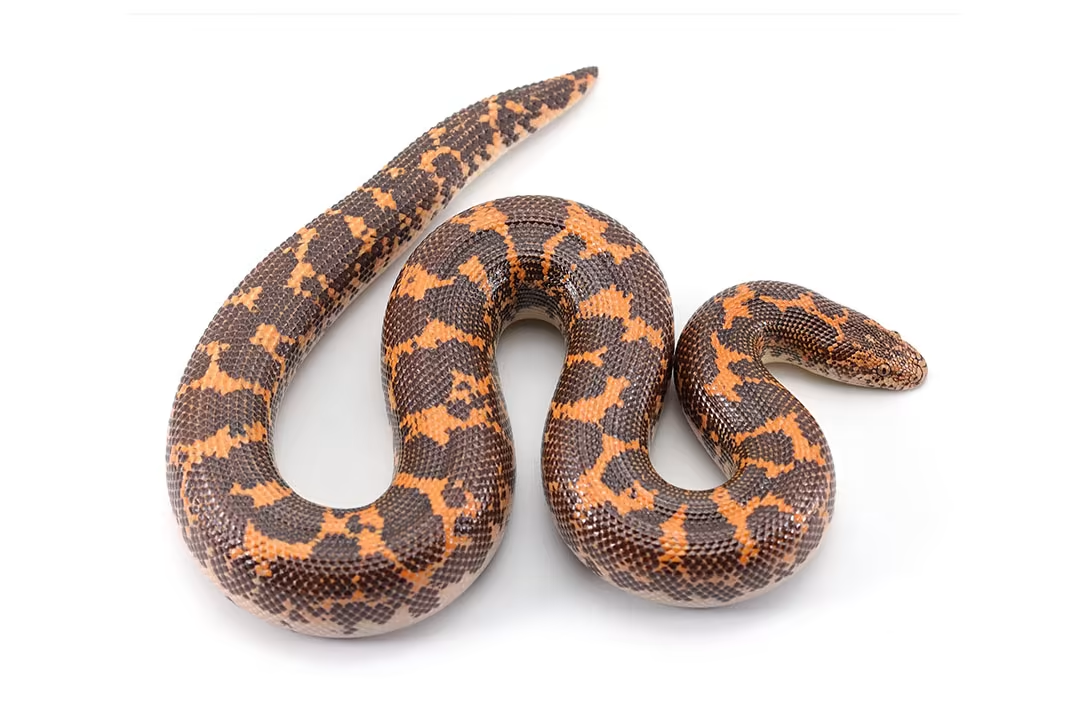
Learn how to care for a Sand Boa, recommended diet and habitat setup. Find the right food, supplies and equipment at your neighborhood Petco.
Updated on November 13th, 2025

A few ideas to use to get your pet safely through a power outage, regardless of the time of year.
Updated on November 13th, 2025
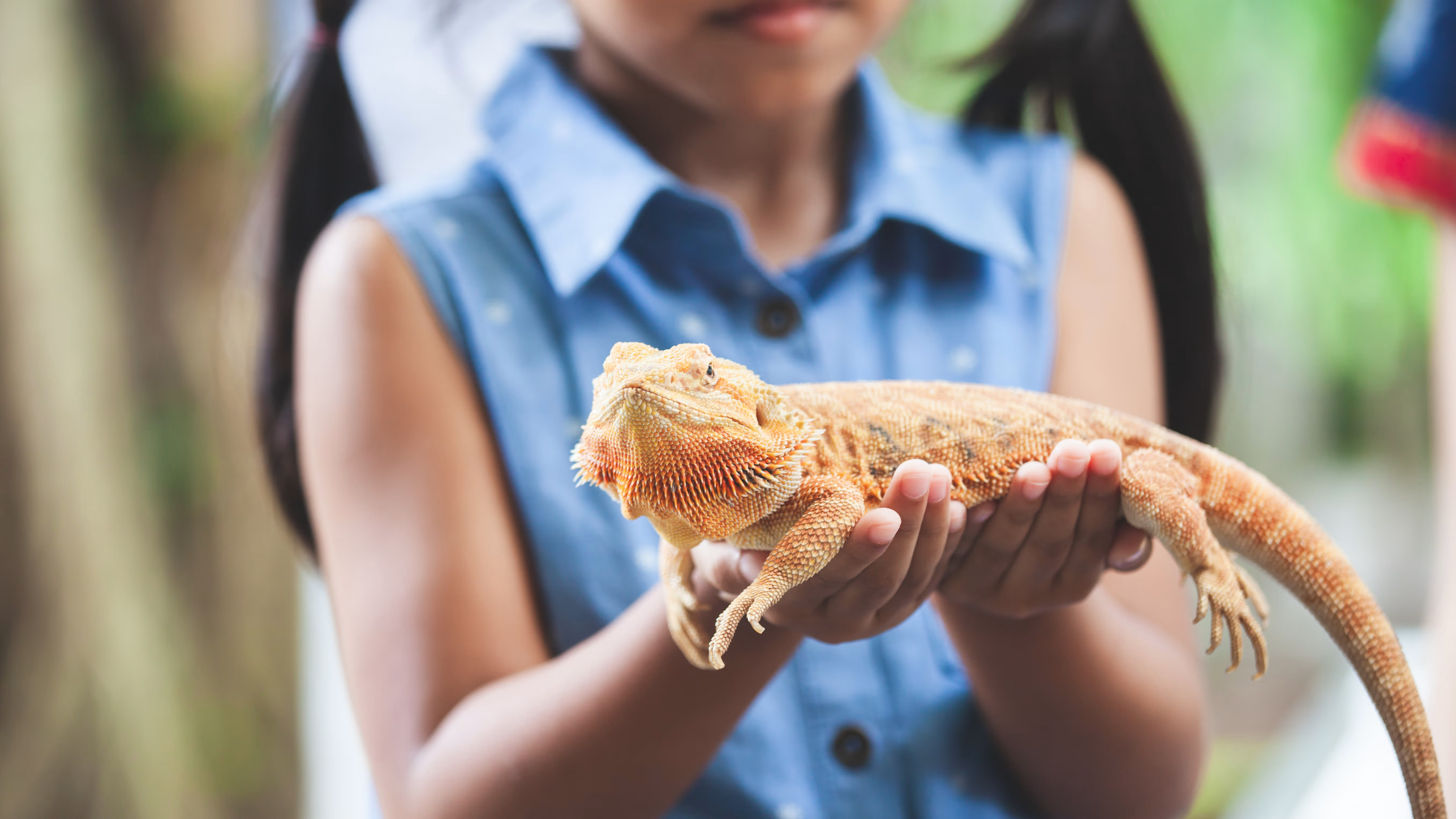
Learn some tips and strategies that can be used to get your pet reptiles safely through a power outage regardless of the time of year.
Updated on November 13th, 2025
Hello, and thanks for using Boop by Petco. There are lots of reasons why a snake might go on a hunger strike, but it sounds like you've narrowed it down to a food preference. Rats are a bit more nutritious and ideally preferable over mice, but mice are also a perfectly acceptable option. Some snakes simply prefer them, in which case you are welcome to keep feeding Luminescence mice, and depending on her size she may simply need multiple mice per feeding as she grows. If you want to encourage her to switch to rats, you can try rubbing a dead mouse or mouse bedding on the rat prior to offering it, to give the rat a more familiar scent. Keep trying - but don't stress if the end result is she ends up staying on mice. Hope this helps!
Updated on August 12th, 2025
Those bumps aren't presenting the way burns would, but without a physical exam, it is difficult to say for sure. Infection would be high on the list. You'll need to have him seen by your veterinarian or a vet experienced in treating reptiles. If infection is diagnosed, S will need antibiotics. Keep him warm and as stress free as possible until he sees the doctor. S soak in a warm 50/50 solution of water and unflavored PediaLyte can treat or prevent minor dehydration. It may also provide some itch relief.
Updated on August 12th, 2025
Corn snakes can grow to as long as 5 feet. On average, they grow to 3-4 feet. A 10 gallon tank is too small. At minimum, a 20 gallon enclosure is recommended. A temp range of 75F-85F is best. They do not "need" a UVB light source but seem to be healthier with one. At 2 years of age, it should be eating adult mice. If it can't, feed whatever you can to get it back into a positive plane of nutrition so it can grow properly. Consider an exam with your veterinarian or an experienced herp vet to diagnose and treat any pre exiting conditions. Submit a stool sample to diagnose intestinal parasites. More information regarding care can be found here: http://www.anapsid.org/corn.html
Updated on August 12th, 2025
One of the eyes looks odd and it appears there are some dry scales or possibly retained shed on the head. The eye could have been damaged by chronic infection or trauma that went untreated. Retained eye caps are also a possibility. A close physical exam would be needed to confirm any of these conditions. Ball pythons are notorious for their hunger strikes. Confirm proper environmental parameters before feeding. A stressed snake will not eat and low temps can affect appetite in reptiles. Instead of a rat, offer an adult mouse. If you feed live, stun the mouse first to prevent injury. Frozen/thawed prey should be at room temp (or warmer) before offering. Don't use a microwave to though prey. You can get some used gerbil bedding from the local pet store. Rub it on prey prior to offering. This will scent the mouse with a python's natural prey. Survey the area around the enclosure for any negative stimuli. This may include loud noises, bright lights, strong vibrations or strong drafts. R
Updated on August 12th, 2025
Here are some tips on how to care for pets who require continuous heat, such as reptiles and snakes: - Before a power outage, if possible, buy a generator. This will allow you to keep your reptiles warm during the outage. - Amphibians will do okay without heat for a period of time. Try to limit the number of times you open the habitat. - For a heat source, you can go to your local sporting goods store and purchase the heat packs used to warm feet and hands. These can be placed underneath the habitat (just like you would place an electric heating pad). This will allow your reptile to get heat. Do not put the pack into habitat with the reptile. - Another way to warm cold reptiles is to use a pillowcase. Place the reptile gently in the case and place the pillowcase next to your body under your shirt for warmth. - Pillow cases can also be used to transport reptiles if needed. - Do not feed your reptile as they need heat to digest their food. - You can save plastic milk
Updated on August 12th, 2025