

Two Easy Ways to Start Earning Rewards!
Become a member today! Members-only pricing and offers, personalized care notifications, Vital Care points back on every purchase and more!
 Become a credit card member today!
Earn 2X Pals Rewards points at Petco
when you use Petco Pay!APPLY NOWLearn More About Petco Pay Benefits
Fritz Aquatics Reptile
Get It Today


Related Articles & Questions
- New Pet
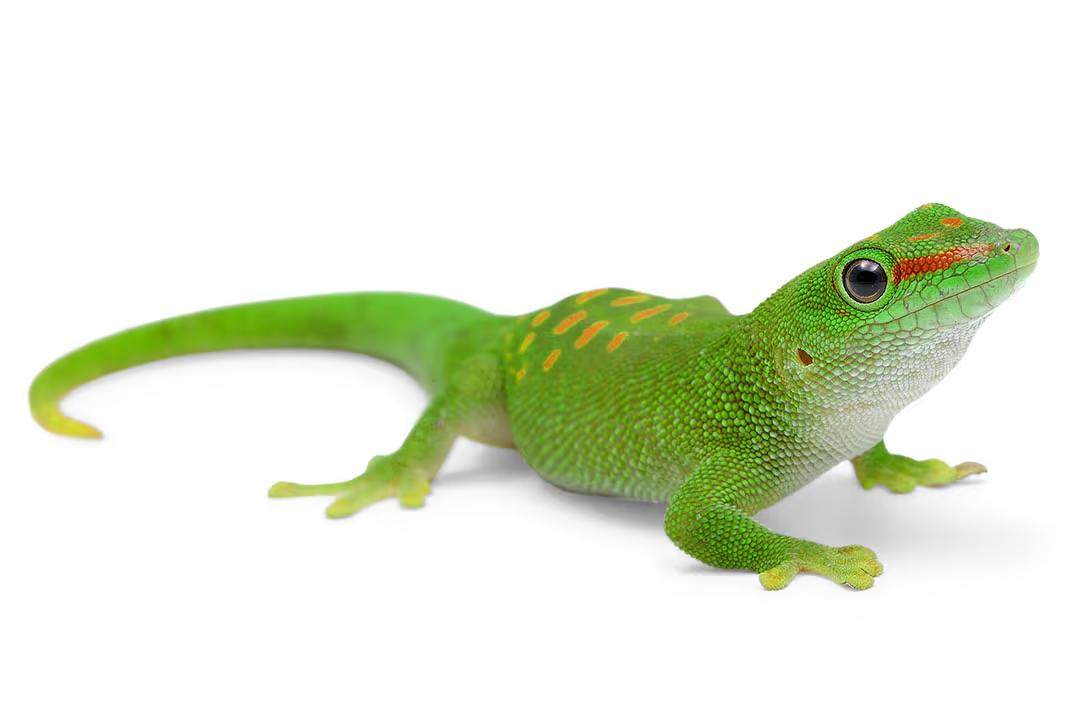
Raise a Thriving Giant Day Gecko: Habitat, Food & Health Guide
Learn how to care for a Giant Day Gecko, recommended diet & habitat setup. Find the right food, supplies & equipment at your neighborhood Petco.
Updated on October 23rd, 2025
- New Pet
How to Safely Handle Reptiles: Stop Salmonella, Protect Your Family
Read more about our recommendations for preventing the transmission of infectious diseases in reptiles. Keep pets safe with these best practices.
Updated on October 23rd, 2025
 Health & Wellbeing
Reptile Power Outage: Protect Your Pet, Keep Them Warm & Safe
A few ideas to use to get your pet safely through a power outage, regardless of the time of year.
Updated on October 23rd, 2025
- New Pet
Aquatic Pet Safety: Keep Your Home Aquarium Pets Healthy & Safe
Learn how to safely handle your aquatic life to avoid toxin & bacterial exposure. Find aquatic life care supplies at your neighborhood Petco pet care center.
Updated on October 23rd, 2025
- Health & Wellbeing
Reptile Metabolic Bone Disease: Understand, Prevent & Treat MBD
Search Petco for information about metabolic bone disease, which is fairly common in many reptiles. Use our tips to help keep your reptile comfortable.
Updated on October 23rd, 2025
- Health & Wellbeing
What’s the difference between reptile water conditioner and any other kind of water conditioner life fish
Reptile water conditioner usually contains chemicals such as Water, Dechloraminating Agents, Synthetic Organic Polymers (Colloids), Chelating Agents, Electrolytes. The reptile conditioner usually also has a chemical that binds calcium in the water as well as a slime protecting agent that is good for amphibians and fish. Aquarium water conditioners (for fresh water fish) contains chemicals such as sulfates such as sodium thiosulfate. Thiosulfate is a Redox reducing agent. Either should be ok for reptiles or fish, however I would stick with reptile conditioner for reptile tanks or mixed (reptile and fish) tanks and for aquaria with fish only I would use specific aquarium water conditioner. The main reason to use a water conditioner is to remove chlorine in water. This, however, can also be attained by leaving the aquarium water fresh from the tap sitting over night. The chlorine will dissipate.
Updated on September 24th, 2025
- Health & Wellbeing
Hi! I was wondering what reptile/amphibian/insect/arachnid I can keep in a medium eco terra faunarium? (Roughly 7.5 x 12 inches)
It is too small to be used for much beyond transport, quarantine or temporary housing (i.e. during cleaning of main enclosure). The plastic construction does not allow for light or heat sources which most reptiles or exotic pets require.
Updated on September 24th, 2025
- Health & Wellbeing
He isnt eating well and hasnt had the appetite he used to for a long time also he had some nose rub im wondering what could be wrong if its his enclosure or him being stressed from being close to my chameleon or something i need to take him to the ve
Use a background to block his view. This may prevent glass surfing or nose rubbing as well as provide more privacy/security. Again, check the temps in his enclosure to make sure it is species appropriate. Offer a variety of crickets, mealworms, dubia roaches, silkworms and wax worms. Gut load prey for 24 hours prior to offering. Dust appropriately with vitamins and minerals regularly. He may also benefit from a soak in a warm 50/50 solution of water and unflavored PediaLyte. If his appetite does not return after adjustments to environment and diet, have him examined by your veterinarian or a vet experienced in treating reptiles. Submit a stool sample to diagnose intestinal parasites or bacterial overgrowth.
Updated on September 24th, 2025
- Health & Wellbeing
my brother found a turtle and wants me to keep it as a pet and take care of it for him. what do i need in order to care for a turtle, like what kind of cage does it need and what food do i give it. also what kind of turtle is it? it is small and the
What you have is a species of slider. It could be a Yellow Bellied Slider. First, be sure it is legal in your state/county to keep a wild caught slider. You will need a tank large enough to provide swimming and basking areas. The general guideline is 10 gallons per inch of turtle. Choose a strong filter to help maintain water quality. It should be rated for at least twice the volume of the tank. You will likely need to perform partial water changes every few weeks though. Other necessary items include: a heat lamp over a basking area, a basking area easily accessible from the water, UVB lighting and a submersible water heater. Feed a balanced diet of animal protein (feeder fish, nightcrawlers, etc.), fresh greens and vegetables and commercial pellets. A multivitamin and a calcium supplement will also be needed. Consider having the turtle examined by your veterinarian or a vet experienced in treating reptiles to confirm good health or to diagnose and treat any pre-existing condit
Updated on September 24th, 2025
- Health & Wellbeing
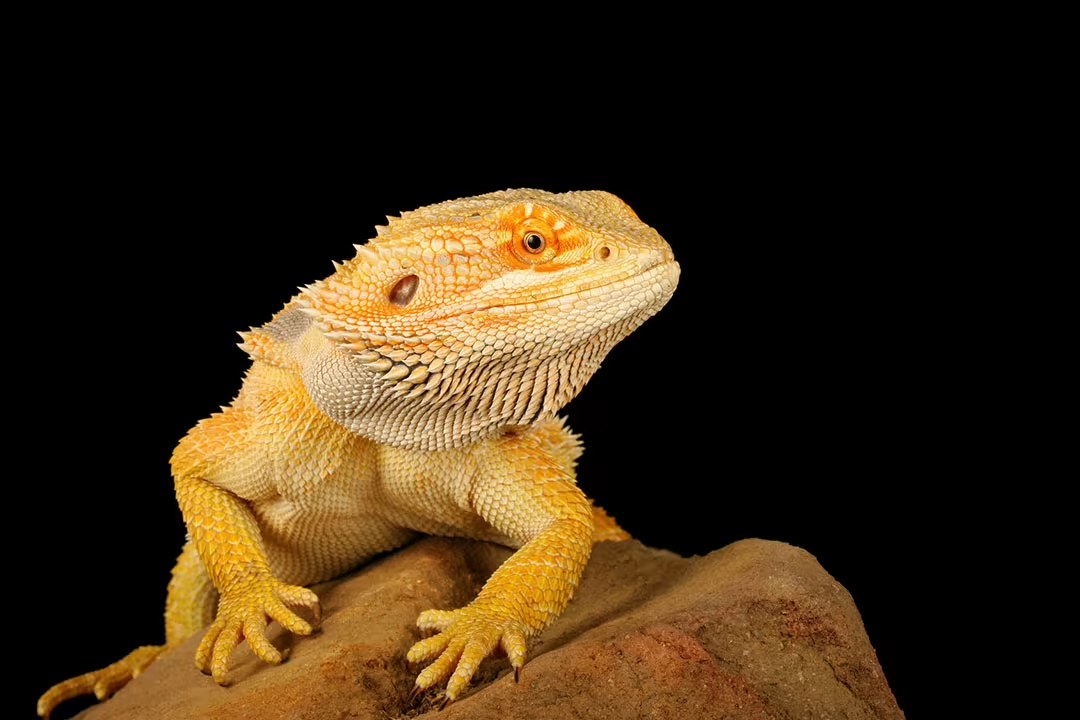
Our 5 year old Bearded Dragon seems sick. We’ve had him since birth. He’s always loved to eat meal worms crickets and greens. He’s very picky on the greens we’ve never been able to get him to eat any other fruits or veggies. Few months ago he started
Check the temperature in the enclosure. Low temps can affect activity and appetite in reptiles. You can soak him in a warm 50/50 solution of water and unflavored PediaLyte for about 20 minutes every few days to prevent or treat mild dehydration. In case he is constipated, you can gently massage the abdomen, front to back, during the soak. You can supplement his diet with Fluker's Repta-Boost ( https://www.petco.com/shop/en/petcostore/product/flukers-reptaboost-insectavore-and-carnivore-high-amp-boost ). Find it in the local Petco. Continue to offer fresh, chopped greens and prey. Place them in a shallow cup to make it easy for him to eat. Survey the area in and around the cage for any negative stimuli. This may include loud noises, strong vibrations, high traffic or cold drafts. Reduce or eliminate any if found. Consider a tank surround to limit his view in case something he sees is causing him stress or making him angry. If symptoms persist or worsen, he will need to be physically e
Updated on September 24th, 2025