

Two Easy Ways to Start Earning Rewards!
Become a member today! Members-only pricing and offers, personalized care notifications, Vital Care points back on every purchase and more!
 Become a credit card member today!
Earn 2X Pals Rewards points at Petco
when you use Petco Pay!APPLY NOWLearn More About Petco Pay Benefits
Jungle Aquarium Water Test Kits

Related Articles & Questions
- New Pet
Grow El Nino Asian Water Ferns: Easy Aquarium Care Guide
Shop Petco for low-maintenance aquarium decorations like the El Nino fern. We want to help decorate your aquarium to keep your fish happy and comfortable.
Updated on October 23rd, 2025
- Training & Behavior
Freshwater Aquarium Costs: Smart Spending for a Healthy Tank
The cost of purchasing and operating an aquarium can often be more than people expect.
Updated on October 23rd, 2025
- New Pet
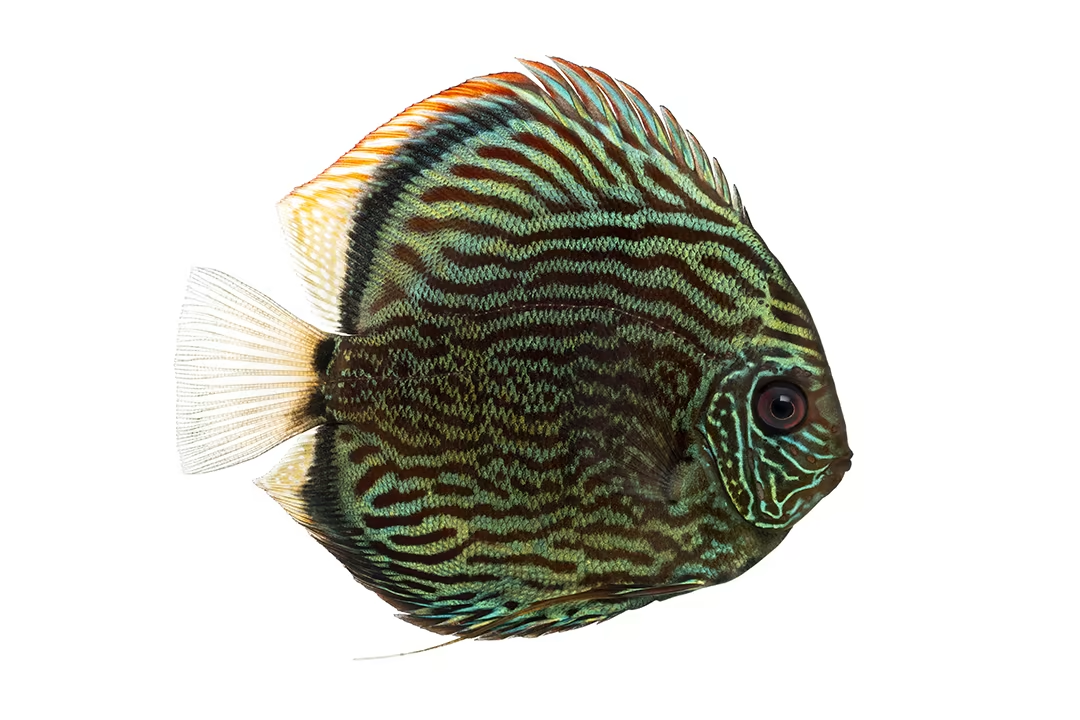
Mastering Discus Fish Care: Tank Setup, Feeding & Water Quality Guide
Learn how to care for a Discus, recommended diet and aquarium setup. Find Discus for sale, supplies and equipment at your neighborhood Petco.
Updated on October 23rd, 2025
- New Pet
How to Acclimate New Fish & Aquatic Life: Thriving Tank Guide
Acclimation helps your aquatic life adjust to the new chemistry of your tank, thereby helping ensure the health of your new addition.
Updated on October 23rd, 2025
- Home & Habitat
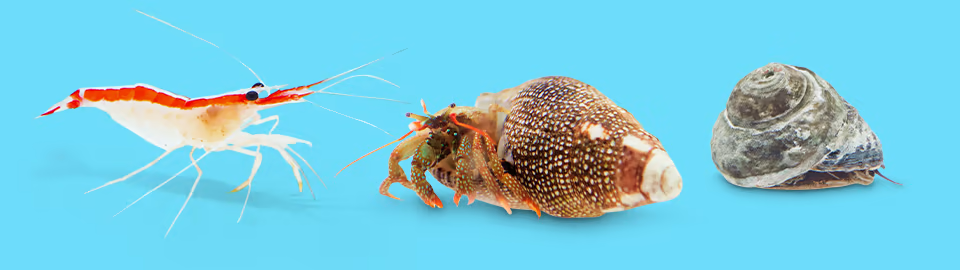
Saltwater Cleanup Crew: Banish Algae, Keep Your Tank Pristine
Visit Petco to learn about cleanup crews and how they can help your aquarium health.
Updated on October 23rd, 2025
- Health & Wellbeing
My fish is acting sick. He is not really eating and he keeps going to the surface to breathe . He is also getting these little what looks like panic attacks and swims very fast and even hits his head constantly on the edges of his tank. I started to
Check water chemistry first. Use a home test kit or submit a water sample for testing. The local Petco may do this for free or for a small fee. Aim for an absence ( 0 ppm) of ammonia and nitrites with nitrates at 20 ppm or less. Perform partial water changes, no more than 30% at a time, to stabilize chemistry and/or to improve water quality. Use only conditioned water that is temperature matched to prevent stress or shock. Check water temp as well. Any of these can drive a fish to the surface. The "flashing" (darting about) can be due to infection (bacterial, fungal or parasites). Consider a broad spectrum antibiotic or an "all in one" product to treat multiple infections. Look in the Aquarium section of the local Petco for options. Follow label directions carefully and remove the carbon filter insert during treatment if indicated.
Updated on September 24th, 2025
- Health & Wellbeing
Hi i have a Small fish Tank 1.6 gallon i originally got it for 2 fish a small gold fish and a terra a neighbor gave us 2 more gold fish the water of the tank went real cloudy and has an odor as this is the first time we have fish I'm probably doing s
These signs are quite concerning and should be approached radically. Begin by submitting a water sample for quality testing. Most pet stores will do this for free or a nominal fee. Clinical examination should always include a water quality check, even if you have done so already. Water testing should be performed with a quality test kit, measuring NH4, NO2 and NO3. High ammonia levels, PH imbalances may be responsible for these signs. Oxygen concentration and quality of the filters should be determined as well. If water quality is good and there are no major imbalances, your fish should get examined to look for any sign of bacterial/fungal infection and eventually water should be treated. Hope this answer was helpful, but please do not hesitate to contact us again on the forum or by requesting a consultation if you have any more questions or to discuss it any further.
Updated on September 24th, 2025
- Health & Wellbeing
Why is my fish tank cloudy? How can I clear it up? I put some chemical in it but it didn't seem too effective. (Sorry my phones camera is really bad)
Thanks for reaching out. You need to determine why it is cloudy before you can treat. Test for pH, ammonia, nitrites and nitrates. Exam the filters and clean if necessary. Some fish stores will let you bring in water samples to test. Good luck.
Updated on September 24th, 2025
- Health & Wellbeing
Which fish and plants suitable in planted tank (75 litre ) ?....And which substrate use are.....And how to medication apply for Discus and tetra fish in planted tank without harm to plants and biological filter ?
Java Moss, Java Fern, Anubias and Amazon Swords are among the easiest live plants to care for and cultivate in an aquarium. You can use aquarium soil or aquarium sand depending on the species of plant(s) chosen. When medicating fish, it is best to remove them to a hospital or quarantine tank. This will spare live plants as well as beneficial bacterial populations, especially if an antibiotic is used. Medicated food is also an option.
Updated on September 24th, 2025
- Health & Wellbeing
Two of the fish fins are clamping down close to their body. I did 75% water change and hopefully they will get better. I do not have the water testing kit. Will buy soon. Is there any ways to get them better? I could see some of their scales are off.
Goldfish need powerful filtration. Your filter should be rated for at least twice the tank volume. Once you get a test kit, check the chemistry. Aim for 0 ppm ammonia and nitrites with nitrates at about 40ppm. Use a kit that has liquid reagents, not strips. The liquid kit is more accurate. The pH should range between 7.2-7.6. Being cold water fish, goldfish thrive between 65F and 72F. You can dissolve 1 teaspoon of plain aquarium salt (NOT table salt) per gallon of water to use as a general tonic. It will reduce stress, improve gill function, treat minor infection and aid in recovery. Treat for 10-14 days then reassess the condition of your fish. When performing partial water changes, treat only the volume of water being replaced not the entire tank volume. Change no more than 30% of the volume at a time. Use only aged or conditioned water that is temperature matched to prevent stress or shock.
Updated on September 24th, 2025