

Two Easy Ways to Start Earning Rewards!
Become a member today! Members-only pricing and offers, personalized care notifications, Vital Care points back on every purchase and more!
 Become a credit card member today!
Earn 2X Pals Rewards points at Petco
when you use Petco Pay!APPLY NOWLearn More About Petco Pay Benefits
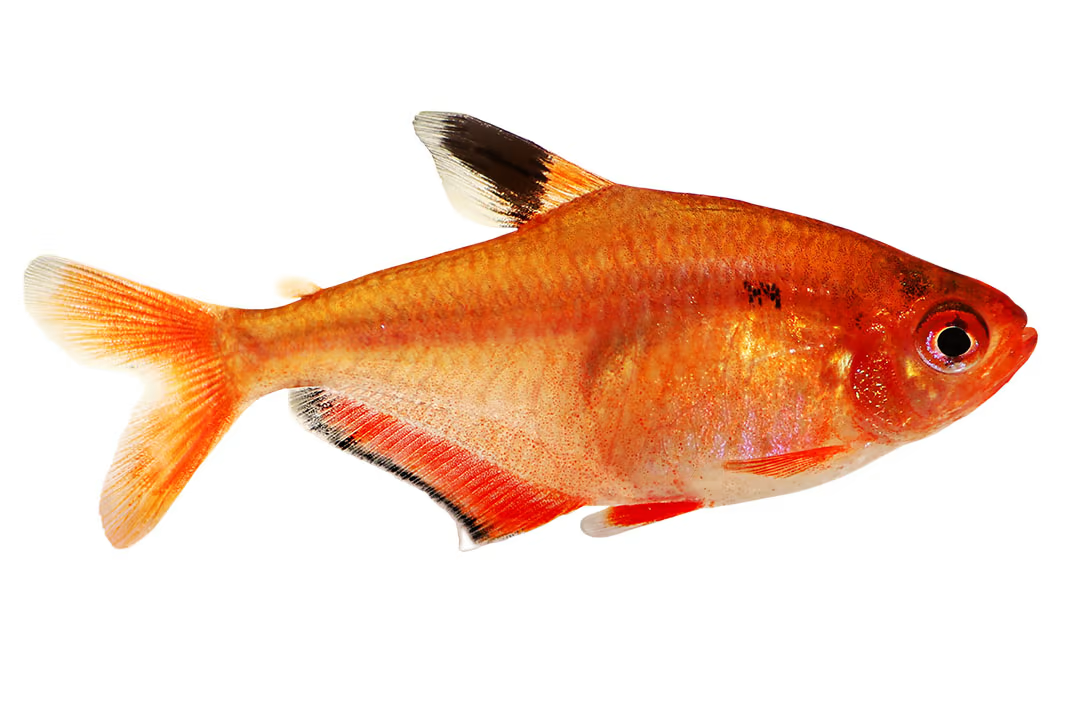
TetraBetta
Get It Today


Related Articles & Questions
- New Pet
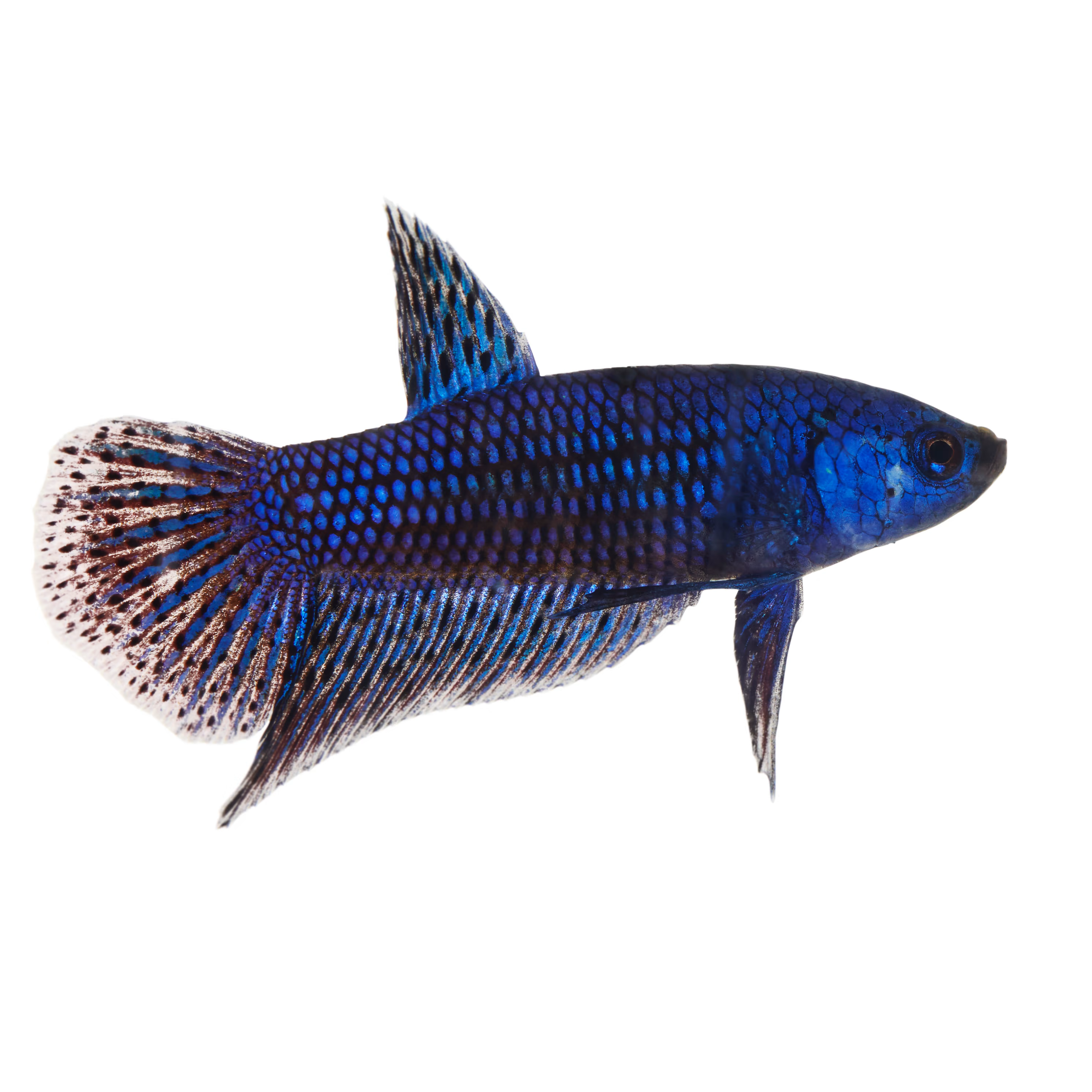
How to Care for Betta Fish: Tank Setup, Feeding, & Compatibility
Learn how to care for a betta fish, recommended diet and habitat setup. Find the right food, supplies and equipment at your neighborhood Petco.
Updated on October 23rd, 2025
- New Pet
Aquatic Pet Safety: Keep Your Home Aquarium Pets Healthy & Safe
Learn how to safely handle your aquatic life to avoid toxin & bacterial exposure. Find aquatic life care supplies at your neighborhood Petco pet care center.
Updated on October 23rd, 2025
- New Pet
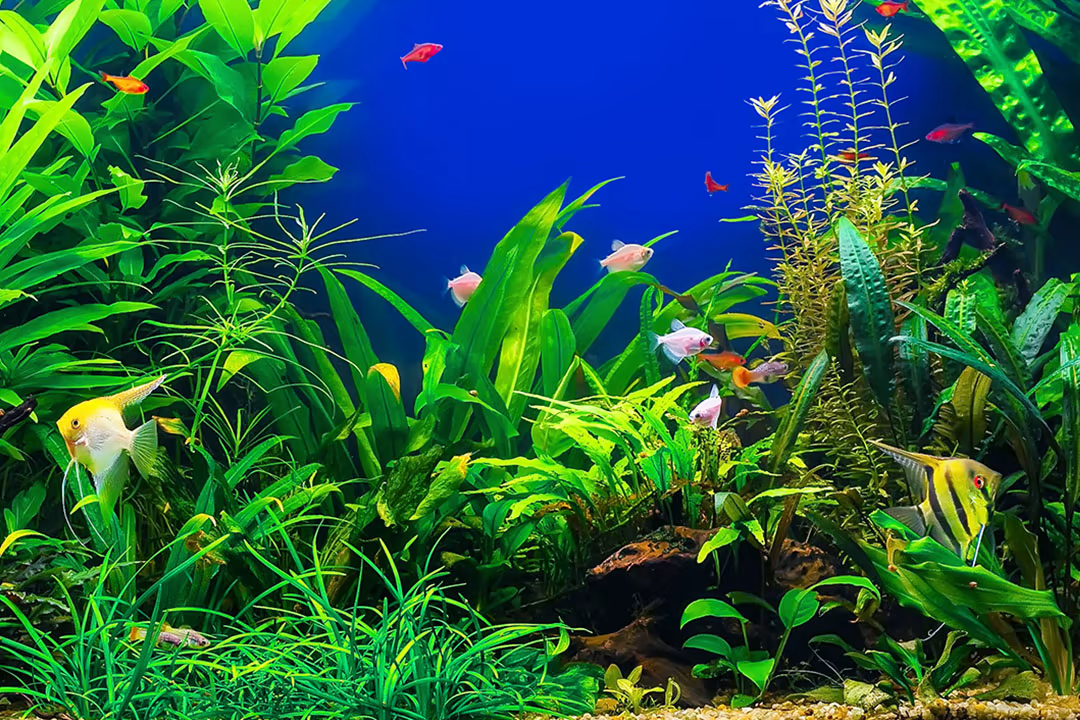
Freshwater Community Fish: Care, Setup & Compatibility Guide
Learn how to care for freshwater community fish, recommended diet & aquarium setup. Find the right food, supplies & equipment at your neighborhood Petco.
Updated on October 23rd, 2025
- Product Guides
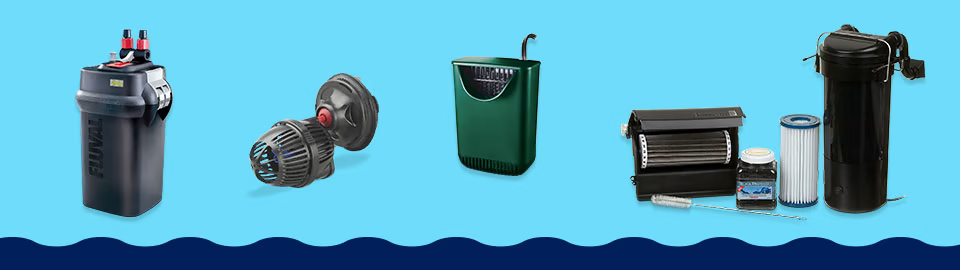
Aquarium Filtration: Pick the Best Filter for a Thriving Tank
Discover the fish tank filter system that’s right for your aquarium. Learn about mechanical, chemical, and biological filtration at Petco.
Updated on October 23rd, 2025
- New Pet
Mastering Discus Fish Care: Tank Setup, Feeding & Water Quality Guide
Learn how to care for a Discus, recommended diet and aquarium setup. Find Discus for sale, supplies and equipment at your neighborhood Petco.
Updated on October 23rd, 2025
- Health & Wellbeing
I'm about to buy some new fishes mostly Tetra Can you help me what fish should I buy because I am beginner in this things. Please tell me what sort of things I should bring I have a one foot tank now other than that What should I purchase from Aquar
Before you buy any fish, you will need to set up the tank. A basic set up includes: a tank, filter, hood/light, heater, gravel and some decor. The tank should run without fish for at least 4 to 6 weeks. This gives it time to cycle. The Nitrogen Cycle is critical to the health of the tank and any fish you will be keeping. During this time, beneficial bacterial will populate the filter and substrate (gravel). These bacteria will be responsible for breaking down fish wastes and other wastes (uneaten food, dead plants, etc.). You will need a home test kit to monitor water chemistry (ammonia, nitrites, nitrates, pH) or you will have to submit water samples for testing. Most pet stores will do this for free or for a small fee. At first, you will see high levels of ammonia and nitrites. Over time, as bacteria grow, these levels will drop. When ammonia and nitrites are at 0 ppm and nitrates are below 20 ppm, you can consider adding fish. Regular (every 1 or 2 weeks) partial water changes as we
Updated on September 24th, 2025
- Health & Wellbeing
hi I bought the imagitarium fresh water uv purified water for my betta,s. Is this good water for them and does it have the nutrients they need? thank you
Yes, this is fine for a Betta tank. You should still use a small filter as well as a small submersible heater to maintain water temp. Bettas do best between 78 F and 80 F. If you choose to use tap water, use an appropriate water condition to remove harmful chemicals and heavy metals.
Updated on September 24th, 2025
- Health & Wellbeing
Ice is sitting at the bottom of the tank on his side. I thought maybe he had swim bladders disease. We have gone 2 days now without feeding him and i tried one pea without skin. I think he may be dying just want to be sure i am doing everything possi
Check the water chemistry. Use a home test kit or submit a water sample for testing. The local Petco may do this for free or for a small fee. Aim for an absence (0 ppm) of ammonia and nitrites. Nitrates should be 20 ppm or less. Check the water temperature as well. Bettas do best between 78 F and 80 F. Low temps can affect appetite and activity in fish. Perform partial water changes to stabilize chemistry and/or to improve water quality. Use only aged or conditioned water that is temperature matched to prevent further stress or shock. Drop the water level to make it easier for Ice to surface.
Updated on September 24th, 2025
- Food & Nutrition
I have a male beta fish that will not eat (or at least I haven’t seen him eat). I got him 5 days ago. He’s in a 1 gallon bowl. I got him the recommended beta pellets but he can’t seem to get them to stay down. He gets excited when I feed him but when
Hello, I recommend checking water quality parameters first for any fish displaying abnormal behavior. For starters, I'd recommend keeping your fish in a larger tank as it is much easier to keep the water clean over time. This website is a good reference for basic betta fish care: https://bettafish.org/care/ I hope this helps. Thanks for using Boop by Petco.
Updated on September 24th, 2025
- Health & Wellbeing
My male Crowntail Betta fish is acting very lethargic, he stays at the bottom of the tank and only coming up for air, barely eats, his stomach looks hollow, and the scales along his back are raised. He has been this way for a few weeks but isn't gett
Check the water quality. This can be done with a home test kit or you can submit a water sample for testing. Most pet stores or aquarists will do this for free or for a nominal fee. Correct any imbalances as indicated. Check the water temp as well. Aim for 78 F to 80 F. Use a tank heater to prevent temps below 74 F. Offer a good quality pellet such as Hikari BioGold. You can also feed blackworms or bloodworms. Live worms may get him eating. Freeze dried tubifex worms may also stimulate his appetite. If there are no outward signs of bacterial or fungal infection, consider parasites. You can use metronidazole for fish. It is sold in most pet stores in the aquarium section. Follow label directions and gauge his response after treatment. The raised scales are a concern because that can be a symptom of dropsy. Dropsy is common in bettas and usually fatal. It is typically accompanied by a swollen abdomen though. Fish tuberculosis is another serious concern. This is a slow, p
Updated on September 24th, 2025