

Two Easy Ways to Start Earning Rewards!
Become a member today! Members-only pricing and offers, personalized care notifications, Vital Care points back on every purchase and more!
 Become a credit card member today!
Earn 2X Pals Rewards points at Petco
when you use Petco Pay!APPLY NOWLearn More About Petco Pay Benefits
TetraBetta Fish Food
Get It Today


Related Articles & Questions
- New Pet
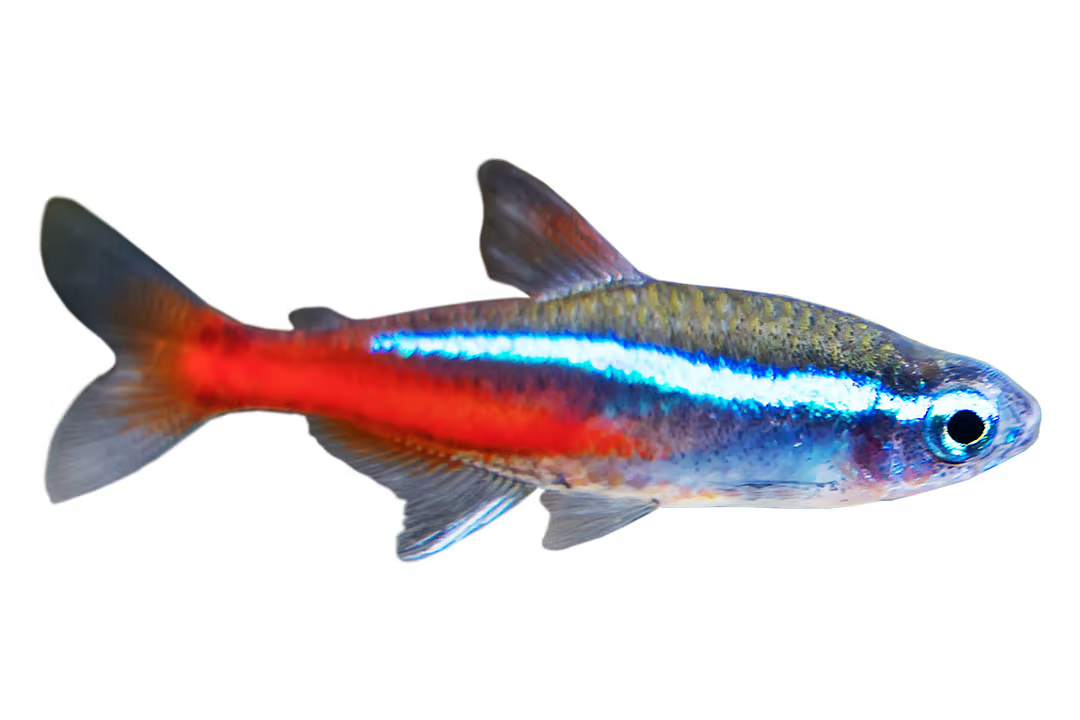
Complete Tetra Care: Tank Setup, Food, & Compatibility Tips
Learn how to care for a Tetra, recommended diet & habitat setup. Find the right food, supplies & equipment at your neighborhood Petco.
Updated on October 23rd, 2025
- New Pet
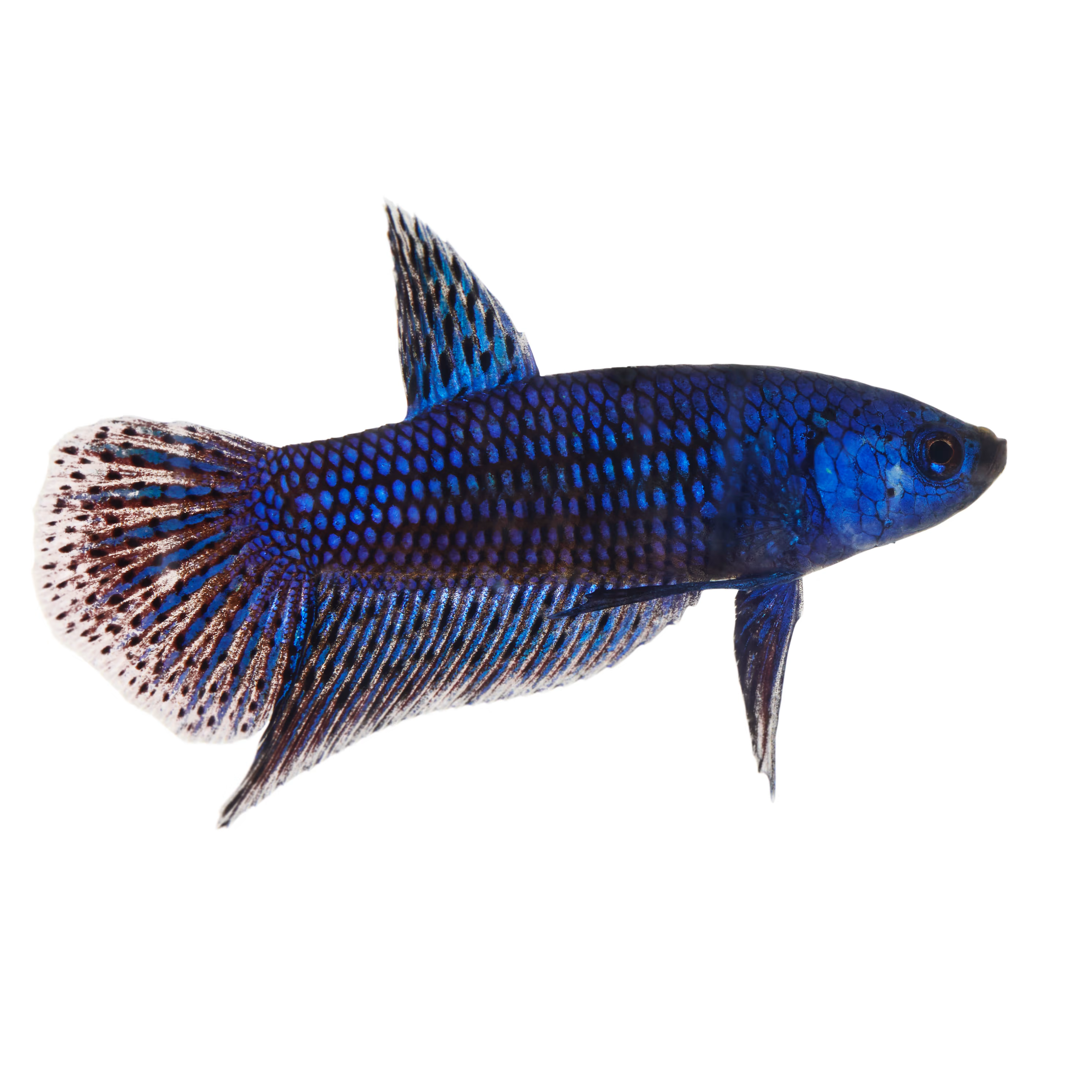
How to Care for Betta Fish: Tank Setup, Feeding, & Compatibility
Learn how to care for a betta fish, recommended diet and habitat setup. Find the right food, supplies and equipment at your neighborhood Petco.
Updated on October 23rd, 2025
- New Pet
Ultimate Betta Fish Care: Tank Setup, Water Quality & Health
If you’re thinking of adding a betta fish to your family, learn a few fun facts about these underwater wonders.
Updated on October 23rd, 2025
- Food & Nutrition
Feeding Freshwater Fish: Ultimate Guide for a Thriving Aquarium
Feeding your freshwater fish isn't as simple as adding a pinch of flakes! Read these three tips to learn more about how to provide your pets the nutrition and environment they need.
Updated on October 23rd, 2025
- New Pet
Beginner's Guide: Freshwater Livebearer Tank Setup, Food & Happy Fish
Learn how to care for freshwater livebearers, recommended diet & aquarium setup. Find the right food, supplies & equipment at your neighborhood Petco.
Updated on October 23rd, 2025
- Health & Wellbeing
Hi, I'm planning on getting a betta fish and I'm wondering what foods are best for it
These are the two highest rated foods for your Betta! You can pick some up when your go in to purchase your Betta; Freeze dried bloodworms https://m.petco.com/shop/en/petcostore/product/omega-one-freeze-dried-betta-treat# Aqueon Natural Beta Food https://m.petco.com/shop/en/petcostore/product/aqueon-betta-color-enhancing-pellets-betta-food#
Updated on September 24th, 2025
- Health & Wellbeing
I'm about to buy some new fishes mostly Tetra Can you help me what fish should I buy because I am beginner in this things. Please tell me what sort of things I should bring I have a one foot tank now other than that What should I purchase from Aquar
Before you buy any fish, you will need to set up the tank. A basic set up includes: a tank, filter, hood/light, heater, gravel and some decor. The tank should run without fish for at least 4 to 6 weeks. This gives it time to cycle. The Nitrogen Cycle is critical to the health of the tank and any fish you will be keeping. During this time, beneficial bacterial will populate the filter and substrate (gravel). These bacteria will be responsible for breaking down fish wastes and other wastes (uneaten food, dead plants, etc.). You will need a home test kit to monitor water chemistry (ammonia, nitrites, nitrates, pH) or you will have to submit water samples for testing. Most pet stores will do this for free or for a small fee. At first, you will see high levels of ammonia and nitrites. Over time, as bacteria grow, these levels will drop. When ammonia and nitrites are at 0 ppm and nitrates are below 20 ppm, you can consider adding fish. Regular (every 1 or 2 weeks) partial water changes as we
Updated on September 24th, 2025
- Health & Wellbeing
I got a baby betta fish and was wondering how do I care for it : as in habitat , water changes , feeding and heating
Mushu is very cute! Betta care is very easy. Ideally, a 5 gallon tank should be used to house your Betta. A smaller tank can be used, but the maintenance (water changes) will be much more frequent. A filter is always recommended otherwise water changes will be required every few days to maintain water quality. With a filter, 20% water changes can be done weekly or every two weeks. Use only aged or conditioned water that is temperature matched to prevent stress or shock. Choices for conditioners include AmQuel Plus, NovAqua, StressCoat, Prime or StressZyme. A small submersible heater is necessary since Bettas are tropical fish. They do best in slow moving water between 78F and 80F. You can feed a pelleted diet such as Hikari Micro Pellets until he grows bigger. Baby brine shrimp, daphnia, bloodworms and blackworms can also be fed. Feed one or twice daily. He should only need 2-3 pellets at each feeding. The conditioners and food can be found in the aquarium section of the local P
Updated on September 24th, 2025
- Food & Nutrition
My Betta fish keeps spitting out its food. I feed it "XL color granules" mixed with "color flakes" its tank mate is a molly. I heard you can get bloodworms and soak them in garlic guard and they will eat it. Is this true? Thank you. -Cristina
Thanks for reaching out about Betty. First, try the blood worms prior to soaking in garlic solution, to monitor ingestion. Garlic can be used to treat some parasitic infestations, and not sure if this is a parasitic problem. Calcium deficiencies can lead to oral boney problems, resulting in inability to swallow food. Iodine deficiencies can lead to thyroid enlargement, also making swallowing difficult. Try the different food first. If swallowing difficulty is monitored, a veterinary visit is recommended for a diagnosis and treatment. Good luck.
Updated on September 24th, 2025
- Health & Wellbeing
I just got a baby betta fish the other day and I have these little fish food pellets. I wanna know how many times I need to feed him and how many pellets should I give him?
Bettas are carnivores and need food high in protein. There are many foods available for your betta that can be bought at your local fish store or cultivated at home. Here’s a quick list to get you started. Remember that like people, a variety of foods allows your fish to get a balanced diet. *Frozen or live bloodworms or bloodworms in gel *Frozen or live brine shrimp or brine shrimp in gel *Frozen or live daphnia *Frozen glass worms *Frozen beef heart (can be purchased at your supermarket or butcher) *Frozen tubifex worms (live tubifex often carry parasites or bacteria and is better avoided) *Frozen mysis shrimp *Live white worms *Live grindal worms *Live flightless or wingless fruit flies *Live black worms. Frozen foods should not be confused with freeze-dried. Freeze-dried foods may cause digestion problems leading to more serious medical issues when fed in excess. If possible, try to avoid feeding dried pellets, flake or freeze-dried food. Some foods are marketed as “For Bettas”
Updated on September 24th, 2025