

Two Easy Ways to Start Earning Rewards!
Become a member today! Members-only pricing and offers, personalized care notifications, Vital Care points back on every purchase and more!
 Become a credit card member today!
Earn 2X Pals Rewards points at Petco
when you use Petco Pay!APPLY NOWLearn More About Petco Pay Benefits
Pro Bugs
Get It Today


Related Articles & Questions
- New Pet
Reptile Enclosure Setup: Create a Thriving Habitat for Your Pet
Learn how to setup your reptiles terrarium to ensure your reptile lives a wholesome & happy life. Shop at your local Petco for all reptile terrarium needs.
Updated on October 23rd, 2025
- New Pet
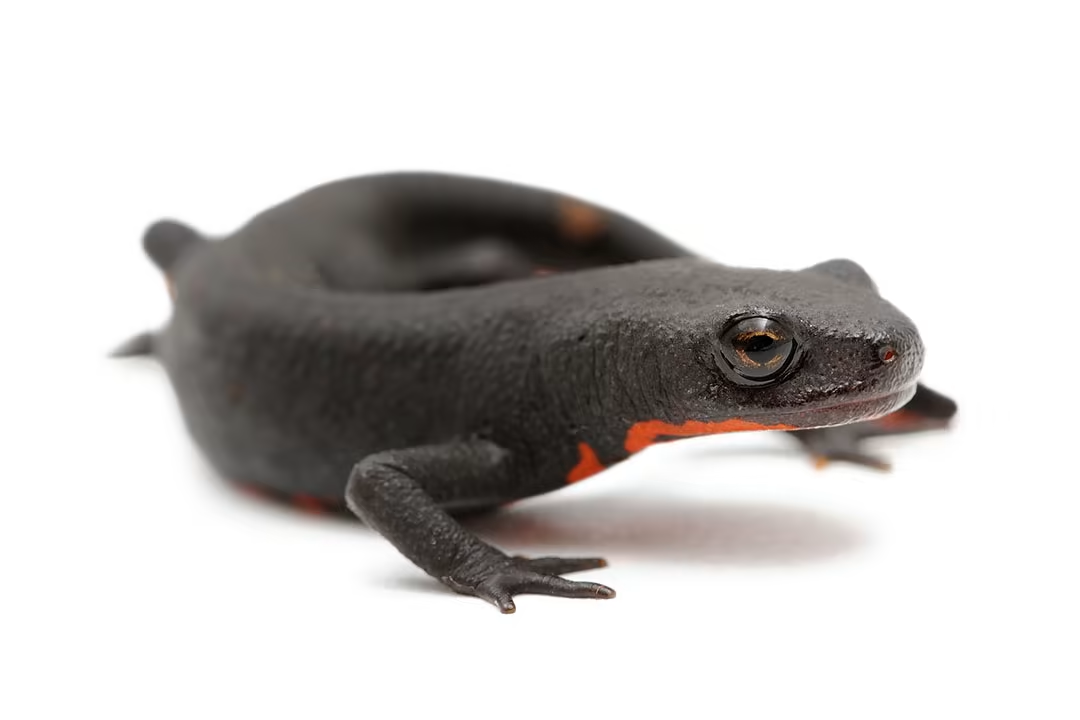
Mastering Pet Salamander & Newt Care: Food, Habitat, Health Guide
Learn How to Care for a Salamander & Newts, recommended diet and habitat setup. Find the right food, supplies and equipment at your neighborhood Petco.
Updated on October 23rd, 2025
 New Pet
Thriving Tropical Roaches: Food, Habitat & Health Care Guide
Learn how to care for tropical roaches, recommended diet & habitat setup. Find the right food, supplies & equipment at your neighborhood Petco.
Updated on February 24th, 2026
- New Pet
How to Safely Handle Reptiles: Stop Salmonella, Protect Your Family
Read more about our recommendations for preventing the transmission of infectious diseases in reptiles. Keep pets safe with these best practices.
Updated on October 23rd, 2025
- New Pet
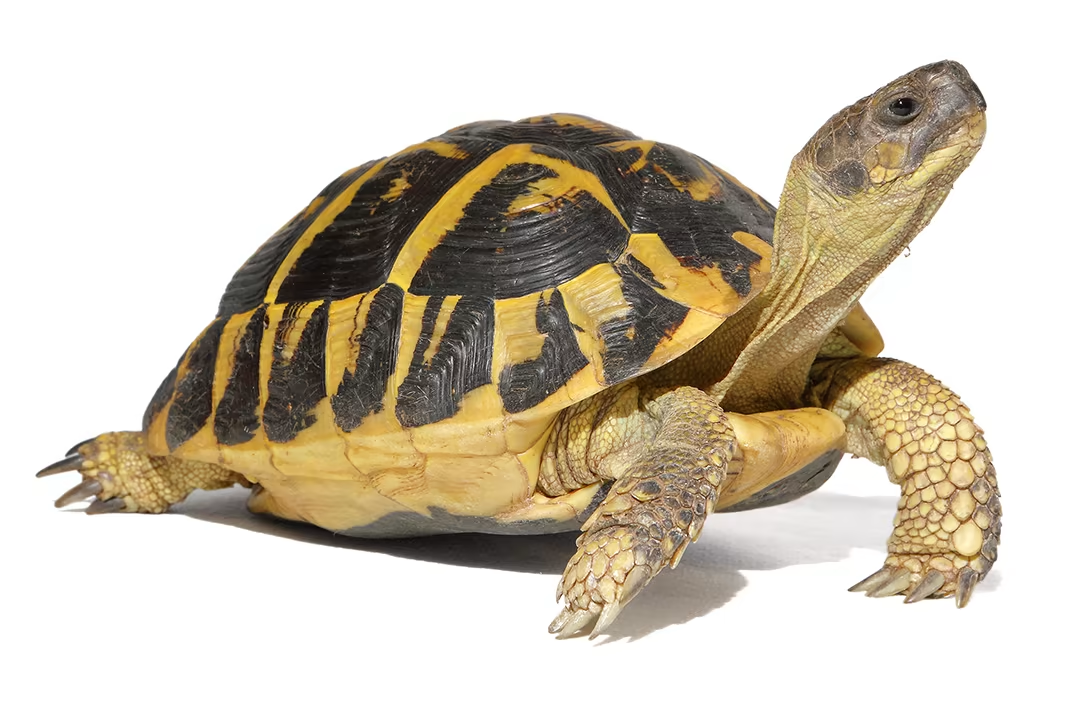
Hermann's Tortoise Care: Ultimate Guide to Habitat, Food & Health
Learn how to take care of your Hermann's Tortoise, tank size, diet & habitat setup. Find the right food, supplies and equipment at your neighborhood Petco.
Updated on October 23rd, 2025
- Health & Wellbeing
He isnt eating well and hasnt had the appetite he used to for a long time also he had some nose rub im wondering what could be wrong if its his enclosure or him being stressed from being close to my chameleon or something i need to take him to the ve
Use a background to block his view. This may prevent glass surfing or nose rubbing as well as provide more privacy/security. Again, check the temps in his enclosure to make sure it is species appropriate. Offer a variety of crickets, mealworms, dubia roaches, silkworms and wax worms. Gut load prey for 24 hours prior to offering. Dust appropriately with vitamins and minerals regularly. He may also benefit from a soak in a warm 50/50 solution of water and unflavored PediaLyte. If his appetite does not return after adjustments to environment and diet, have him examined by your veterinarian or a vet experienced in treating reptiles. Submit a stool sample to diagnose intestinal parasites or bacterial overgrowth.
Updated on September 24th, 2025
- Health & Wellbeing
Is it okay for leopard geckos to eat black soldier larve or dubia roaches as their staple diets?
Black Soldier Fly larvae are a healthy, nutritious feeder insect for your gecko. High in calcium, low in phosphorus, black soldier fly larvae make a great staple food or treat. Dubia roaches are a healthy protein-rich food for geckos. It is best to have a variety of food for your gecko and not just stick to one type of insect.
Updated on September 24th, 2025
- Health & Wellbeing
my gf caught this lizard in Jeju, South Korea; we think it's of the Takydromus family; she is caring for him because she's worried about his injury - she has ordered mealworms for him to eat--any other recommendations? - he has had one of his hi
It does appear to be of the takydromus species. These grass lizards are common and fairly easy to keep. Being adept climbers, more vertical space should be offered in an enclosure. Branches and vines can be placed for climbing. Bring reptiles, they need an external heat source and UVB lighting. Daytime temps can range from 24 C to 30 C (75-85 F). Provide a basking spot of around 35 C to 38 C (95-100 F) using a heat lamp. Aim for 70-80% humidity. Provide a shallow bowl for water. Mist the cage daily. Feed appropriately sized prey, no bigger than the space between the eyes, that have been gutload for 24 hours prior to offering. This will maximize nutritional value. Crickets, mealworms, dubia roaches, waxworms or wingless fruit flies can all be offered. Dust prey with a calcium supplement and a multivitamin supplement several times weekly. Ideally, the wound should be addressed by a veterinarian experienced in treating reptiles. You can clean it with dilute Betadine or chlorhexidine
Updated on September 24th, 2025
- Health & Wellbeing
My Mediterranean house gecko is not able to move his rear legs and I haven't seen feces in more than a week. He moves by dragging himself on his front legs and has been eating very little. I believe this is due to nutritional secondary hyperparathyro
Most house geckos are nocturnal and do not require UVA/UVB lighting, but it won't harm them. Ideally, Dartzilla should be examined by your veterinarian or a vet experienced in treating reptiles to diagnose illness or injury. The paralysis may be compounded by constipation, especially since there has been no stool recently. Soak Dartzilla in a warm 50/50 solution of water and unflavored Pedialyte for 15-20 minutes. This will provide warmth and hydration. Both can aid in digestion and promote GI motility. A gentle abdominal massage, front to back, during the soak may stimulate defecation. Offer appropriately sized prey, no bigger than the space between his eyes. Gut load them for 24 hours prior to offering to maximize nutritional value. You can use a quality fish flake or high protein baby cereal for this. Rep-Cal Herptivite and Rep-Cal Calcium with Vitamin D3 are the gold standards for vitamin and mineral supplementation. You can find them online or in the local Petco. Follow label
Updated on September 24th, 2025
- Health & Wellbeing
I just purchased a baby leopard gecko from petco. I noticed it was the smallest of all of them and occasionally it will shake its legs individually like thumper... what could this be ? It eats really good!
If it is only occasionally, continue to monitor him/her. A nutritional deficiency is always a concern, especially in juveniles, but as long as the appetite is good this is not a concern. Be sure to supplement with a calcium/D3 at each feeding and a multivitamin several times a week. Repashy, HerptiVite and Rep-Cal w/D3 are all options. If the shaking/thumping worsens or if you see lethargy, lameness or swollen limbs/joints, then have the little one examined by your veterinarian or an experienced herp vet.
Updated on September 24th, 2025