

Two Easy Ways to Start Earning Rewards!
Become a member today! Members-only pricing and offers, personalized care notifications, Vital Care points back on every purchase and more!
 Become a credit card member today!
Earn 2X Pals Rewards points at Petco
when you use Petco Pay!APPLY NOWLearn More About Petco Pay Benefits
Repashy
Get It Today


Related Articles & Questions
- New Pet
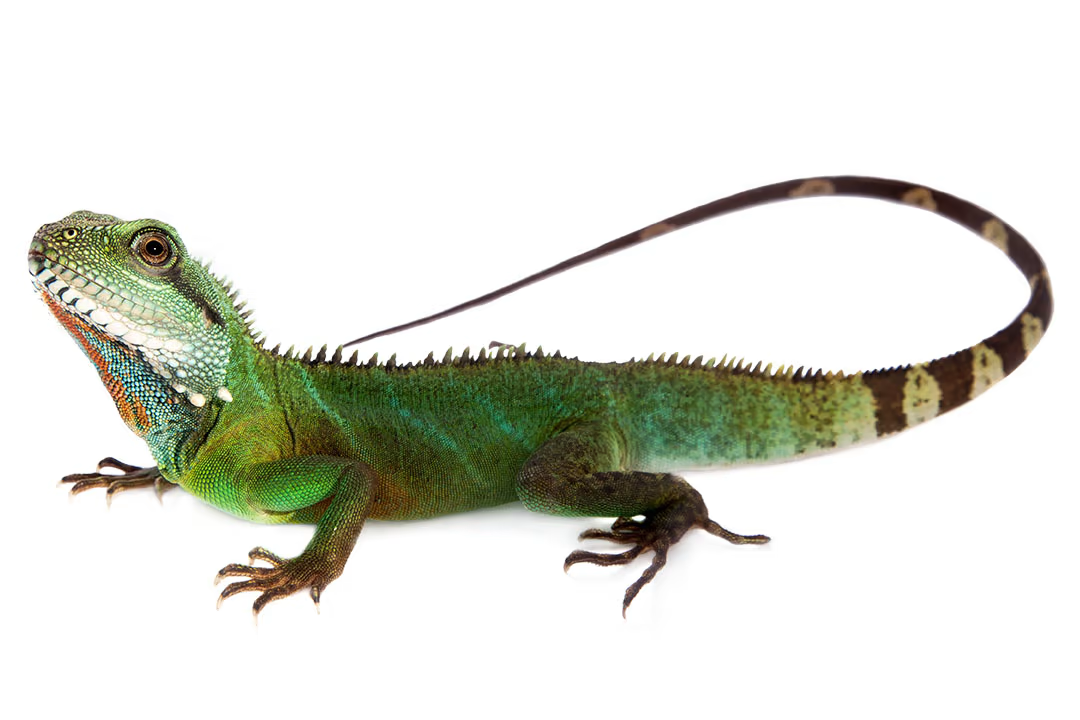
Ultimate Tropical Lizard Care: Habitat, Food & Health for a Happy Pet
Learn how to care for tropical lizards, recommended diet & habitat setup. Find the right food, supplies & equipment at your neighborhood Petco.
Updated on November 13th, 2025
- New Pet
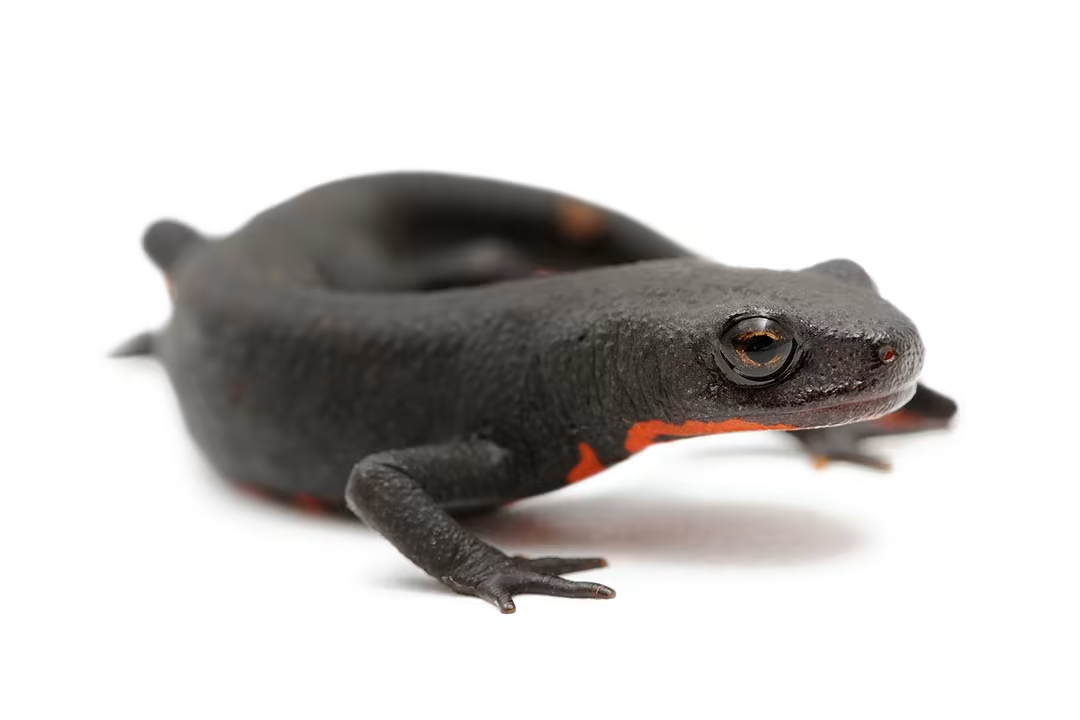
Mastering Pet Salamander & Newt Care: Food, Habitat, Health Guide
Learn How to Care for a Salamander & Newts, recommended diet and habitat setup. Find the right food, supplies and equipment at your neighborhood Petco.
Updated on November 13th, 2025
- New Pet
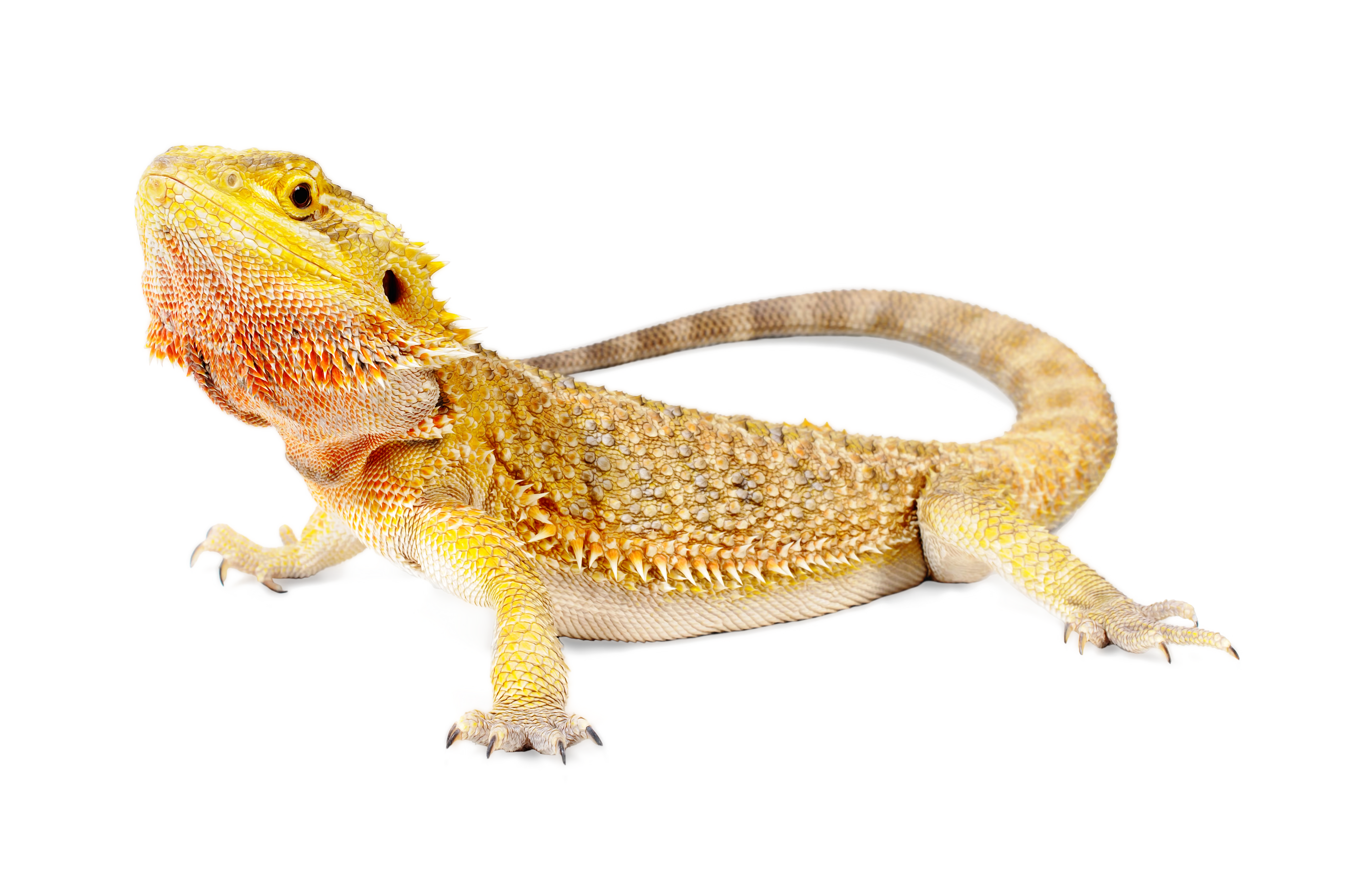
Arid Lizard Care: Expert Tips for Optimal Habitat, Diet & Health
Learn how to care for arid lizards, recommended diet & habitat setup. Find the right food, supplies & equipment at your neighborhood Petco.
Updated on November 13th, 2025
- Health & Wellbeing
Reptile Metabolic Bone Disease: Understand, Prevent & Treat MBD
Search Petco for information about metabolic bone disease, which is fairly common in many reptiles. Use our tips to help keep your reptile comfortable.
Updated on November 13th, 2025
- New Pet
New Owner's Arid Tortoise Care: Habitat, Food, & Health Guide
Learn how to care for a tortoise, recommended diet & habitat setup. Find the right food, supplies & equipment at your neighborhood Petco.
Updated on November 13th, 2025
- Health & Wellbeing
Ever since Ash shed he hasn’t ate much. He’s only ate a couple worms here and there. The same goes for crickets. I have tried so hard to get him to eat better but he doesn’t seem to want to. What should I do?
Often when a reptile doesn’t want to eat, it is a sign that they don’t feel well. The most common reason behind them not feeling well is imperfections in their husbandry and diet. I would recommend consulting an online care sheet to ensure that your husbandry is as perfect as possible. Common areas of imperfection include temperature, lighting, and humidity. I would also recommend having Ash seen by a veterinarian, as they can help to counsel you about Ash’s husbandry as well. In addition to a thorough physical examination, they may recommend diagnostic testing including radiographs (x-rays) and blood work to evaluate systemic health. I hope that gives you a place to start, and thanks for using Boop by Petco!
Updated on August 12th, 2025
- Health & Wellbeing
I have a crested gecko and I’ve had him for about a month now and he’s still very jumpy . He won’t let me pick him up and when I put my hand in the cage to see if he will climb onto it he has no reaction or will scram away into the plants . I was won
It will take patience and consistency on your part. Spend time sitting by the cage. He may run or hide initially, but when he doesn't, place your hand in the cage for ever increasing periods of time. Once again, he may run and hide but make no attempt to touch or hold him. Once he stops running from your hand, use special food treats/prey to entice him onto your hand. Eventually, he will anticipate your presence as meaning a potential meal or treat.
Updated on August 12th, 2025
- Health & Wellbeing
I have a 4 month old chameleon who got mbd i know its a common disease and i tried to prevent it ive been giving him liquid calcium (3 drops everyday oral) and he has uvb. I can take him out side becuase of my weather conditions.. He eats well and dr
Hello, I’m glad you are taking steps to correct the MBD. Oral calcium is important as well as vitamin A and hydration. I like Repashy vitamin A dust on crickets every 2 weeks and calcium powder dust with every other feeding. Make sure the humidity stays above 50-60%. This is very hard inside in the winter so it will be a constant battle. Gut load and dust all insects fed, if you have a drip or misting system, ensure that is working well. The UVB light should be changed every 6 months. MBD lizards are at higher risk of infections and fractures so keep a close eye on his appetite and activity. Pad branches and lower branches if he seems unsteady. Most of all, be patient. Reptiles take a long time to get sick and take just as long to recover. It can take several months for him to bounce back, and any distortion or trauma to his bones may always be noticeable. If you’d like to discuss this more, don’t hesitate to request a consult. Take care!
Updated on August 12th, 2025
- Health & Wellbeing
I adopted a bearded dragon she is eight years old and she has not been eating since I have a doctor which has been one week she has been given what the lady that gave her told me to give her but she still has not eaten anything
I commend you on adopting such a wonderful creature! She may need time to adjust to her new home and enclosure. Make sure it is large enough for her and located away from loud noises, vibrations, direct sunlight or high traffic areas. The commercial pellets are an excellent diet. You should also offer dark, leafy greens, diced vegetables and prey such as crickets or dubia roaches. These can be purchased from your local pet store. Gut load prey for 24 hours prior to offering to maximize nutritional value. Dust with a calcium supplement 3-5 times per week. Use a multivitamin 2-3 times per week. Make sure the temperature in her enclosure is appropriate. Low temps can affect appetite and activity in reptiles. The cage should be in the mid 70s F on the cool side and mid to high 80s F on the warm side. A basking spot of 90-100 F is recommended. She will also need a UVB light source running the length of her cage and about 12-14 inches away. This is vital for calcium, metabolism. You c
Updated on August 12th, 2025
- Health & Wellbeing
Hello. Ok so we have 2 chameleons a f and a m and we were on vacation and just go back yesterday. And found that the female is having a hard time to move her legs. They look weak or liked of like broken. She hardly moves and stays at the bottom of th
Sounds like MBD. Without more information all I can tell you is that you should take them to see a reptile veterinarian. This could be trauma/injury but honestly, most problems we see with reptiles are due to improper diet and/or husbandry. I would to know how long you have had them, what is their cage setup, what is the lighting/temperature/humidity set up, what diet have you been feeding, any supplements? How long were you gone? Etc. I don't have enough information to go on. ( https://www.lbah.com/reptile/chameleon-bone-disease/ ) Here is a list of reptile vets in PA. You will need to see if any are near you. You may have to drive a ways to find one..... ( https://www.thesprucepets.com/exotic-pet-veterinarians-in-pennsylvania-1239016 ) Hope this helps. If you have more questions you can always opt for a private consultation where we can chat back and forth. That way you can ask as many questions as you'd like. Best wishes.
Updated on August 12th, 2025